Renault Group shortens new-car development to a two-year cycle; Renault Korea named an electrification hub, proving its capabilities with the Grand Koleos and Philant
Renault Korea has been designated a global strategic base to lead the Renault Group’s transition to autonomous driving and software-defined vehicles (SDVs).
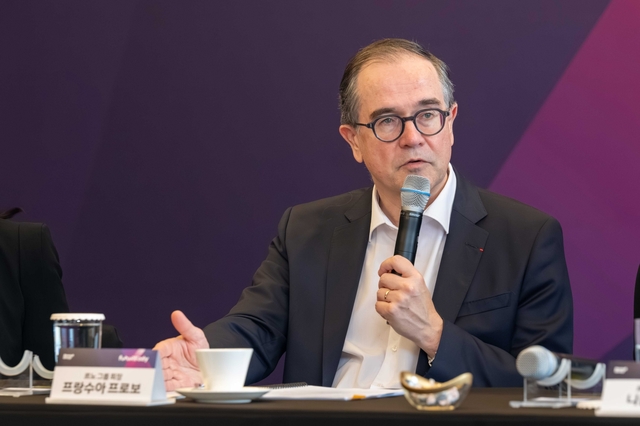
On April 3, François Provost, chairman of the Renault Group, unveiled a new global master plan called futuREady at a meeting with the Korea Association of Automotive Journalists and the Korea Automotive Journalists Association at the JW Marriott Hotel in Seoul. The plan compresses the new-car development cycle to two years, and Provost expressed strong confidence in the South Korean market.
Provost said Korean consumers’ exacting standards are a vital driver of Renault’s advanced-technology development. He also showed a personal affinity for Korea, recounting that he once requested photos of Seorae Village, where his family previously lived. As CEO of Renault Samsung Motors (now Renault Korea) in 2016, Provost led the launch of the SM6, which challenged Hyundai’s Sonata in the mid-size segment. He described Korea as “an important pilot market with sophisticated technical requirements.”
The futuREady strategy focuses investment and resources on markets with the highest profit potential. Renault aims to sell 2 million vehicles worldwide under the Renault brand by 2030, with 1 million of those sales outside Europe. Provost drew a firm line: aside from the Alpine brand, Renault does not plan to enter the U.S. market. Instead, the company will develop five core hubs, with India and South America—together accounting for roughly half of its growth—alongside South Korea among the prioritized hubs.
South Korea will play a unique role in handling domestic sales and exports of upper-segment (D- and E-segment) vehicles. Praising the Korean unit’s R&D capabilities, Provost said, “Renault Korea is the only production site in the Renault Group capable of building D-segment vehicles at the level of the Philant and the Grand Koleos.”
Nicolas Paris, CEO of Renault Korea, who attended the meeting, said the company plans to relocate pilot testing and some factory engineering work to Busan starting in the second quarter of next year.
Provost also clarified Renault’s strategy of building a competitive alliance ecosystem for batteries rather than vertical integration. “Renault has no intention of becoming a battery manufacturer,” he said, adding that localization in Korea is the priority for developing a competitive battery ecosystem. He reiterated close cooperation with long-time partner LG Energy Solution and emphasized collaborative growth with Korean battery firms.
But beneath the broad investment plans, Provost issued a stark warning about long-term viability. While praising the Busan plant’s manufacturing capabilities, he pointed out a critical weakness: “It’s the only Renault plant worldwide without an agreed annualized work-pattern.” He warned that the plant’s overall cost competitiveness lags on the global stage and stressed that labor-management agreements enabling flexible responses to market demand are essential to secure new-model allocations and export volumes.
Reporter Won-gi Cheon 1000@viva100.com