Mercedes‑Benz has been sanctioned by South Korea’s Fair Trade Commission after the automaker did not fully disclose battery information during EV sales efforts. The KFTC found that Mercedes misrepresented the manufacturers of battery cells in some models, a conclusion that could erode trust in the premium marque’s three‑pointed star. Mercedes‑Benz Korea said it will challenge the ruling in court.
The Korea Fair Trade Commission announced on the 10th that it fined Mercedes‑Benz Korea and the German parent company 11,239,000,000 KRW (about $8,429,250) and will refer both companies to prosecutors for violating the Monopoly Regulation and Fair Trade Act.
According to the KFTC, Mercedes produced an internal dealer sales guide called the “EQ Sales Playbook” in June 2023 for use during vehicle sales. The commission found the playbook made no mention of Parasis battery cells — a Chinese supplier whose cells are fitted to certain models — while highlighting the technology and market share of CATL, the world’s largest battery maker. The KFTC says Mercedes also instructed dealers to emphasize CATL’s strengths during customer consultations.
But actual vehicle configurations differed. Of six EQE models on offer at the time, four used Parasis cells, and one of seven EQS models used Parasis cells. The commission concluded that Mercedes‑Benz Korea and the German headquarters were aware of this before distribution but omitted the information from the sales guidance.
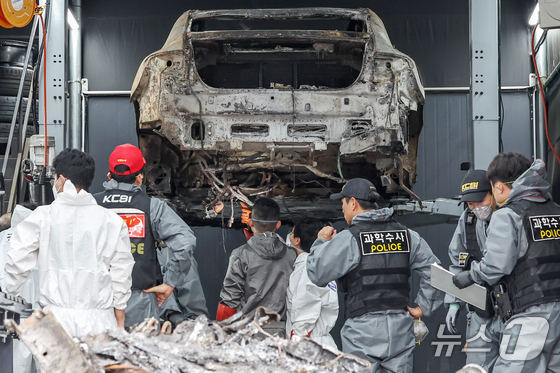
Parasis cells were installed in the Mercedes EQE that first caught fire in a basement parking garage at an apartment complex in Cheongna International City, Incheon.
Battery cells are a critical component that determines an EV’s performance and safety, and the cell manufacturer is often a key factor in buyers’ decisions. The KFTC noted that one stated purpose of the sales guide was to allay consumer concerns about battery safety.
Mercedes‑Benz Korea distributed the playbook to dealers, used it in sales operations and adopted it as official training material. The commission’s investigation found that dealers, unaware that Parasis cells were fitted, marketed the vehicles as equipped with CATL batteries.
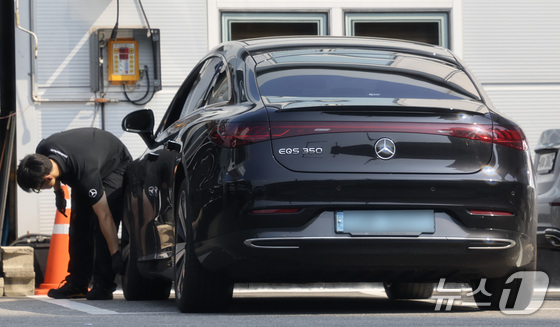
Industry analysts say the dispute could do more than spark an advertising controversy — it could damage Mercedes’ premium image. The brand led South Korea’s imported car market from 2016 through 2022, building the three‑pointed star into a symbol of engineering and trust.
“Battery safety and technical credibility are central to electric vehicles,” an industry source said. “If relevant information was withheld or sales practices could mislead buyers, the brand’s reputation will suffer. For a premium marque, consumer trust is vital, so the consequences could be significant.”
Observers also warn that as Korea’s EV market grows rapidly and the industry shifts from internal combustion to electrification, the controversy could weaken Mercedes’ competitive standing in the domestic market.
Mercedes‑Benz, however, disputes the KFTC’s findings. Mercedes‑Benz Korea said it has cooperated fully with authorities since the investigation began, respects the commission’s process but disagrees with its conclusions.
The company added, “We operate in compliance with laws and under high standards of corporate ethics and responsibility, and we have provided accurate information to the media and customers. We will continue to press our position through legal channels, including filing administrative litigation.”