◆Munoz lays out vision at shareholders’ meeting
Unveils dozens of new models, including 36 for the U.S.
Fire at Daejeon Anjeon Industry plant raises concerns
Production worries for Kona and Niro
Unveils dozens of new models, including 36 for the U.S.
Fire at Daejeon Anjeon Industry plant raises concerns
Production worries for Kona and Niro
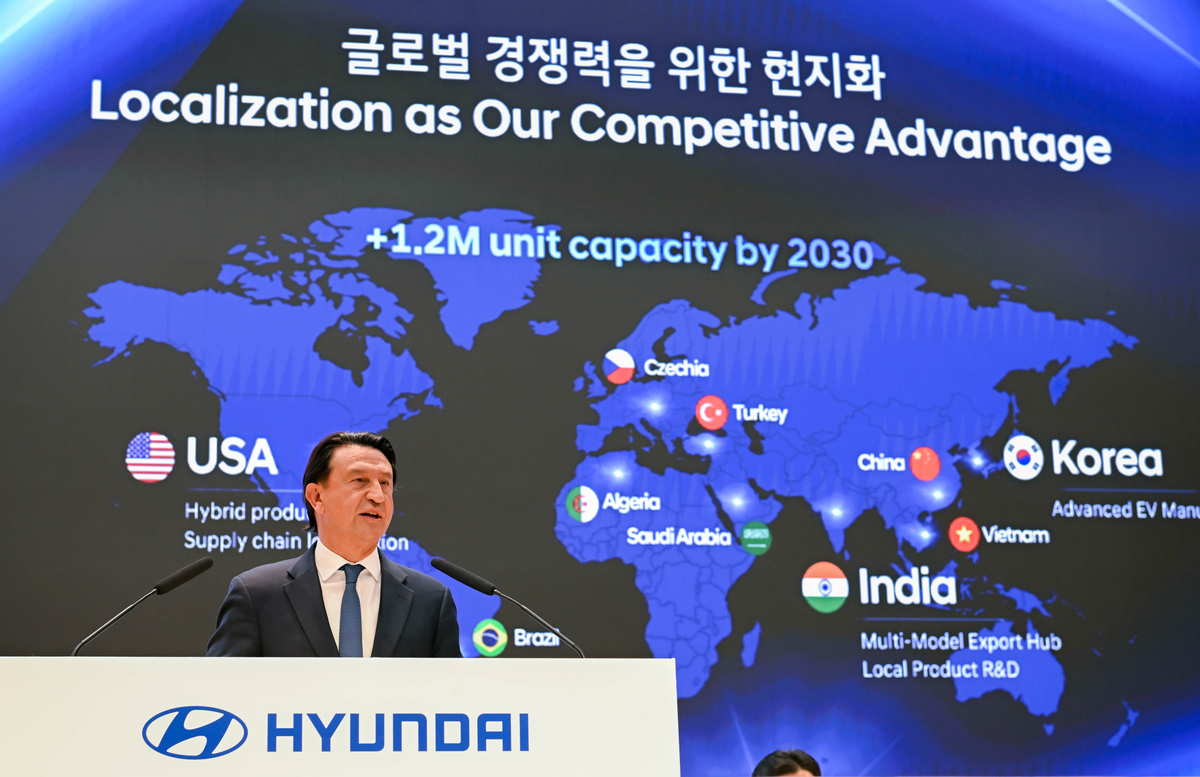
Hyundai Motor CEO Jose Munoz told attendees at the company’s 58th annual shareholders meeting on March 26 that Hyundai and Kia will expand combined global production capacity by 1.2 million units by 2030 to reach an annual run rate of 10 million vehicles. As of year-end, combined capacity for Hyundai and Kia stood at 8,805,000 units.
This year, Hyundai will begin producing hybrid models at its U.S. plant and is planning new production hubs in India, Saudi Arabia and Vietnam.
Hyundai said it will expand its strategy of market‑specific models across the U.S., China, Europe and India. Munoz said, “In China, we plan to launch 20 new models over five years and will introduce a new electric sedan this year.” He added, “In Europe, starting with the Ioniq 3 in April, we will roll out five new models over the next 18 months.”
Hyundai will unveil a locally tailored electric SUV for India early next year. The company plans to invest $5 billion (approximately 6.67 trillion KRW) by 2030 to increase capacity at the new Pune plant by 250,000 units and to introduce 26 new models over 10 years. A Genesis launch in India is also under consideration for next year. In North America, Hyundai plans to sequentially introduce 36 new models by 2030.
Munoz emphasized a push to transform the company from an automaker into a technology leader focused on AI and robotics. “Our collaboration with NVIDIA, investments in 42dot and Motional, and our partnership with Waymo are core activities to secure technological competitiveness,” he said. “We aim to move beyond building cars to becoming a company that develops the intelligent systems that power them.”
Meanwhile, a fire at Daejeon parts supplier Anjeon Industry has started to reveal production disruptions at Hyundai and Kia. Industry sources say Kia is likely to face engine shortages for Seltos and Niro hybrid models beginning April 8. Both models use the small Kappa engine, and Anjeon Industry reportedly supplies all of the engine valves. Hyundai is also concerned about potential production disruptions affecting the Kona, Casper and Elantra, which use the Kappa engine.