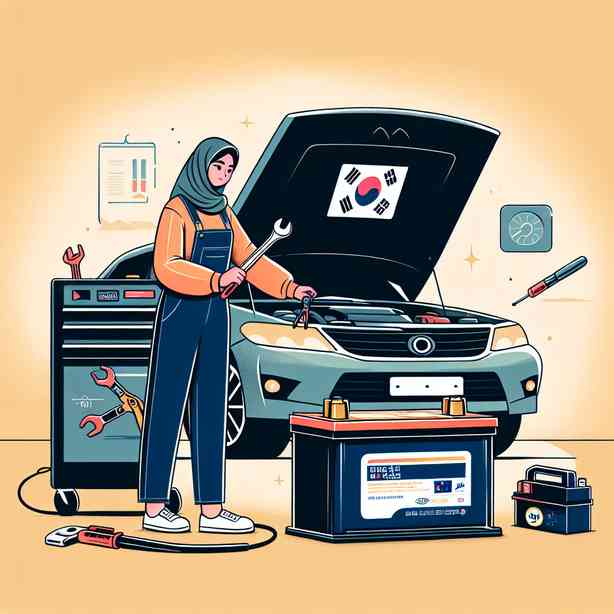
Why Choose a Korean Brand for Your Car Battery Replacement?
Korean Brands' Standing in the Global Auto Battery Market
Korean brands stand out for car battery replacements because of their firm position in the global market. As electric vehicles reach the mainstream, demand for batteries has surged, making technology and reliability decisive factors. Two of the world's three largest battery makers are Korean, together accounting for nearly half of global market share. With strengths in advanced engineering, supply networks, and quality control, Korean firms have earned international trust. Choosing a Korean brand for a battery replacement is a rational choice grounded in proven global performance and reliability.
Technical Edge of Korean Car Batteries
Technology is a top concern for buyers replacing car batteries. Korean manufacturers lead on core metrics—cell energy density, cycle life, and charge speed. They have rapidly commercialized advanced chemistries and components, including high-nickel cells, silicon anodes, and sophisticated thermal-management systems. Automakers increasingly integrate these advances into new-vehicle programs, and joint projects with global OEMs confirm their value. Because battery tech directly affects range, picking a Korean replacement lets drivers benefit from the latest improvements sooner.
Quality Reliability and Safety Advantages
Safety is a primary consideration in battery replacement. Korean brands apply rigorous quality controls across production, with strict contamination protocols, automated inspection, and continuous process improvements that cut defect rates. In response to global concerns about battery fires, manufacturers deploy measures such as thermal-runaway mitigation, reinforced casings, and multilayer protection circuits. Selecting a Korean brand gives buyers access to high safety standards and robust reliability measures.
Price Competitiveness and Economic Efficiency
Battery replacement can be costly. Thanks to large-scale production and global sourcing, Korean brands are often more price-competitive while maintaining quality. Their mass-production footprint helps deliver comparable performance at reasonable prices, and they offer product lines tailored to vehicle type and usage. That range helps drivers minimize both up-front expense and long-term maintenance costs.
After-Sales Service and Network Strength
After-sales support matters after a battery swap. Korean brands operate dense service networks domestically and abroad, providing fast, organized support. Service centers in major cities and regions are staffed by trained technicians who handle diagnostics, repairs, and replacements. Programs often include performance checks, free exchanges in qualifying cases, and scheduled maintenance—ensuring ongoing support after installation.
Environmental Leadership and Sustainability
More buyers now weigh environmental impact when replacing batteries. Korean manufacturers are adopting greener production methods, expanding renewable energy use, and cutting harmful substances. They also lead in end-of-life systems, building recycling centers and developing processes to recover valuable metals and boost reuse rates. Choosing a Korean battery aligns with sustainability goals and broader environmental trends.
Replacement Cycles and Performance Guarantees
Replacement intervals depend on battery durability. Korean firms produce long-life cells that extend service intervals and use technologies to slow capacity loss so batteries hold stable output under real-world conditions. Many also offer longer warranties than competitors, giving owners greater peace of mind and reducing the risk of unexpected replacement costs.
Optimized Compatibility with Domestic Vehicles
Korean batteries offer high compatibility with domestically produced vehicles. Proper integration with a car’s electrical architecture—charging systems, battery management system (BMS), and vehicle electronics—is critical. Korean suppliers collaborate closely with local OEMs to tune specifications for seamless integration, simplifying installation and lowering the likelihood of performance or software issues. That cooperation also speeds software updates and parts service, improving overall maintenance efficiency.
Broad Product Lineup and Customization
Korean brands provide a wide selection of capacities, formats, and performance levels. They offer batteries tailored to sedans, SUVs, and commercial vehicles, along with units engineered for extreme climates or high-power demands. This breadth lets buyers match a replacement to vehicle needs, driving patterns, and budget—giving consumers meaningful choice.
Collaborations with Global Automakers
Korean batteries earn global recognition through close partnerships with major automakers. Leading OEMs work with Korean firms from early development stages to co-develop advanced battery systems. These collaborations raise reliability, safety, and performance while meeting international quality standards. Choosing a Korean brand for replacement means using a product engineered to global specifications.
Certifications and Standards Compliance
Certifications matter for replacement batteries. Korean brands comply with a broad set of domestic and international safety, environmental, and performance standards—UN transport rules, CE in Europe, UL in North America, and domestic KC and environmental certifications. That compliance provides buyers with assurance that their replacement meets strict regulatory benchmarks.
R&D Investment and Innovation Leadership
Korean firms lead through sustained R&D investment. Major companies reinvest significant revenue into research on new materials, next-generation cells like solid-state, and advanced BMS technology. Strong R&D pipelines move innovations into production quickly, so replacement batteries often reflect the latest advances. Choosing a Korean brand is therefore a forward-looking choice.
Recall and Quality-Issue Responses
How manufacturers handle defects and recalls is critical. Korean brands are known for transparent, proactive responses—rapid root-cause analysis, product recovery, and free replacements when necessary. They provide timely communication and expand preventive inspection services. That responsiveness reassures consumers that support will be available if problems arise after replacement.
Supply Stability and Global Logistics
Raw-material volatility and logistics disruptions have made supply stability a priority. Korean brands have diversified sourcing, multiple production sites, and optimized logistics to limit risk and ensure steady deliveries. Choosing a Korean supplier helps guarantee access to replacement batteries even amid market fluctuations.
User Feedback and Market Reaction
User reviews are a key barometer after a swap. Across enthusiast forums, professional review sites, and social media, Korean batteries earn high marks for range, charging speed, durability, and quieter operation. Many owners report long trouble-free service, strong support, and favorable cost-performance—benefits drivers can expect after choosing a Korean replacement.
Policy Support and Government Certifications
The Korean government treats EVs and batteries as strategic industries, offering incentives and certifications that affect replacements—subsidies for replacement costs, eco-vehicle certifications, and energy-efficiency programs. These measures reduce the financial burden of swapping a battery and ensure products meet strict government oversight.
Impact on Used-Car Value
Battery replacement affects resale value. Due to certifications, warranties, and service coverage, Korean batteries can increase a used vehicle’s market value. Dealers often price cars higher when they carry documented replacements from recognized Korean brands, so choosing such a battery can protect future resale prospects.
Ongoing Technological Evolution and Future Outlook
As the EV market expands, battery technology is changing fast. Korean brands continue advancing energy density, charging rates, and next-generation chemistries, while pursuing solid electrolytes, lithium-sulfur cells, and recycled-material applications. Given that momentum, Korean firms are likely to remain leaders in the replacement market. For many drivers, opting for a Korean battery will remain the most practical choice.
Conclusion: Korean Brands Are the Answer for Battery Replacement
The case for choosing a Korean brand for car battery replacement is clear: global credibility, cutting-edge engineering, safety, value, strong after-sales support, sustainability, diverse product lines, and reliable supply chains. Combined with positive user feedback, government backing, and benefits to resale value, selecting a Korean replacement battery is both practical and forward-looking. Korean brands are well-positioned to remain a top option for drivers seeking dependable replacements.