From April 8, public agencies adopt odd-even driving; government-run parking lots shift to a weekday five-day rotation
Households with multiple cars are swapping license plates more often
If all plate end digits are odd or even, owners can request replacements
Households with multiple cars are swapping license plates more often
If all plate end digits are odd or even, owners can request replacements
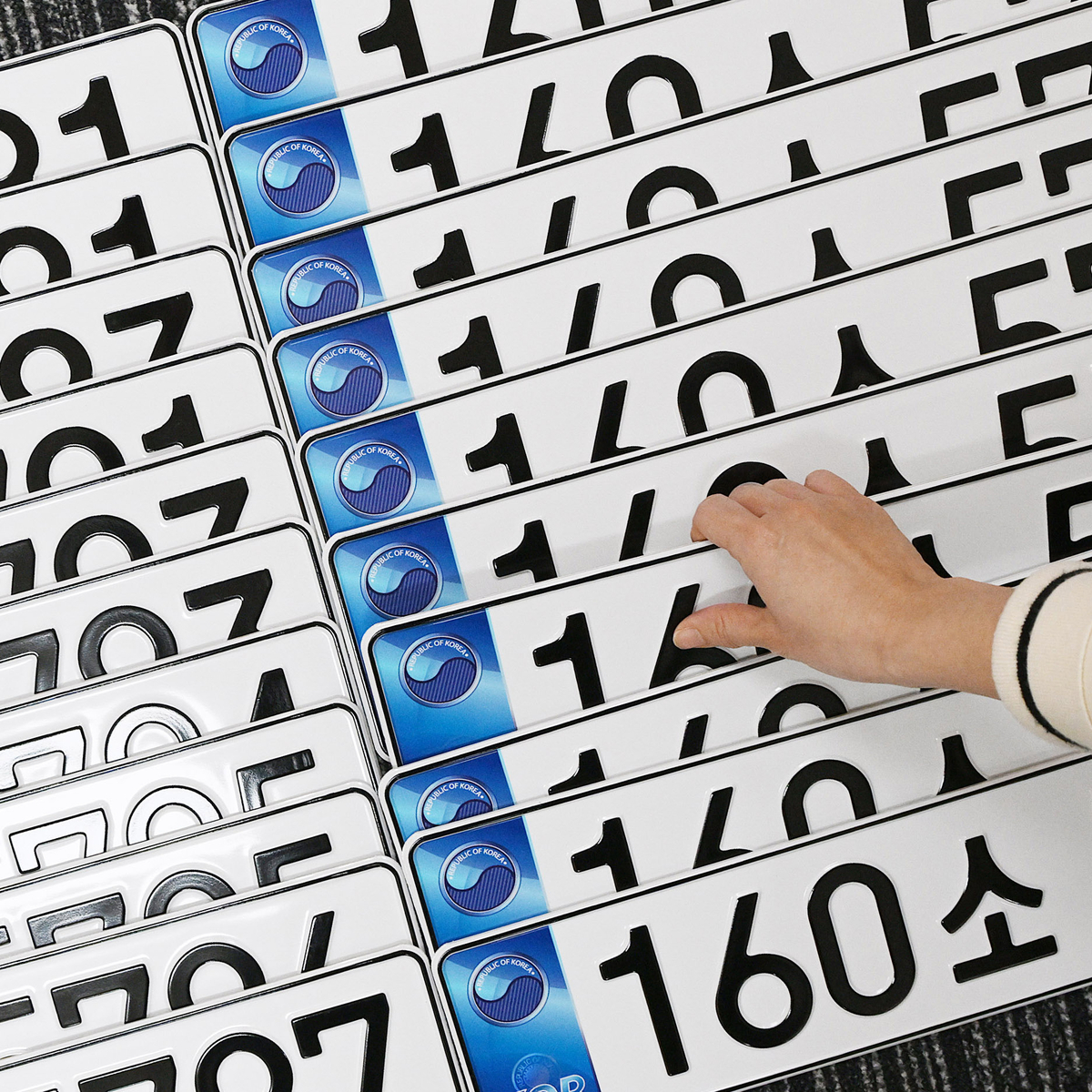
As restrictions based on plate end digits spread, demand for plate changes has risen, particularly among multi-car households.
The government and Seoul City said on the 7th that starting the 8th, public agencies will enforce an odd-even system for passenger cars, while public parking lots run by government agencies will apply a weekday five-day rotation. Seoul will implement the five-day rotation at 75 city-operated parking facilities. Corporations including Samsung and LG have also adopted five-day rotations for corporate fleets to support the government’s energy-saving measures.
The five-day rotation restricts driving by the plate’s final digit: Monday blocks plates ending in 1 and 6; Tuesday blocks 2 and 7; Wednesday blocks 3 and 8; Thursday blocks 4 and 9; and Friday blocks 5 and 0. Saturdays, Sundays and public holidays are exempt. The odd-even system is stricter, alternating daily between plates that end in odd and even numbers.
Local governments report more inquiries about plate changes. Gangseo District in Seoul says plate-change requests rose about 30% after the public sector introduced the five-day rotation. Songpa District receives two to three related calls daily. A Gangseo official said demand has increased as people proactively change plates to prepare for potential future measures, noting seven plate changes were processed in a single day.
Online, posts asking how to change plates have surged. On one forum, a user asked whether four company cars that all end in even digits could be changed to odd numbers.
Changing a license plate is not illegal. Under current rules, a plate change is allowed in certain cases: when both vehicles in a two-car household have the same odd/even ending; in cases of lost or stolen plates; after an address change; or when a buyer requests a change during transfer registration.
Critics warn that a spike in plate-change requests could undermine the effectiveness of the driving restrictions. To encourage public transit use, Seoul will reimburse Climate Companion Card users 30,000 KRW (about $22.50) per month for three months starting this month. A Seoul official said, “We will continue to develop support measures to encourage voluntary citizen participation.”