● Enters P1 phase... 2027 Avante appears production-ready
● Exterior and interior now mirror higher-end models... class boundaries are blurring
● HYBE-focused strategy... structural shifts under way to counter Chinese rivals
Hello.
I'm Yuniji of Yuka Post, an automotive influencer.
A 2027 Avante prototype undergoing full-change tests has been spotted. Even under heavy camouflage, the car’s revised exterior and the direction of the interior redesign are clear.
Is the 2027 Avante a routine generational update, or a reset of expectations for compact sedans? The P1 test vehicle sighted in Korea offers a key clue: it’s close to production form and therefore reveals the likely direction of the final model.
Notably, the design language and interior architecture echo the larger Grandeur, suggesting Hyundai is deliberately narrowing the gap between segments. Whether this is merely a product upgrade or a shift that reshapes the sedan market remains to be seen.
What P1 means... almost a finished car
The 2027 Avante we photographed is not an early development mule; it has moved into the P1 phase. P1 prototypes are built using production parts and processes, so their structure closely matches the retail model.
P1 focuses on validating manufacturing processes and debugging software; engineers then refine the vehicle through P2 and P3. In short, the car’s current appearance likely reflects the production Avante’s direction.
Spotting a P1 test car typically signals that a full redesign is imminent, and a domestic launch in the second half of 2026 is now a strong possibility.
Design changes... why some say it resembles the Grandeur
The most noticeable change is at the front end. Hyundai appears to be moving away from the split headlamp layout toward an integrated treatment that links the grille and lighting into a single composition.
The prominent H-shaped light bar and the horizontal-centered face mirror the direction Hyundai used on the recent Grandeur. That front fascia reads as an upmarket move that crosses traditional class lines.
Along the profile, thicker C-pillars and balanced proportions create a retro-tinged silhouette that reinforces the Grandeur-like impression.
The rear adopts a more sculpted H-style taillamp layout that visually broadens the stance. Overall, the Avante is shifting from a sporty emphasis toward a more premium presentation.
Interior changes... bringing the Grandeur and Tucson experience downmarket
The cabin is the biggest change.
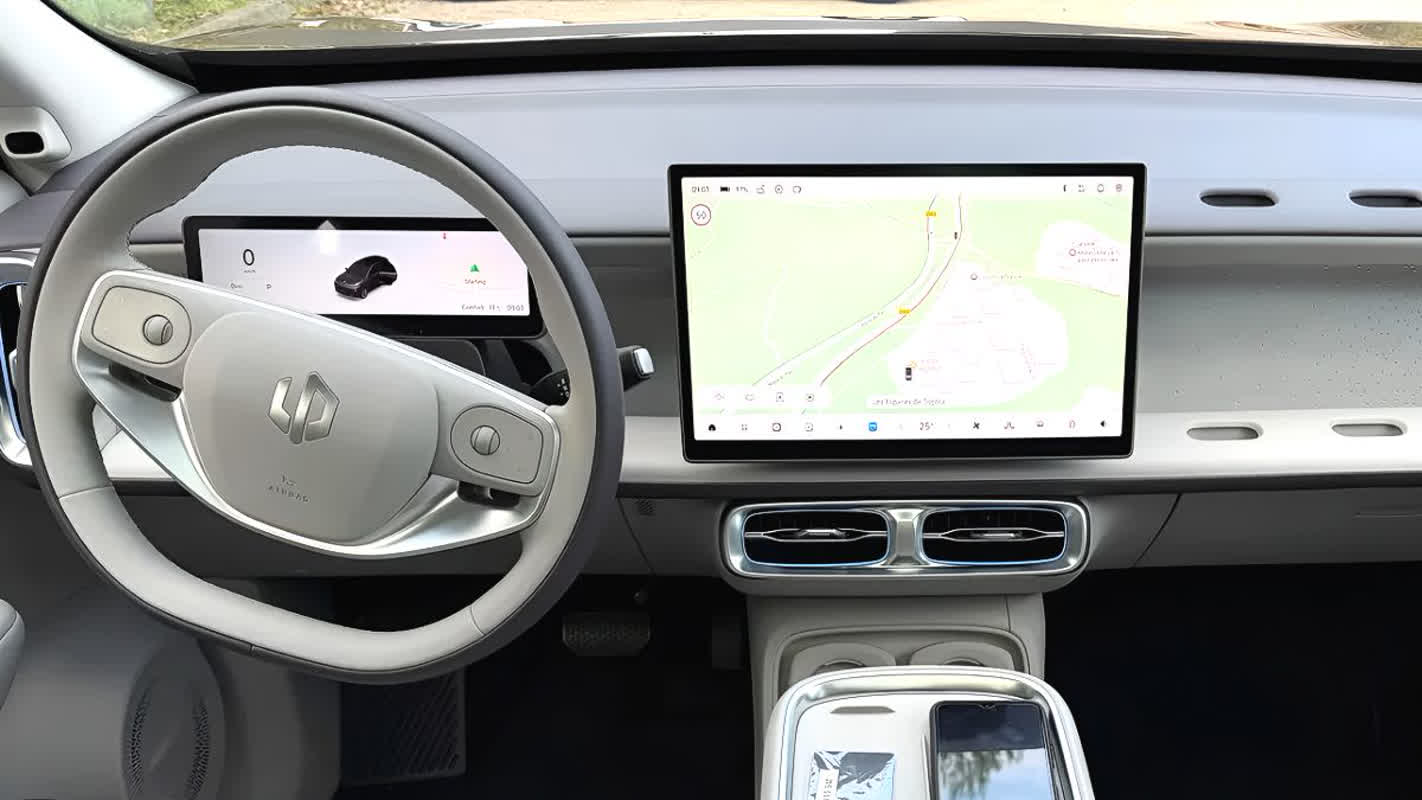
Hyundai appears to abandon the previous curved display in favor of a dual-screen arrangement: a 9.9-inch instrument cluster paired with a 17-inch central display.
The vehicle will run a PleoS OS-based infotainment system on an Android platform, supporting a broad array of apps and functions. With Gleo AI voice assistant onboard, driver interaction is expected to feel markedly more natural and capable.
This UX approach extends the systems Hyundai has been testing in the new Grandeur and Tucson. In practice, although the Avante occupies a lower segment, the user experience will come much closer to those higher-end models.
Powertrain... reorganized around HYBE
The 2027 Avante reflects Hyundai’s HYBE-centered strategy.
The base 1.6-liter gasoline engine and the 2.0-liter turbo used in the sportier Avante N will remain, but the focal point is an improved HYBE system. Hyundai has boosted both fuel economy and output and aims to deliver a driving feel that approaches EV-like smoothness. Expect a HYBE-specific 6-speed transmission and SmartSense-enabled Level 2.5 driver assistance features.
Changing competitive landscape... pursuing both segment expansion and Chinese rivals
The Avante’s full redesign is more than a local compact-sedan refresh; it’s a strategic response to global market shifts.
Where competition historically focused on sedans within a narrow segment, the new Avante elevates design and cabin experience to near-Sonata and Grandeur levels, effectively widening the segment benchmark.
Strengthening the PleoS OS-based UX addresses an area where Chinese EV brands have excelled: software-driven user experience. The fight is shifting from hardware alone to the overall customer experience.
Domestically, the Avante’s upgrades could blur the lines with the Grandeur and K8. The model may retain its price and class, but the perceived experience will feel closer to those larger cars.
Editor’s note
Seeing the recently revealed Avante full redesign brought one thought to mind.
Are traditional vehicle segments—those familiar class labels—losing their relevance?
A compact sedan that delivers an experience close to that of a near-luxury car.
Will this shift alter how consumers choose cars, or will price and size continue to dominate decisions?
We’ll be watching market trends closely. Please leave your valuable opinions in the comments.1