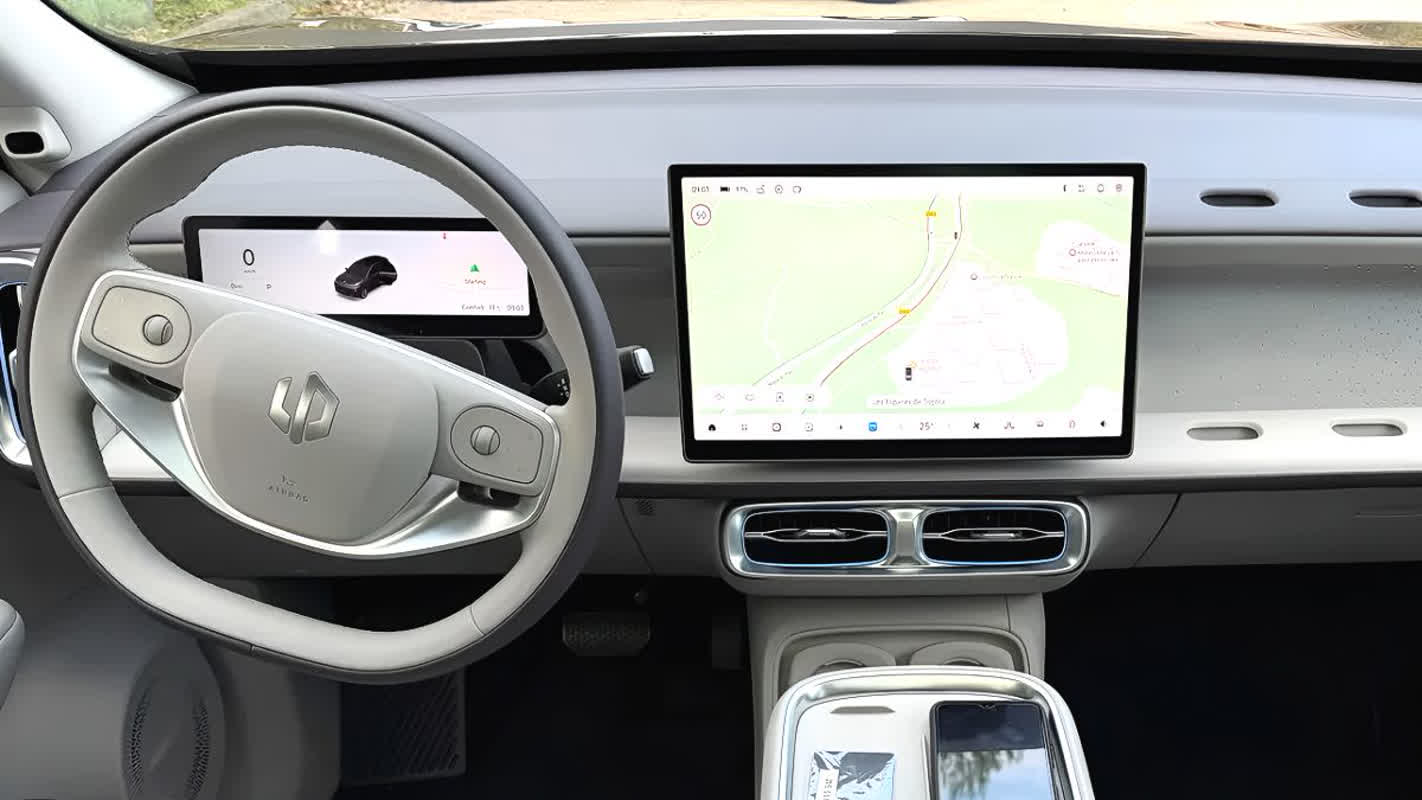
A crossover wave is sweeping the domestic auto market. Crossovers combine the comfort of a sedan with the versatility of a sport utility vehicle (SUV).
Renault Korea launched the upper mid-size crossover Philant to meet that demand.
The Philant comes with a 250-horsepower hybrid E‑Tech powertrain and AI-based advanced connectivity services.
We test-drove the Philant in Gyeongju.
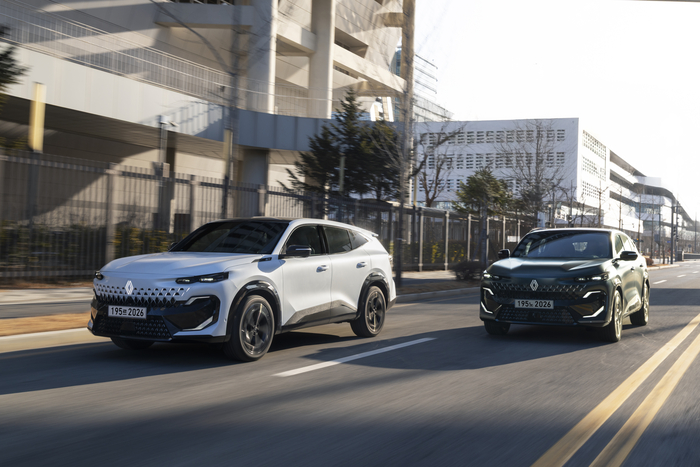
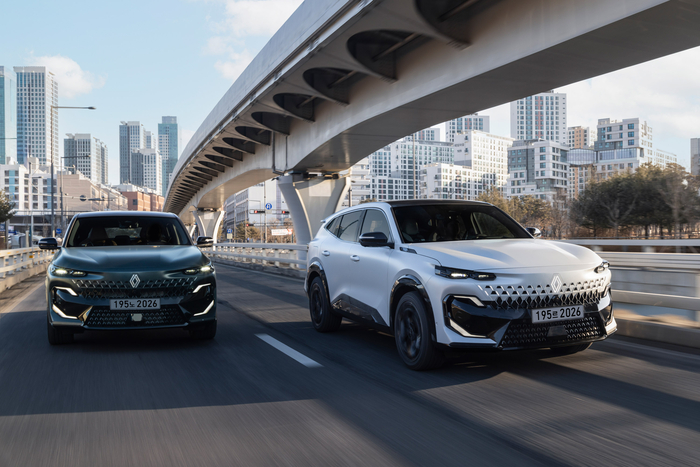
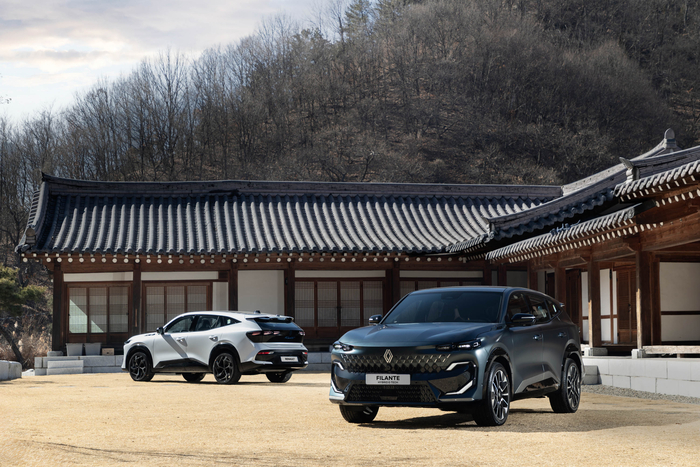
The Philant’s exterior emphasizes smooth surfaces. Straight edges and curves are balanced to create a sculpted, voluminous body, highlighted by Renault’s lozenge emblem and sharper LED daytime running lights. The vehicle measures 4,915 mm (193.5 in) in length, 1,890 mm (74.4 in) in width and 1,635 mm (64.4 in) in height, giving the upper mid-size crossover a roomy footprint.
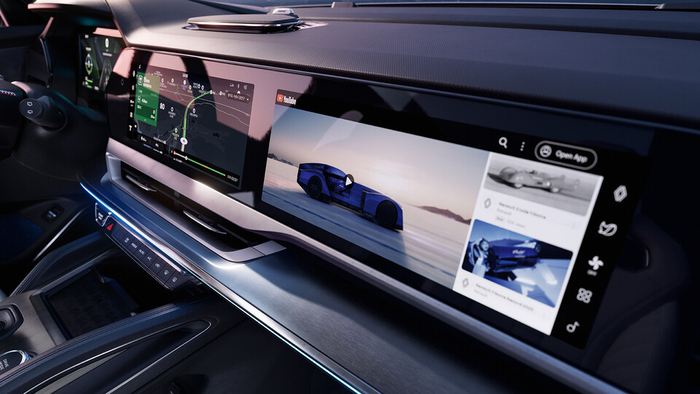
The cabin adopts a horizontal layout anchored by a long openR panorama screen and a user-friendly four-spoke steering wheel. Three linked 12.3-inch displays form the openR panorama screen, delivering an immersive experience across the front row.
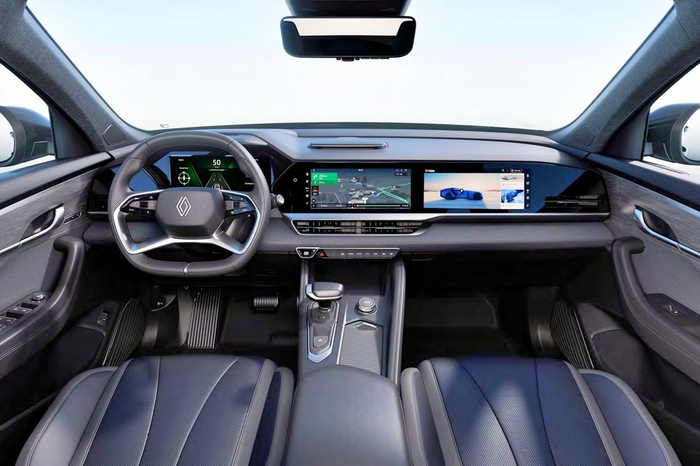
The drive-linked racing game \"R Racing,\" played on the openR panorama screen, helps turn the car into a rolling entertainment space rather than just a means of transport.
A fixed panoramic glass roof opens the cabin visually. A 180 cm (5 ft 11 in) adult seated in the second row still has roughly a fist’s worth of clearance between head and roof. The trunk holds 633 liters (22.3 cu ft), enough room for a stroller or golf bags.
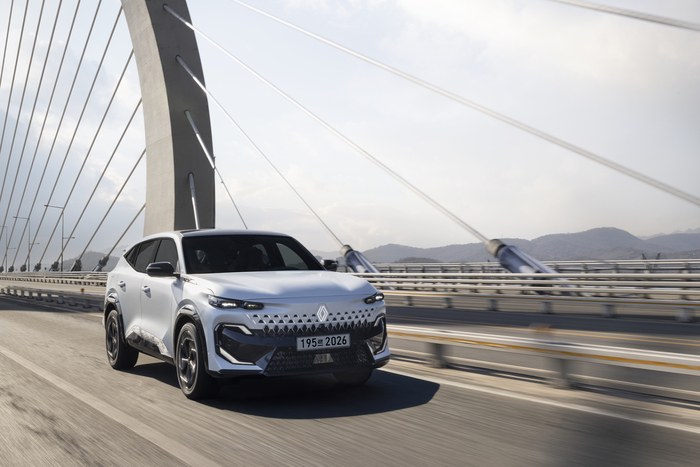
The Philant pairs a 1.5-liter turbocharged gasoline engine with a responsive 100 kW electric motor to produce a combined 250 hp and 250 N·m (184 lb‑ft) of torque. After a 140 km (87 mi) drive, we recorded an average fuel economy of 14.5 km/L (about 34.1 mpg US), underlining the model’s competitiveness for an upper mid-size vehicle with a curb weight of roughly 1.8 tonnes (≈ 3,968 lb).
The most significant improvement is in noise, vibration and harshness (NVH). Renault Korea didn’t just thicken the glass roof to reduce vibration and noise; engineers also added frequency-responsive dampers and other measures to quiet the cabin. Those dampers classify road vibrations into three levels and attenuate them accordingly.
Where the Grand Koleos used a single damper, the Philant adds responsive dampers to deliver ride comfort closer to that of a premium sedan. The dual-layer acoustic glass fitted to the first and second rows is another notable upgrade.
The Philant features the large-language-model–based AI voice assistant A.Dot Auto. It analyzes driving patterns, recommends destinations and supports natural voice conversations. Say \"Hi Renault\" to start a conversation; the assistant handled weather checks and destination suggestions smoothly during our drive.
Driving modes include Eco, Comfort, Sport and Snow. The AI observes driver behavior for 10 minutes and then recommends the optimal mode. In Sport mode the steering felt firmer with minimal body roll, and the car accelerated more briskly. After that run, the trip computer showed 13.3 km/L (about 31.3 mpg US), below the official combined rating of 15.1 km/L (about 35.5 mpg US).
The Philant is offered in four trims. Prices after eco-car tax benefits are: △Techno: 43,310,000 KRW (≈ $32,483) △Iconic: 46,960,000 KRW (≈ $35,220) △Esprit Alpin: 49,710,000 KRW (≈ $37,283) △Esprit Alpin 1955: 52,180,000 KRW (≈ $39,135).
Renault Korea says it will use the Philant to build on the Grand Koleos’ sales momentum. Last month the company sold 3,893 units in total—2,000 domestically and 1,893 exported. The Grand Koleos accounted for 1,471 units, led by its hybrid trim.
Nicolas Pari, president of Renault Korea, said, \"The Philant was born in France and is built in Korea — Born in France, Built in Korea. It perfectly combines the comfort of a sedan with the versatility of an SUV and best represents Renault’s future vision.\"
He added, \"We will continue to introduce a variety of new models for domestic customers and aim to exceed Korean buyers’ expectations.\"
Jiwoong Kim jw0316@etnews.com