● Sleek design and upgraded safety features — a product refresh after four years
● Combined fuel economy 20.2 km/L (about 47.5 mpg) — hybrid SUV with smart regenerative braking and Stay Mode
● OTA, AI voice recognition, 10 airbags — user experience that exceeds the compact‑SUV class
Hello.
I'm Yunji (Yuka Post), an automotive influencer.
How far have fuel economy and practicality advanced in South Korea’s eco‑SUV segment? As buyers weigh hybrids against full EVs, Kia has revealed the refreshed Niro, signaling another shift in the efficiency‑focused SUV market. The New Niro is the first meaningful update since the second‑generation 2022 model, sharpening the design and adding modern convenience and safety technologies.
Kia boosted the Niro’s competitiveness by maintaining a high combined fuel economy of 20.2 km/L while integrating advanced connectivity and ADAS. With steady sales in the eco‑SUV market, this refresh will test how the Niro repositions itself among hybrid SUVs.
Design changes amplify the 'Opposites United' theme
The New Niro refines Kia’s Opposites United design language and tightens its exterior execution. The front end adopts the Star Map signature DRL, reflecting the brand’s latest styling cues. The lamp graphics emphasize horizontal and vertical lines for a cleaner, more modern face, while a more sculpted front bumper and lower grille reinforce the SUV’s solid stance.
Along the side, a flowing roofline and restrained character lines create a polished silhouette. The rear features a long horizontal character line centered on the tailgate and diagonal LED rear‑combination graphics that widen the car’s visual presence. Exterior colors are offered in seven finishes, including a new Ivory Silver.
Interior shifts to a digital‑first layout
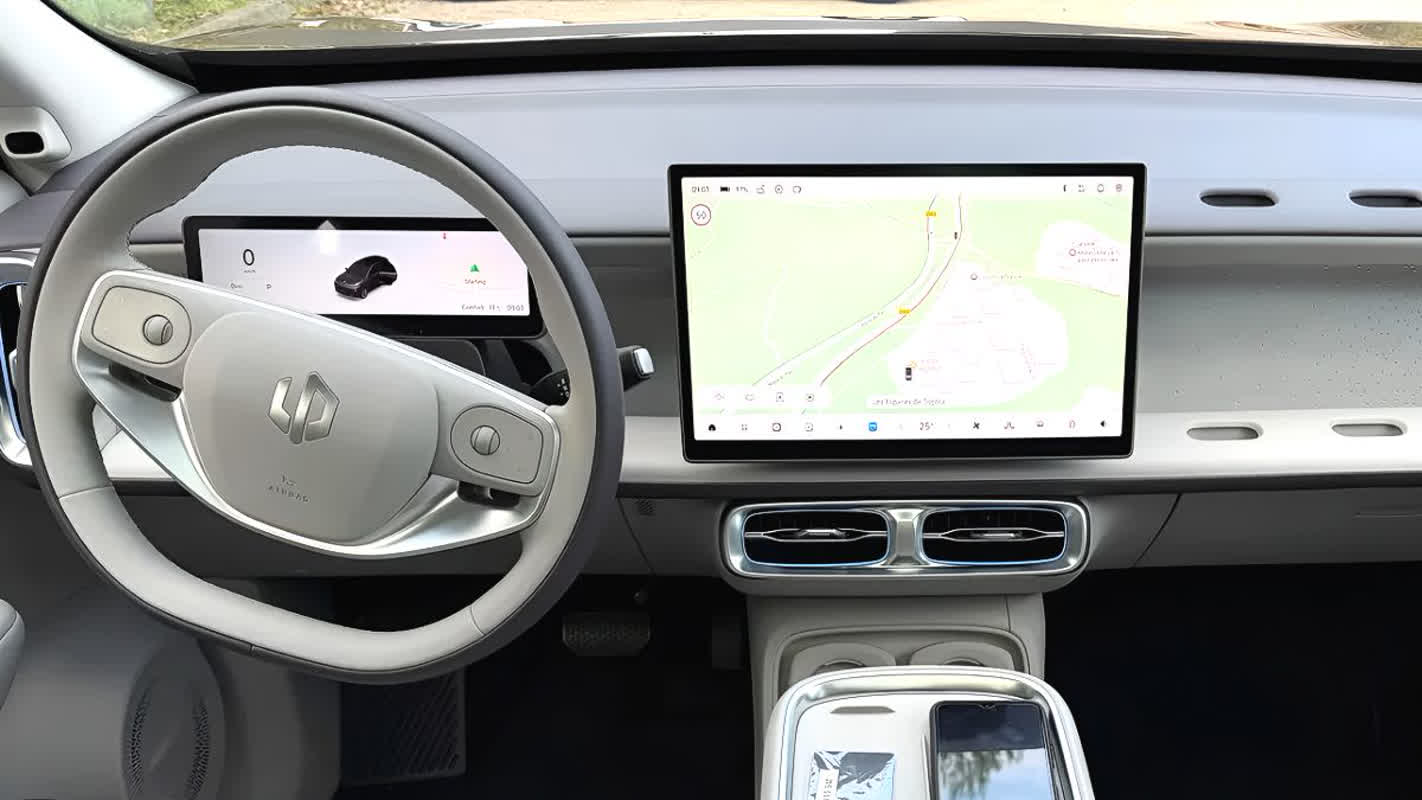
The cabin emphasizes openness with a broad, horizontal layout. The headline change is a panoramic curved display that links a 12.3‑inch driver cluster with a 12.3‑inch infotainment screen, creating a clean, digital‑centric dash. A double D‑cut two‑tone steering wheel, a new crash‑pad pattern and refined floor‑console garnish improve perceived quality.
The driver’s seat gets Relaxation Comfort seating to reduce fatigue on long drives. The front passenger benefits from an Easy Access feature to aid entry and exit, and rear passengers can use a walk‑in device. The second row offers reclining seats with fine angle adjustment, and both rows deliver class‑leading legroom and headroom, reinforcing the Niro’s family‑friendly practicality.
Hybrid powertrain with an efficiency‑first focus
The New Niro retains the 1.6L gasoline hybrid system from the previous model. Peak system output is 141 hp with 27.0 kg·m (about 195 lb‑ft) of torque, and combined fuel economy is 20.2 km/L (about 47.5 mpg) on 16‑inch wheels. That keeps the Niro among the most efficient entries in the compact‑SUV segment. Kia also enhanced several hybrid‑specific features on this update.
The smart regenerative‑braking system automatically adjusts regeneration by analyzing not only the distance to the vehicle ahead but also navigation data and driving conditions. A hierarchical predictive control system evaluates the route to the destination to optimize battery use and improve real‑world efficiency. Kia also adds Stay Mode, which lets occupants use climate control and multimedia while stopped without restarting the engine — a handy feature for car camping or waiting in the vehicle.
Expanded connectivity and safety technology
Kia equipped the New Niro with a broad set of modern connectivity features. The ccNC‑based infotainment supports OTA software updates, and customers can purchase or subscribe to digital services via the Kia Connect store. Natural‑language AI voice control through the Kia AI Assistant improves hands‑free operation of vehicle functions.
Safety equipment is significantly upgraded. The Niro comes with 10 airbags and a comprehensive ADAS suite that includes Highway Driving Assist 2, Lane Keeping Assist 2, Forward Collision‑Avoidance Assist, Blind‑Spot Collision‑Avoidance Assist, and a Surround View Monitor. Kia also added steering‑grip detection to more reliably confirm driver engagement during semi‑autonomous driving.
Prices start in the 20‑million KRW range (approximately $15,000) — could this shift the market?
With eco‑vehicle tax incentives applied, Kia prices the New Niro as follows: Trendy — 28.85 million KRW (≈ $21,638), Prestige — 31.95 million KRW (≈ $23,963), and Signature — 34.64 million KRW (≈ $25,980). These price points are competitive within the hybrid‑SUV segment. Kia also offers a range of financing programs; for example, a residual‑value deferral plan can lower monthly payments to roughly 110,000 KRW (≈ $83).
The compact hybrid‑SUV segment already includes rivals such as the Hyundai Kona hybrid, Renault Arkana hybrid and the newly updated Seltos hybrid.
Still, the Niro has long held advantages in fuel economy, efficient packaging and price competitiveness. As EV adoption grows, the Niro remains an attractive proposition for buyers seeking lower purchase costs than EVs while retaining strong fuel efficiency in a hybrid SUV.
Editor’s note
EV sales are climbing, but many buyers still prioritize practicality — and hybrids remain a pragmatic choice. The New Niro favors balanced gains in economy, utility and tech over flashy redesigns. Its fuel economy above 20 km/L combined with a starting price in the low‑tens of millions of KRW keeps it competitively positioned. For shoppers weighing EVs against hybrids, the New Niro is a credible, real‑world alternative. Share your thoughts in the comments — we’ll be watching how it shapes the eco‑SUV market.