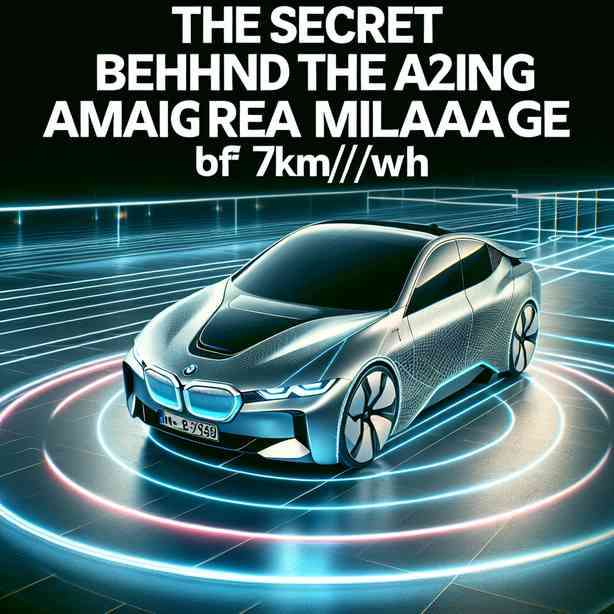
Real-world efficiency of the 2025 BMW i5 draws attention in the EV market: 7 km/kWh
As the electric-vehicle market expands, buyers are increasingly focused on real-world efficiency and usable range. The 2025 BMW i5 has turned heads by delivering roughly 7 km per kWh (≈ 4.35 miles/kWh) in everyday driving. In today’s market, an EV’s competitiveness depends as much on how efficiently it converts electricity to miles as on brand image, design and outright performance. At about 7 km/kWh, the i5 sits near the top of the premium electric-sedan segment and establishes a new benchmark for shoppers. A closer look shows BMW’s engineering — from battery chemistry to system-level controls — is responsible for squeezing more range out of each charge.
What 7 km/kWh means and how it compares to rivals
The 7 km/kWh figure means the i5 can travel roughly 7 kilometers on 1 kWh of energy (≈ 4.35 miles/kWh). That metric gives drivers a direct sense of efficiency. Many EVs average around 5–6 km/kWh (≈ 3.11–3.73 miles/kWh). For comparison, the Tesla Model S typically posts about 6–6.5 km/kWh (≈ 3.73–4.04 miles/kWh), and competitors such as the Mercedes‑Benz EQE and Audi e‑tron GT fall in a similar band. Reaching 7 km/kWh puts the i5 a step ahead on efficiency. Importantly, BMW’s figure reflects real-world testing across mixed conditions, not just lab cycles, which makes it a meaningful reference for everyday drivers.
Efficiency secret 1: evolved battery technology
Central to the i5’s efficiency is its battery architecture. BMW uses next‑generation lithium‑ion cells to raise energy density and durability. The pack is lighter and more space-efficient, which trims mass and optimizes weight distribution. BMW’s cell‑to‑pack approach reduces energy loss during module assembly, letting the same usable capacity deliver more miles. An advanced battery-management system monitors cell temperatures and voltages in real time to keep charge/discharge cycles at peak efficiency. Those advances in cell chemistry, packaging and software are the primary drivers behind the i5’s strong real‑world numbers.
Efficiency secret 2: optimized motor and drivetrain
Motor and drivetrain improvements also play a major role. BMW introduced a higher-efficiency electric motor that improves energy conversion by more than 5% over the previous generation while minimizing rare-earth content. The motor delivers robust power with low noise and vibration. A two‑speed transmission helps maintain efficiency at both low and highway speeds, and a refined thermal-management system prevents heat-related performance loss. By cutting drivetrain friction and boosting regenerative-braking effectiveness, BMW preserves more energy during typical driving, helping the i5 sustain roughly 7 km/kWh in real use.
Efficiency secret 3: aerodynamics and lightweighting
Aerodynamics and lightweight construction further enhance efficiency. BMW refined the front fascia, underbody, side mirrors and rear diffuser to achieve a drag coefficient (Cd) of about 0.23 — competitive for the segment. Lower drag reduces energy use at highway speeds. The car also uses aluminum, high‑strength steel and composites to lower curb weight. Lighter mass benefits battery efficiency, acceleration and braking performance. The combined effect of improved aerodynamics and targeted lightweighting helps the i5 reach its notable real‑world efficiency.
Efficiency secret 4: intelligent energy management
Another key factor is an intelligent energy-management system. BMW applies AI‑driven algorithms to adapt energy use to driving conditions, driver behavior, live traffic and route data. The system maximizes regenerative braking on descents and in stop‑and‑go traffic, and it balances motor and battery output during heavy acceleration or sustained high speed. It also monitors HVAC, infotainment and other electrical loads to reduce unnecessary draw. This automated approach lets the i5 hold close to 7 km/kWh in typical driving without constant driver intervention.
Reliability of the 7 km/kWh: tested across real driving conditions
The 7 km/kWh claim is based on repeated testing across realistic scenarios — varying temperatures, road types and driving styles. The i5 shows consistent efficiency in urban traffic, highway cruising, hilly terrain and both cold and hot environments. Owner reports and independent test drives commonly record figures near 7 km/kWh (≈ 4.35 miles/kWh). Extreme climates or aggressive driving will reduce efficiency, but in most everyday conditions the i5 delivers close to that mark, which strengthens credibility for prospective buyers.
Charging infrastructure and its relation to real‑world efficiency
Real-world efficiency depends on the vehicle and the charging ecosystem. The i5 supports ultra‑fast charging up to 350 kW (≈ 469 hp), allowing rapid replenishment without significant battery degradation. With high‑power DC fast chargers, a 10‑minute top‑up can add more than 70 km (≈ 43.5 miles) of range — enough to sustain long trips or unexpected errands. BMW is expanding partnerships with charging networks and building dedicated stations to improve access and convenience. Better infrastructure makes it easier for drivers to realize the i5’s efficiency benefits in daily use.
What 7 km/kWh means for the environment
Higher efficiency translates into lower lifecycle emissions. Traveling more kilometers per unit of energy reduces total CO2 output over a vehicle’s life, though an EV’s carbon footprint still depends on the electricity mix. Improving system‑level efficiency amplifies the environmental gains of electrification. BMW also applies green practices across the i5’s lifecycle, using renewable energy in production and recycled materials where feasible. In that context, the 7 km/kWh figure positions the i5 as a more sustainable option within the premium segment.
Operating cost savings and the real economic impact of 7 km/kWh
The i5’s real‑world efficiency delivers measurable savings. Using an example electricity price of ₩200 (≈ $0.15 USD) per kWh, the energy cost comes to about ₩28.5 (≈ $0.02 USD) per km. By comparison, a similar internal‑combustion vehicle might cost around ₩120 (≈ $0.09 USD) per km in fuel. That gap could save roughly ₩1,830,000 (≈ $1,372.50 USD) over 20,000 km (≈ 12,427 miles) annually. EVs also require fewer routine fluid changes, and regenerative braking reduces brake wear, further lowering maintenance costs. Taken together, the 7 km/kWh figure represents tangible economic value for owners.
The future value of the i5’s 7 km/kWh
As battery chemistry, power electronics, grid capacity and charging networks improve, real‑world efficiency benchmarks can rise further. BMW is already developing next‑generation cells, motors and AI energy management to drive those gains. The i5’s real‑world performance is more than a model‑level achievement — it points to a wider shift in the EV market toward higher practical efficiency and lower operating costs.
Why buyers care: the 2025 BMW i5’s 7 km/kWh as a decision factor
For buyers, the i5’s 7 km/kWh figure is a clear, objective comparator when evaluating EVs. The car pairs strong performance, a premium interior and advanced driver aids with high energy efficiency, appealing to drivers who want luxury without sacrificing economy. Achieving 7 km/kWh adds credibility, reduces operating cost and supports sustainability claims, helping the i5 stand out among premium EV choices. That number will likely remain an important yardstick for shoppers.
The 2025 BMW i5’s 7 km/kWh: a new EV standard
The EV market is evolving around efficiency, performance and sustainability. By delivering about 7 km/kWh (≈ 4.35 miles/kWh) in real driving, the 2025 BMW i5 advances that evolution. Improvements in batteries, motors, aerodynamics, lightweighting and system-level energy management combine to create efficiency drivers can actually feel. The i5’s real‑world figure is more than a spec sheet metric — it signals a new standard for economy, sustainability and reliability in electric vehicles. For anyone weighing an EV, the i5’s efficiency will be a major factor, and its importance is likely to grow as the market matures.