As the U.S. and Israel enter the one-month mark since strikes on Iran began, reporting indicates billions of dollars in military equipment have been damaged and many U.S. bases across the Middle East have become largely uninhabitable. Analysts warn weapons stocks may not last another month.
On the 26th (local time), the Wall Street Journal reported that Elaine McCusker, a former senior Department of Defense official and now a senior fellow at the American Enterprise Institute (AEI), estimated combat damage and recovery costs for the first three weeks of the conflict at $1.4 billion (approximately 1.87 trillion KRW) to $2.9 billion (approximately 3.87 trillion KRW).
McCusker served as the Pentagon’s senior finance official during the first Trump administration and previously led resource analysis for U.S. Central Command (USCENTCOM).
The Journal said most damaged systems are high‑tech military platforms and that Iran’s ballistic missiles and drones inflicted much of the damage. It added that radar systems at U.S. bases in Qatar were also hit.
The Journal noted the Pentagon has identified weapons and equipment likely to require replacement in a roughly $200 billion supplemental budget request to the White House (approximately 266.67 trillion KRW), and it suggested the three F‑15 fighters shot down on the 1st could be on that list. Each F‑15 costs roughly $100 million.
On the 12th, a KC‑135 aerial refueling tanker crashed, killing six crew members. Iran’s missile strike on Saudi Arabia’s Prince Sultan Air Base damaged five additional KC‑135s, which are now undergoing repairs. Boeing stopped producing the KC‑135 decades ago, so the aircraft are likely to be replaced by KC‑46 Pegasus tankers, each costing about $165 million.
The Journal reported that more than a dozen MQ‑9 Reaper drones have been lost since the conflict began. Iran shot down at least eight with missiles; three were destroyed on the ground by strikes, and one was lost to friendly fire. The paper said each MQ‑9 costs at least $16 million, and with MQ‑9 production ended, replacements will likely be MQ‑9B SkyGuardian drones, which sell for roughly $30 million apiece.
Iran also attacked an AN/TPY‑2 radar that forms part of Jordan’s THAAD missile defense system; the Journal said that radar costs at least $300 million. It added that the AN/FPS‑132 early‑warning radar at Al Udeid Air Base in Qatar can track multiple targets simultaneously and costs about $1 billion.
The situation at U.S. bases in the Middle East is deteriorating. The New York Times reported that sustained strikes have left many of the 13 U.S. bases in Kuwait, Bahrain, Qatar, Saudi Arabia and the United Arab Emirates largely uninhabitable.
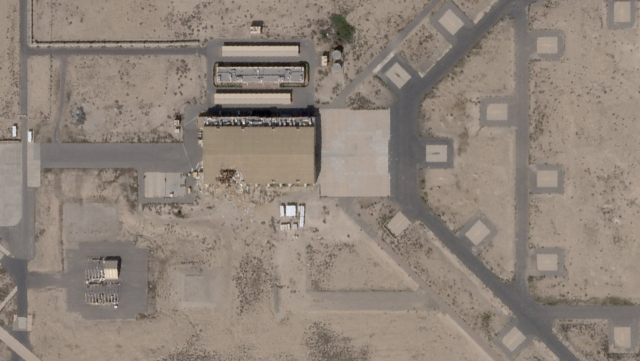
The Telegraph cited analysis from IISS senior fellow Fabian Hinz, reporting that Iran attacked 104 U.S. bases and nearby sites. Ali Al Salem in Kuwait received the most strikes (23), while Arifjan and Buwaib sustained 17 and six strikes, respectively.
Satellite images of the three bases show damaged hangars, communications infrastructure, satellite equipment and fuel storage. After the attack on Ali Al Salem on the 25th, even large warehouses were destroyed.
Satellite imagery also shows hangars reduced to rubble at Saudi Arabia’s Prince Sultan Air Base, and antennas and satellite facilities destroyed at Al Udeid, the largest U.S. base in the region. At the UAE’s Al Dhafra Air Base, images show a large hole in a building believed to house personnel and an unusually wide blast radius.
The reporting said Iran’s strikes forced U.S. forces to withdraw from multiple regional bases. U.S. personnel are now working out of nearby hotels and office buildings, creating safety risks for both military members and civilians.
Iran has even threatened U.S. service members staying in hotels. On the 26th, Iranian Foreign Minister Abbas Araghchi posted on his account on platform X: "Since the war began, U.S. soldiers have fled Gulf Cooperation Council (GCC) countries' military bases and are hiding in hotels and offices. They are using GCC citizens as human shields."
He warned, "U.S. hotels are refusing reservations from U.S. military officers because they could endanger guests. GCC hotels should do the same."
Observers have also raised alarms about U.S. weapon stockpiles. The Journal cited a Royal United Services Institute (RUSI) report that found the U.S. has expended substantial ordnance over the past month.
RUSI said U.S. forces used more than 11,000 munitions in the first 16 days of the conflict, at a cost of about $26 billion (approximately 34.67 trillion KRW). Specifically, inventories of defensive systems fell rapidly: 198 THAAD interceptors, 431 other surface‑to‑air missiles, and 402 Patriot missiles were expended.
The institute warned that if current consumption continues, key weapons stocks could be depleted within a month, leaving U.S. air defenses in the region, in Europe and elsewhere effectively bare.