![12일 서울 여의도 국회의원회관에서 국회 문화체육관광위원회 소속 정연욱 국민의힘 의원, 조계원 더불어민주당 의원 공동 주최로 \'K-푸드, Global-푸드의 중심에 서다 : 2026 한국 음식관광 활성화 정책토론회\'가 개최됐다. [사진=강상헌 기자]](https://contents-cdn.viewus.co.kr/image/2026/03/CP-2023-0070/image-9317bb4f-6232-4b48-8dc1-2189a8ad035b.jpeg)
On March 12, Rep. Jung Yeon-wook of the People Power Party and Rep. Jo Gye-won of the Democratic Party co-hosted the policy forum “K-Food: At the Center of Global Food — 2026 Strategy to Promote Korean Food Tourism” at the National Assembly Members’ Office Building in Yeouido, Seoul. The Ministry of Culture, Sports and Tourism and the Korea Tourism Organization co-organized the event, bringing together academics, industry leaders and government officials to map out practical strategies for Korean food tourism.
In his opening remarks, Rep. Jo stressed food tourism’s growing importance. “Food is no longer a travel add-on — it’s a reason people travel and what brings them back,” he said. “K-food is more than just cuisine; it’s a cultural industry that has become a major national brand introducing Korea to the world.”
Rep. Jung echoed that view, saying K-food should no longer be measured only by export growth. “It needs to serve as compelling tourism content that attracts international visitors. If regional K-foods are developed into tourism products, they can make a real contribution to local economies.”
Park Sung-hyuk, president of the Korea Tourism Organization, called K-food “one of the most powerful K-content experiences that captivates the world’s senses.” He added, “Food is one of the magic keys to reaching the era of 30 million inbound visitors sooner. To maximize this advantage and help Korea become a global culinary destination, the National Assembly, industry and local governments must work closely together.”
The forum split into expert presentations and a roundtable discussion. Presenters laid out concrete strategies to elevate K-food tourism. Kwon Jang-wook, a professor at Dongseo University, argued that food tourism must move beyond one-off events and restaurant-focused promotion. He said the goal should be a sustainable culinary ecosystem linking producers, ingredients, communication and communities. Approaching this as a business model that combines experiences, distribution and sales will help prevent price gouging and quality decline.
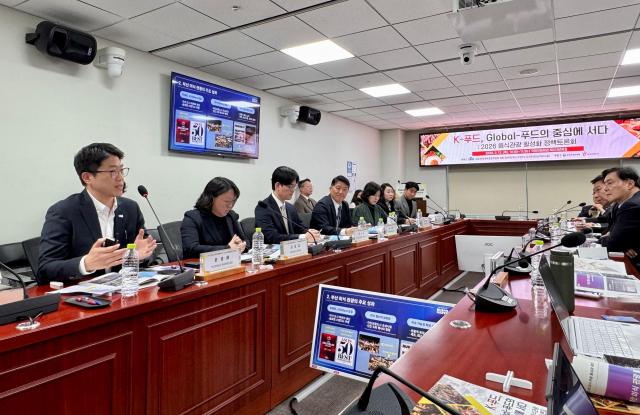
The panel discussion, chaired by Kyung Hee University Professor Lee Kyu-min, raised practical concerns and concrete proposals from the field. Choi Ji-ah, CEO of OnGo Food Communication, noted that as tourists stay longer they expect culinary content beyond famous restaurants, but Korea still lacks the frameworks to support this demand. She called for training regional culinary experts who can craft and promote the stories of local artisans.
Park So-yeon, manager of CJ CheilJedang’s Hansik245 team, said the food industry is shifting from a product-focused model to a people-and-experience-first “2.0” strategy. She proposed government-backed international exchange programs so world-renowned chefs can experience Korean ingredients and return as ambassadors.
Lee Tae-ho, head of Kay-Account at CatchTable, also highlighted tourists’ appetite for hands-on experiences. “Travelers enjoy mixing bibimbap, grilling meat at the table and wrapping their own ssam,” he said. “Platforms that re-curate everyday dining moments into new, curated experiences will be important.”
Officials also raised practical funding issues for national and local governments. Moon Young-bae, head of tourism content at the Busan Tourism Organization, warned that local budgets alone can’t sustain long-term culinary tourism projects. He urged the creation of competitive grant programs that the central government can match, similar to initiatives for night-tourism cities.
In response, Kim Na-na, director of Convergent Tourism at the Ministry of Culture, Sports and Tourism, said the key is creating high added value by linking experiences to K-culture and lengthening regional stays. She confirmed the ministry will continue supporting initiatives this year, including the “K-Food Road” project that helps local governments develop food-culture streets.