SisaWeek — Reporter Kim Ji-young As decaf becomes a standard option, fully caffeine-free alternative coffees are starting to steal the spotlight.
With wellness-first living fueling a \"healthy pleasure\" vibe, decaf is now easy to find at most cafés. But decaf—made by removing the bulk of caffeine from green beans before roasting—still contains some caffeine. That means people can still experience side effects like sleeplessness or heart palpitations after drinking it. Those concerns are helping drive interest in truly caffeine-free alternatives.
According to the Korea Customs Service and the Korea Origin Information Service, the global alternative-coffee market was about 3.49 trillion KRW in 2022 (about 2.7 billion USD) and, at an annual growth rate of 8.9%, is projected to reach roughly 6.85 trillion KRW by 2030 (about 5.3 billion USD).
◇ Chicory coffee even Napoleon drank — and why it's greener
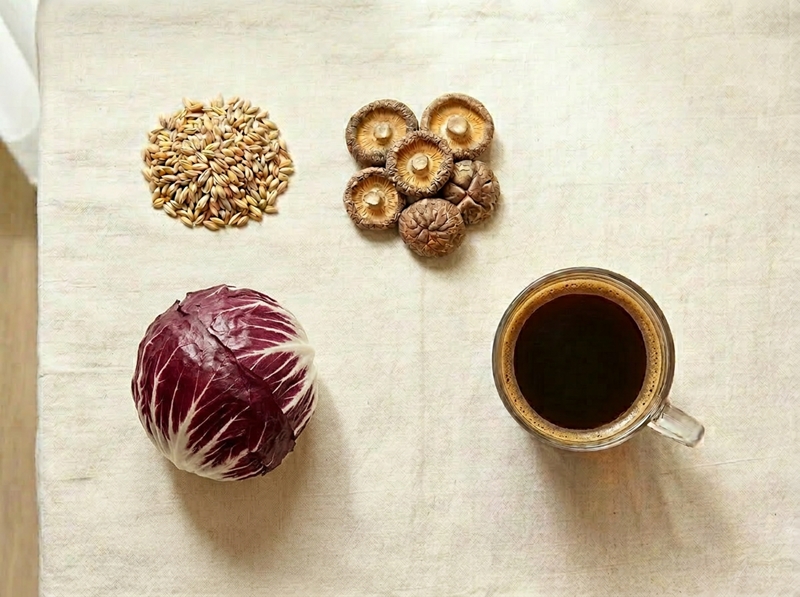
The roots of alternative coffee go back around 200 years. In the early 19th century, Napoleon’s 1806 continental blockade cut off France’s coffee bean imports from Britain. To replace coffee, people roasted and brewed chicory root—what we now recognize as an early form of alternative coffee. Today, chicory joins barley (orzo), dandelion root and other plants as common bases for beanless brews.
Because alternative coffee doesn’t use coffee beans, it’s often called \"beanless coffee,\" and its environmental footprint can be smaller than that of traditional coffee. To maximize profits, coffee farms have cleared other trees in tropical forests to plant more coffee trees. Climate studies also warn that rising global temperatures could shrink suitable coffee-growing areas by more than half by 2050.
The coffee industry is already feeling the strain. After Vietnam’s 2023 drought and Brazil’s severe droughts and heavy rains in 2024—Brazil is the world’s top coffee producer—green-bean prices spiked the following year. According to the Korea Agro-Fisheries & Food Trade Corporation (aT), arabica and robusta green-bean prices that were $4,152 and $3,134 per metric ton in February 2024 rose to $8,397 and $5,534 per metric ton by February 2025—year-over-year increases of about 102% and 77%, respectively.
◇ Alternative coffee moves from specialty brands into café menus
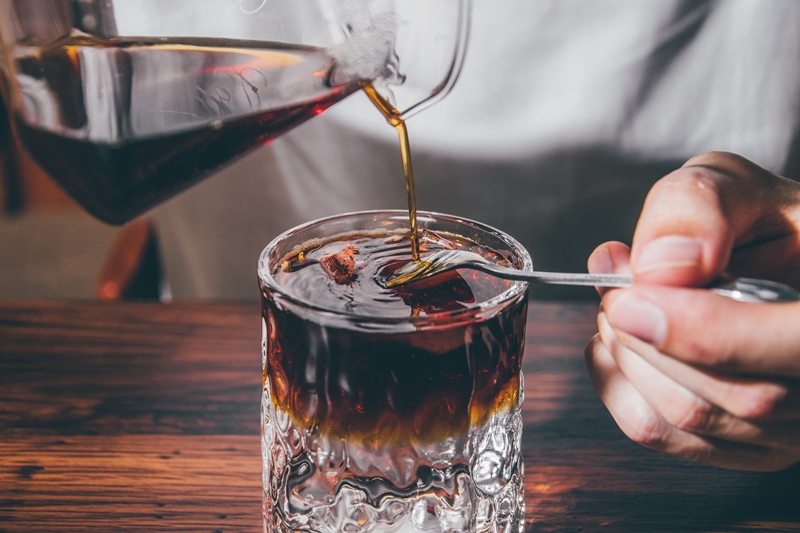
Climate extremes like Brazil’s multi-year drought are expected to become more frequent, keeping bean supplies unstable and prices elevated. Just as in early-19th-century France, consumers' thirst for a coffee-like experience may simply move toward substitutes.
Euromonitor reports that South Korea’s per-capita coffee consumption was 405 cups in 2023—about 2.7 times the global average of 152 cups—suggesting strong potential for alternative-coffee growth at home.
Reflecting that opportunity, SANS, an alternative-coffee brand launched in 2023, began serving its products at a flagship store and pop-ups in Ikseon-dong, Jongno-gu, Seoul, in 2024. SANS uses ingredients like date-palm seeds, barley and chicory root and applies fermentation techniques to recreate coffee-like aromas and flavors.
In early February, Direct Coffee—the country’s first unmanned café chain—added alternative-coffee drinks like the \"Chicorycino\" and \"Chicory Latte\" to its regular menu.
Retailers are getting in on it, too. In January, tea brand TEAZEN launched \"TEAZEN Caffè Orzo,\" an alternative coffee made from barley. Last September, Binggrae announced an online-only ready-to-drink called \"Chicory Brew Black.\"
Lee Jong-woo, a professor of distribution marketing at Namseoul University, said, \"For alternative coffee to succeed as a café beverage, it’s not enough to mimic coffee’s flavor—producers also need to persuade consumers why ingredients that differ from coffee beans can justify prices similar to regular coffee.\"