Ever opened a container of sugar to cook and found it so hard a spoon won’t budge? Tossing it feels wasteful, and hacking it apart is a pain.
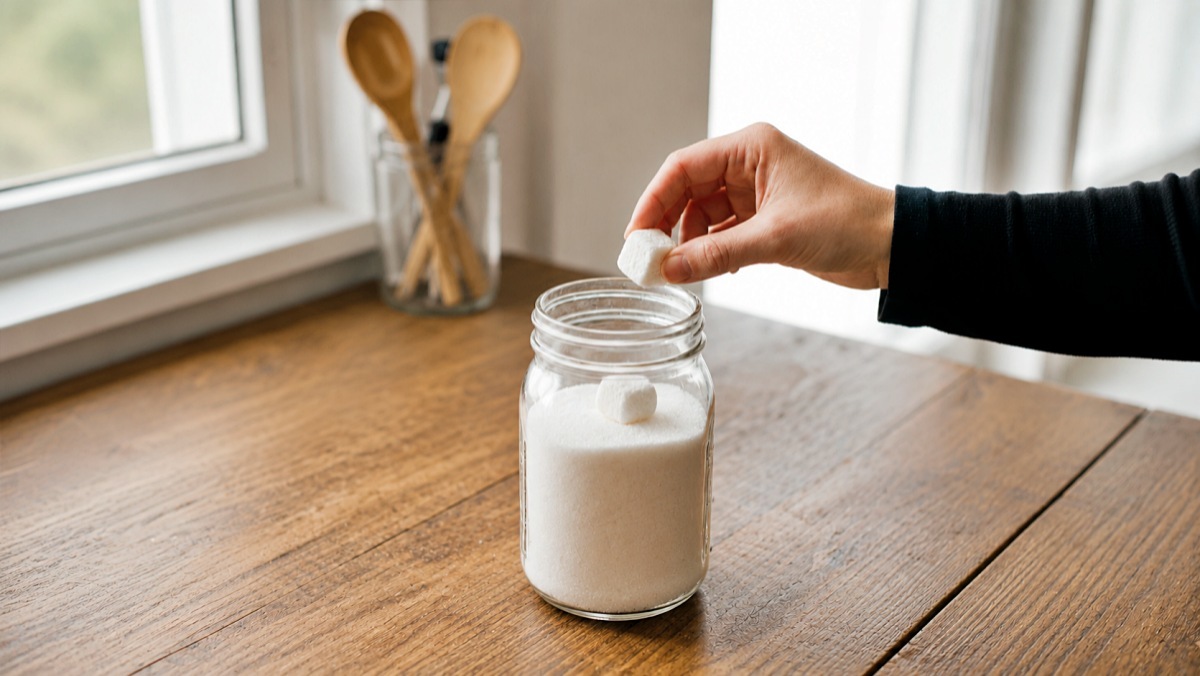
Luckily, you can rescue hardened sugar with just two marshmallows.
How marshmallows soften hardened sugar
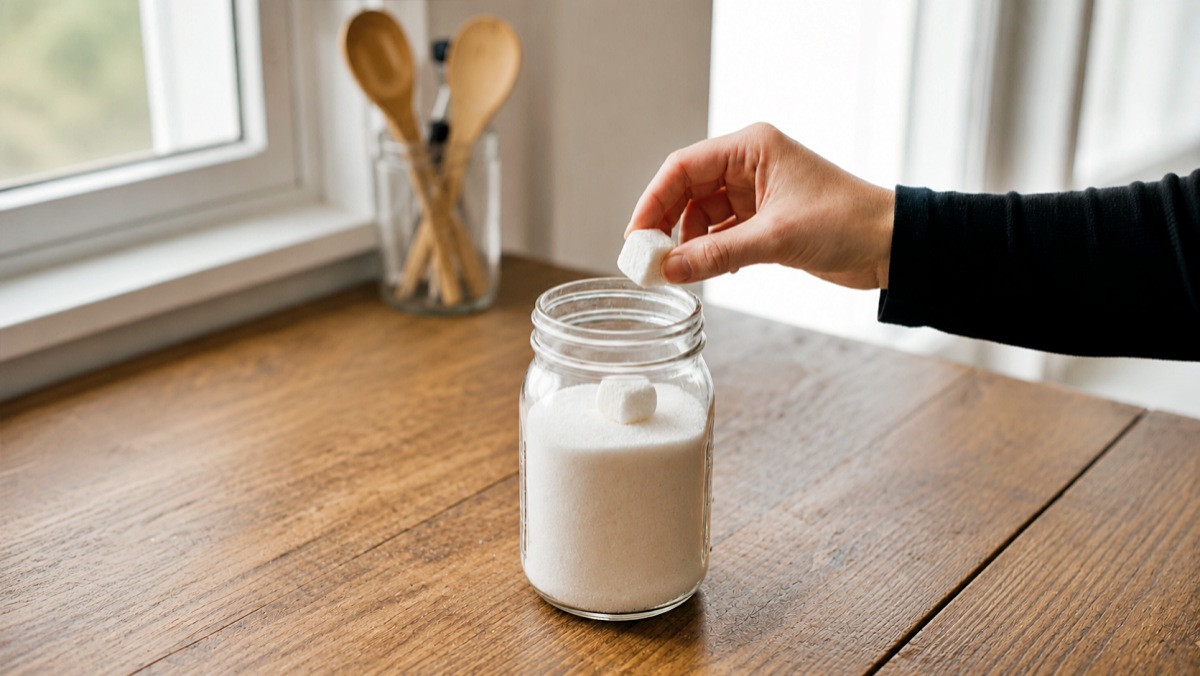
Marshmallows are a quick and easy fix. Drop two soft marshmallows into an airtight container with the sugar, seal it, and wait. In about a day the sugar should be noticeably softer.
Why it works: marshmallows contain gelatin, sugar, and moisture. In a sealed container, that moisture slowly migrates into the dry sugar. Because the moisture moves gradually instead of pouring water directly on the sugar, the sugar rehydrates without turning soggy or clumpy.
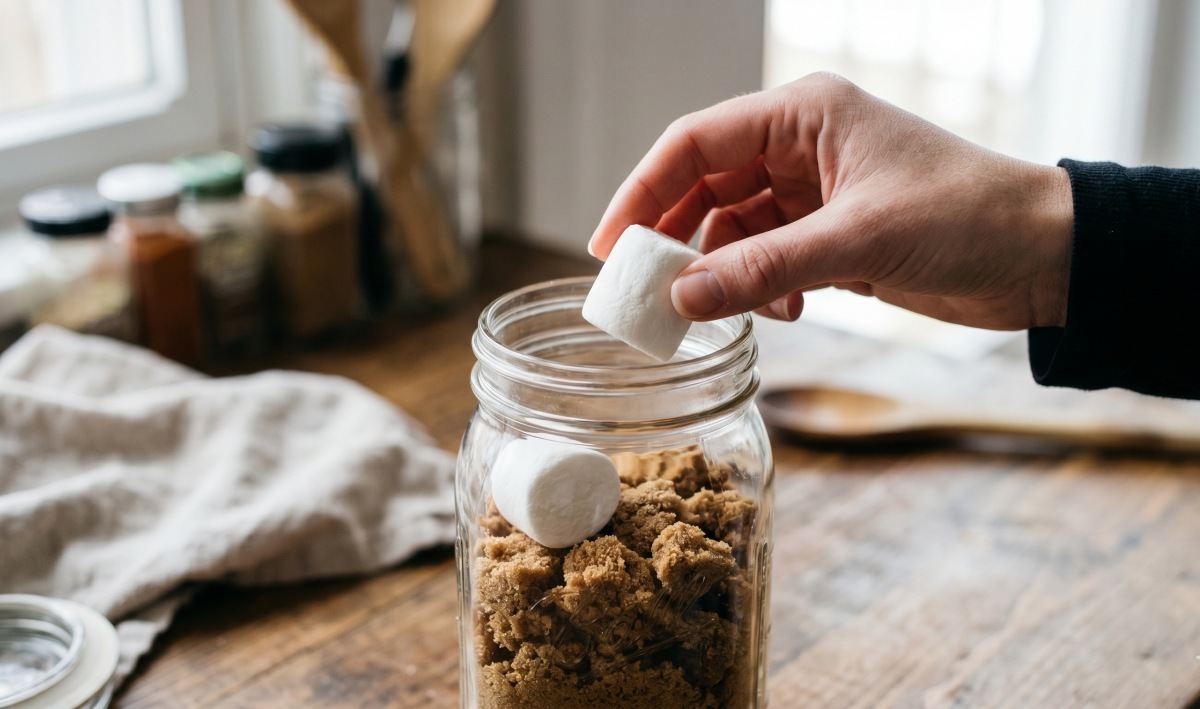
Once the sugar has softened, remove the marshmallows. After giving up their moisture, marshmallows can harden and, if left too long, become an odd lump inside the sugar. Check after about a day, take them out, and gently loosen the sugar with a spoon or clean spatula for easy use.
This trick is especially handy for light and dark brown sugar, which are more sensitive to moisture changes. If you’re working with a lot of sugar or it’s severely compacted, one round might not be enough—swap in fresh marshmallows and repeat as needed. The point is to restore moisture slowly, not flood the sugar at once.
Sugars harden for different reasons
Understanding why sugar hardens helps you prevent it. White, light brown, and dark brown sugars all behave differently because of their makeup and texture.
White sugar tends to clump when granules repeatedly get wet and dry—stored in a humid spot and then dried, the particles can stick together tightly. If your white sugar clumps, check whether storage humidity fluctuated.
Brown sugars are different because of molasses, which gives them color and flavor. Molasses keeps brown sugar soft when it holds moisture, but if it dries out the granules can bind strongly. That’s why brown sugars often become stickier or form larger chunks than white sugar.
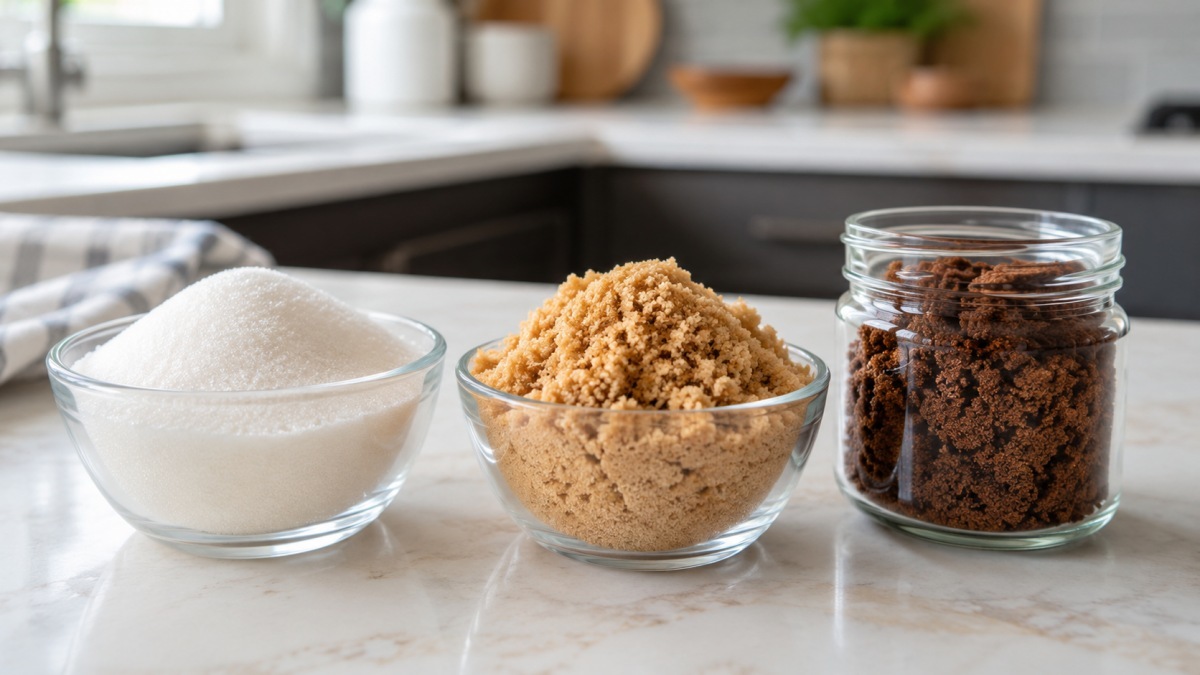
Because the marshmallow method reintroduces moisture slowly, it’s particularly well-suited to brown sugars. As moisture returns to the dried molasses, the bonds between granules loosen and the texture softens—without noticeably changing flavor.
Keep in mind that if storage conditions don’t improve after you revive the sugar, it can harden again. Once softened, double-check the seal and the storage spot to prevent a repeat.
Try bread or apple slices if you don’t have marshmallows
No marshmallows? Small pieces of bread or apple can do the trick. Both carry moisture that will transfer to the sugar inside a sealed container.
For bread, place a small piece on top of the sugar, close the lid, and wait a few hours to a day—the bread’s moisture will migrate into the sugar and soften it. If crumbs bother you, lay a sheet of parchment over the sugar and place the bread on that.
Apple slices work fast because apples are juicy. Put thin slices in the container and check after a few hours. But apples are aromatic and perishable, so don’t leave them in too long—remove them as soon as the sugar softens.
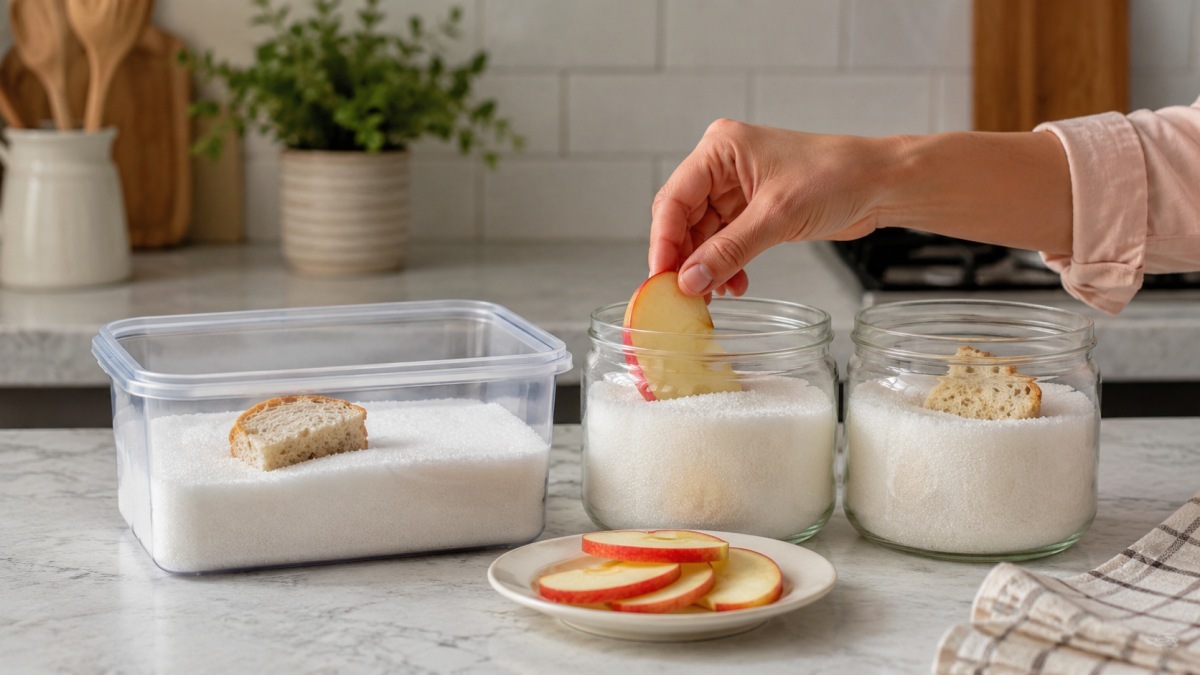
Hygiene matters with these alternatives. Bread and fruit can spoil at room temperature, so only leave them in the container long enough to rehydrate the sugar. Make sure the container is clean and sealed tightly to keep outside air out. And don’t use too much of the food item—excess moisture can make the sugar damp instead of just soft.
These methods rescue sugar you’d otherwise toss, but they’re not long-term storage fixes. After softening, remove the bread or apple and reseal the container.
In a hurry? Briefly microwave it
If you need sugar now and can’t wait, try the microwave. Put the hardened sugar in a microwave-safe container, cover it with a kitchen towel lightly moistened with water, and heat in short 10-second bursts while checking the texture.
The towel’s steam helps loosen the sugar clump. For mild cases, a few short bursts can make the sugar usable. But treat the microwave like an emergency tool—sugar reacts to heat and can melt or scorch if overheated.
Heat in 10-second intervals rather than continuously. Overheating can melt parts of the sugar, turning them sticky or syrupy. After heating, break the sugar up gently with a spoon and reheat only briefly if necessary. Be careful—the container and sugar may be hot right after microwaving.
An oven is an option but not ideal at home. Ovens heat slowly and unevenly, so sugar may burn in spots before the whole mass softens. For quick restoration, brief microwave bursts are usually the safer choice.
Store sugar sealed from the start
Prevention beats fixing hardened sugar. The essentials are controlling humidity and keeping air out. Leaving an opened bag loosely folded invites air and lets sugar conditions change.
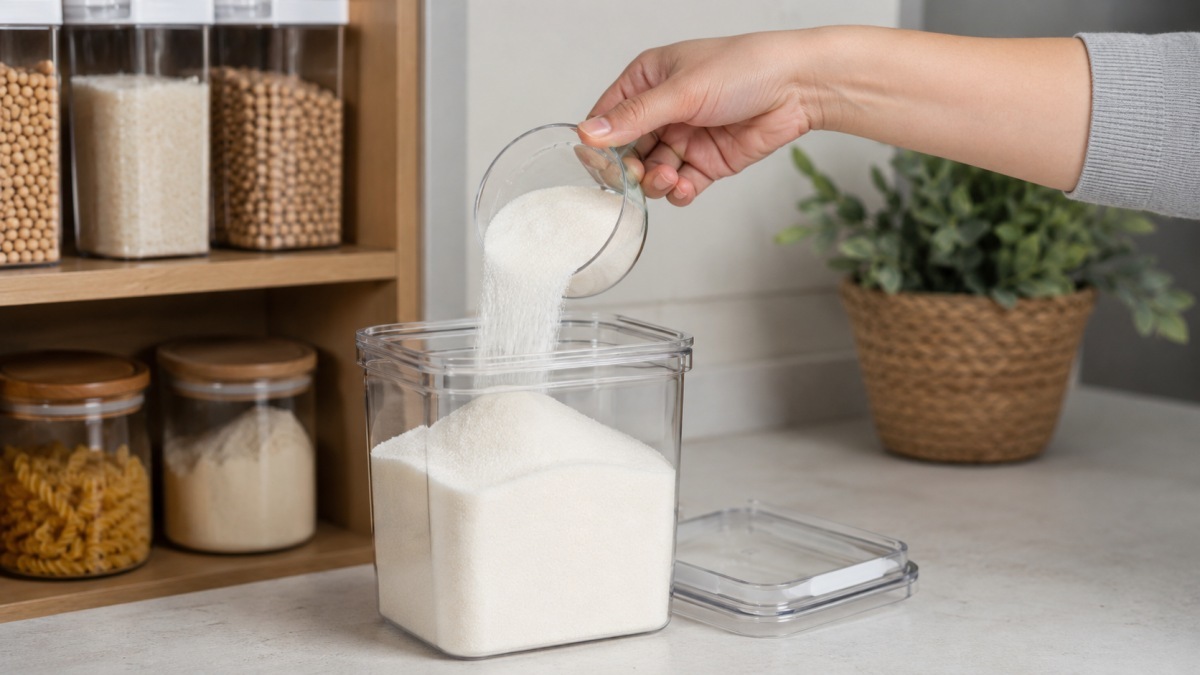
After opening, transfer sugar to an airtight container with a rubber seal. A well-sealed lid keeps external moisture out and reduces moisture loss from the sugar—especially important for light and dark brown sugars, which harden quickly when they lose moisture.
Pick a good storage spot: away from direct sunlight and big temperature swings. Avoid storing sugar near the stove or under the sink. Heat and steam from the stove, and humidity under the sink, cause sugar to absorb moisture and then dry, which leads to clumping.
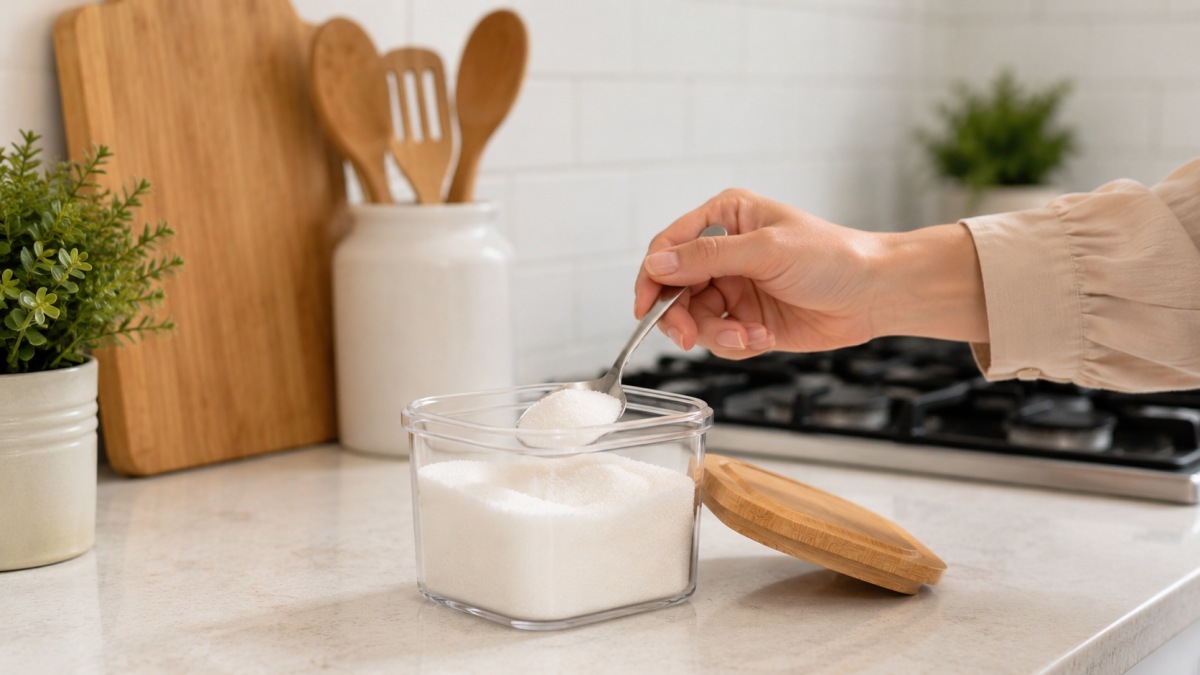
Refrigeration isn’t ideal either. Although the fridge is relatively dry, moving the container in and out can cause condensation inside the lid. That moisture can harden white sugar or ruin brown sugar’s texture. Store sugar at room temperature in a cool, dry place instead.
If you must keep the opened bag as-is, fold the opening several times and place it inside an airtight container. A simple clip may not fully seal it. Double protection against air and humidity helps sugar stay in good condition longer.
Avoid putting wet spoons in the container
Small habits matter. A wet spoon introduces droplets that slip between granules and form lumps. That may not be obvious immediately, but over time it can cause the sugar to harden.
Always use a clean, dry spoon when scooping sugar. Don’t refill directly over a hot pot—steam can enter the container and raise humidity. For soups or braises, measure the amount you need first, then add it to the pot.
After using sugar, close the lid right away and wipe any powder from the rim or lid interior. Sugar trapped in the lid can stop it from sealing tightly.
If you don’t use sugar often, buy smaller amounts instead of bulk. Sugar lasts a long time, but the longer it sits open, the more it’s exposed to humidity changes.
Use storage tools to make management easier
If you use sugar often, the right tools help. An airtight container with a rubber seal is a must, and you can also use humidity-control accessories made for sugar storage—like small terracotta moisture controllers.
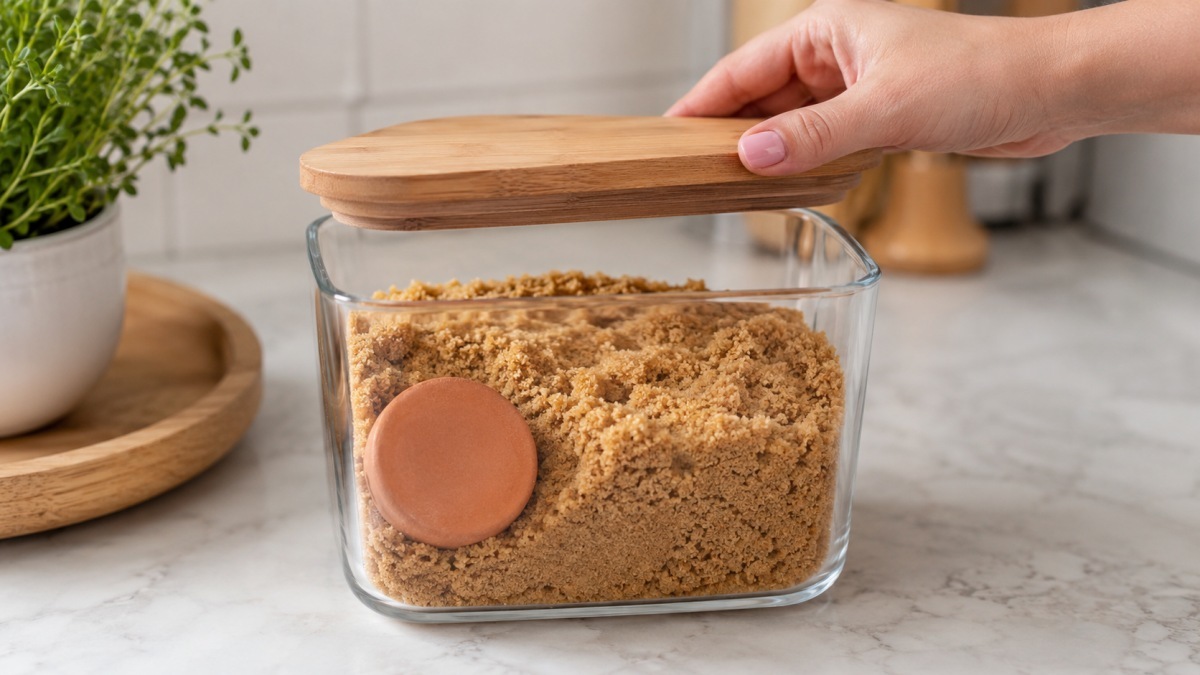
Soak the terracotta briefly, wipe off excess surface moisture, and place it in the sugar container. The clay slowly releases moisture and helps keep light and dark brown sugars from drying out. Don’t put it in dripping wet—wipe it down first so the sugar doesn’t get damp.
No dedicated tool? Marshmallows can be a short-term stand-in, but don’t leave them in long-term. Marshmallows will harden or change over time. Once the sugar softens, remove them and keep the sugar sealed afterward.
For large quantities, you can line the inside of the container with plastic wrap before closing the lid. That reduces tiny gaps between the container and lid and limits air contact. Make sure the wrap stays flat and clean so it doesn’t fold into the sugar or contaminate it.
Hardened sugar is usually just a physical clump—not spoilage. If it doesn’t smell off or contain foreign matter, there’s no need to toss it. With a controlled return of moisture, it can be restored to usable condition.