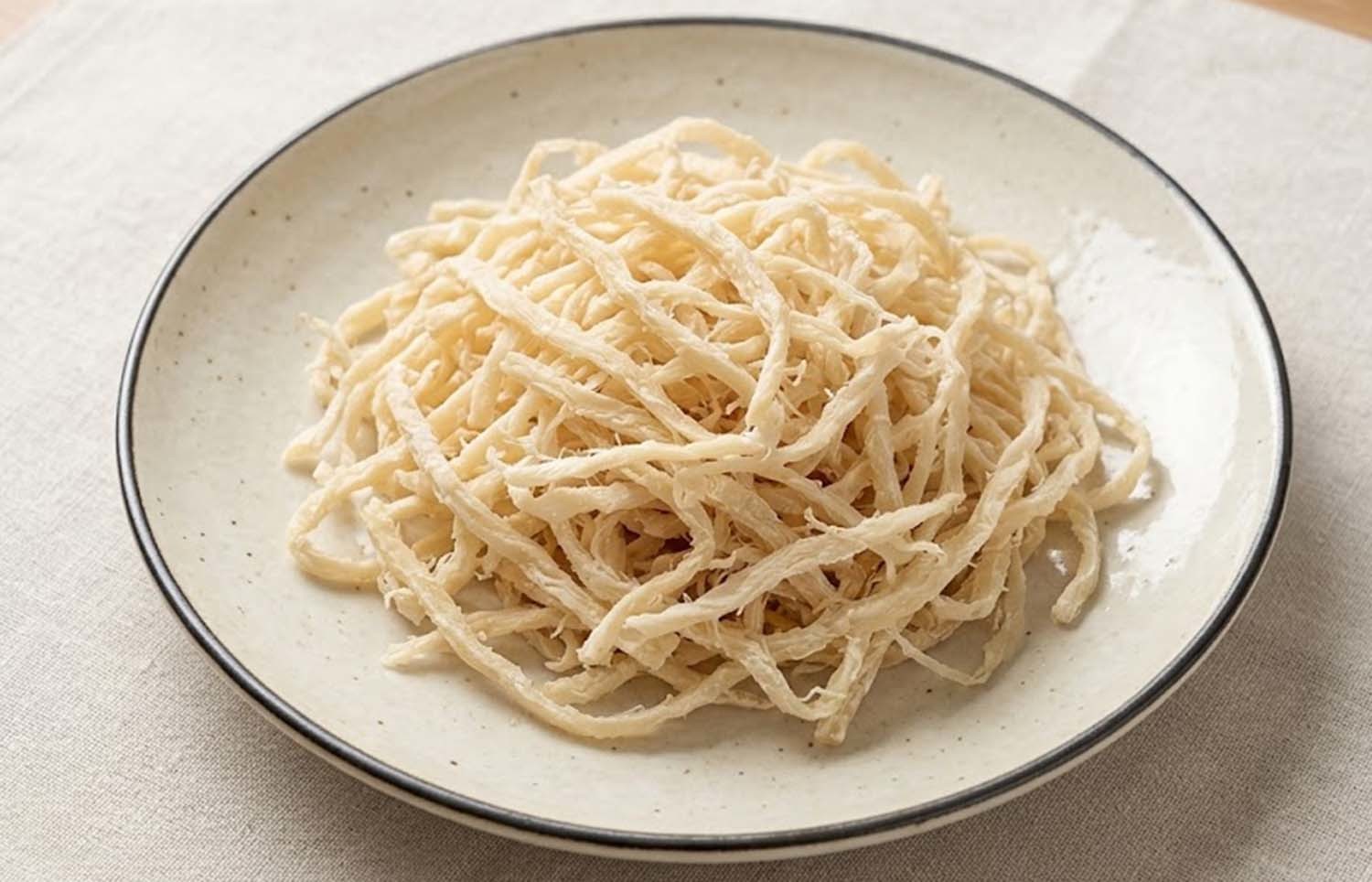
You don’t have to turn on the stove at all. One bowl, a pair of scissors, and 30 seconds in the microwave—that’s it.
When people think of jinmichae as a side dish, they usually picture a frying pan and a gochujang-based stir-fry. You have to keep stirring so it doesn’t burn, and if you mismanage the heat it often turns tough. But what if you could skip the heat and still end up with a side that makes you polish off a bowl of rice? If you’re not put off by the scent of olive oil, this method is a whole lot simpler.
Jinmichae is dried, shredded squid—either sun-dried in the shade or machine-dried. The name "Jinmichae" started as a brand in 1985 when a company launched a line of processed squid products in partnership with a Japanese seafood firm, and the brand name eventually became a generic term. Today people use ojingeochae (squid strips) and jinmichae almost interchangeably. Baek-jinmichae is peeled, using just the white flesh, while hong-jinmichae is dried and shredded with the skin on, giving it a reddish tint. The flavors are similar, but hong-jinmichae is a bit chewier.
Jinmichae’s charm is that its flavor opens up the more you chew. It’s rich in protein, vitamin E, zinc, DHA, EPA, and taurine—so it’s a nutritionally solid ingredient. That said, seasoned products can contain added sugar and sodium, so enjoy them in moderation.
Using olive oil in a jinmichae salad is a clear departure from traditional recipes. Swap sesame oil for olive oil and you’ll get a lighter, fresher finish instead of a heavy, nutty one. The fruity notes of olive oil surprisingly complement jinmichae’s salty bite. If you hate the smell of olive oil, though, this isn’t the method for you—go with your taste.
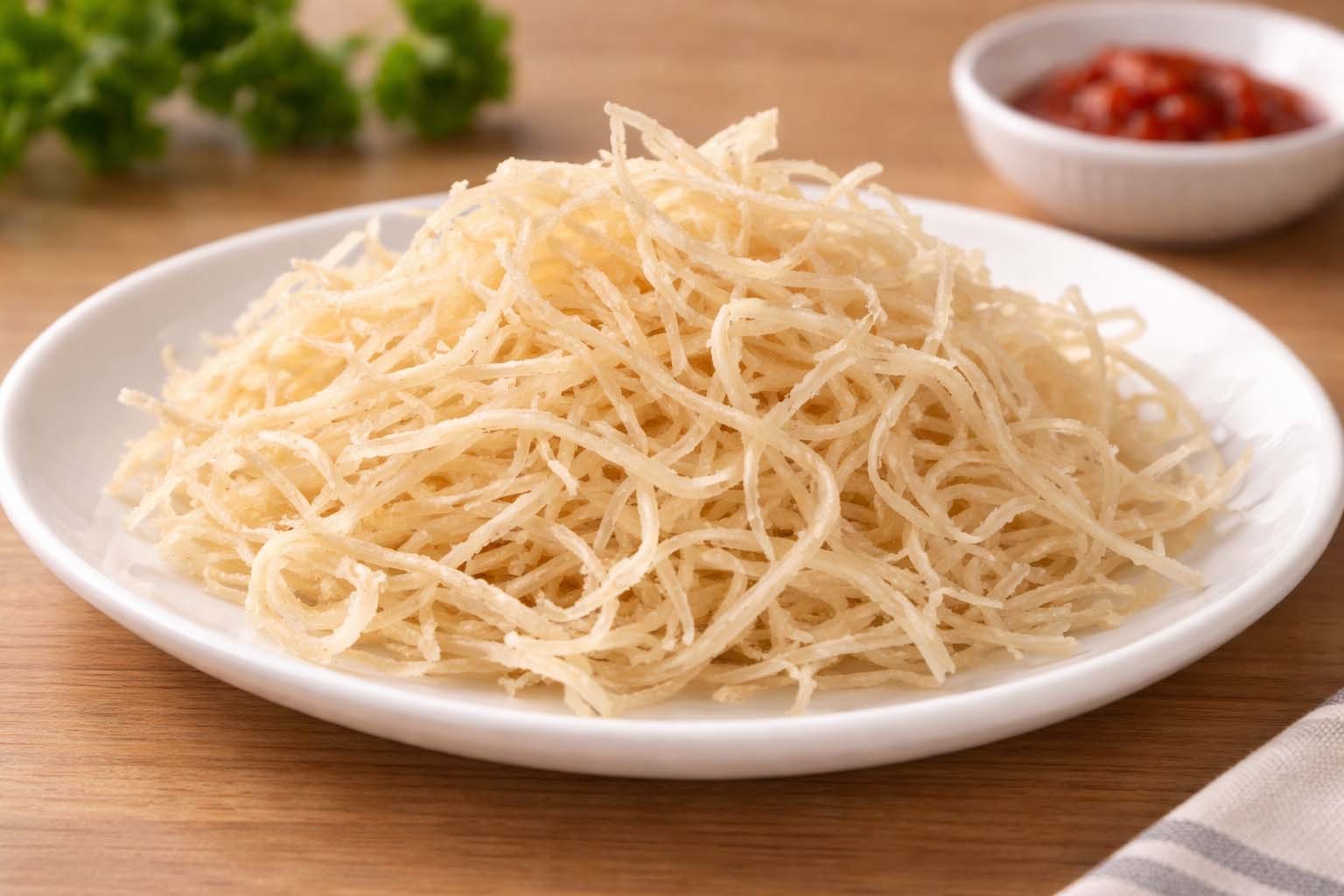
Here’s how to make it. Snip the jinmichae into bite-size pieces with scissors and put them in a bowl. Microwave for 30 seconds. Add a little gochugaru (Korean chili powder)—be careful not to overdo it or it will overpower the dish. Add soy sauce to taste, then mix in minced garlic and chopped scallions. Pour in a generous amount of olive oil; if you skimp, the ingredients won’t coat evenly. Finish with a generous sprinkle of toasted sesame seeds, then toss everything with your hands until well coated.
There are three key points. The 30-second microwave step is optional—skip it if you prefer, though it helps with sterilization. Use olive oil liberally so the pieces get evenly dressed. And don’t be shy with the toasted sesame seeds at the end; they bring out the dish’s nutty depth.
Stir-frying jinmichae used to be considered the standard. Because squid strips can get tough when overcooked, cooks have always emphasized quick frying so the seasoning soaks in without drying the strips out. Unlike stir-frying, this tossed method eliminates that heat-control stress. A quick 30-second zap and a good toss with the seasonings are all it takes. It’s perfect for anyone who’s not confident in the kitchen or who simply doesn’t want to stand over a stove.
It may take a little getting used to olive oil–tossed jinmichae. At first it might feel unfamiliar, but after a couple of tries you’ll likely find it brighter and more refreshing than a gochujang stir-fry. When you’re tired of heavy, spicy flavors and want a light, savory side, this recipe hits the spot. Jinmichae also keeps well in the fridge for several days, so having one no-cook side ready in the fridge is easier than you think.
Your daily personal fortune report! What will your day be like?