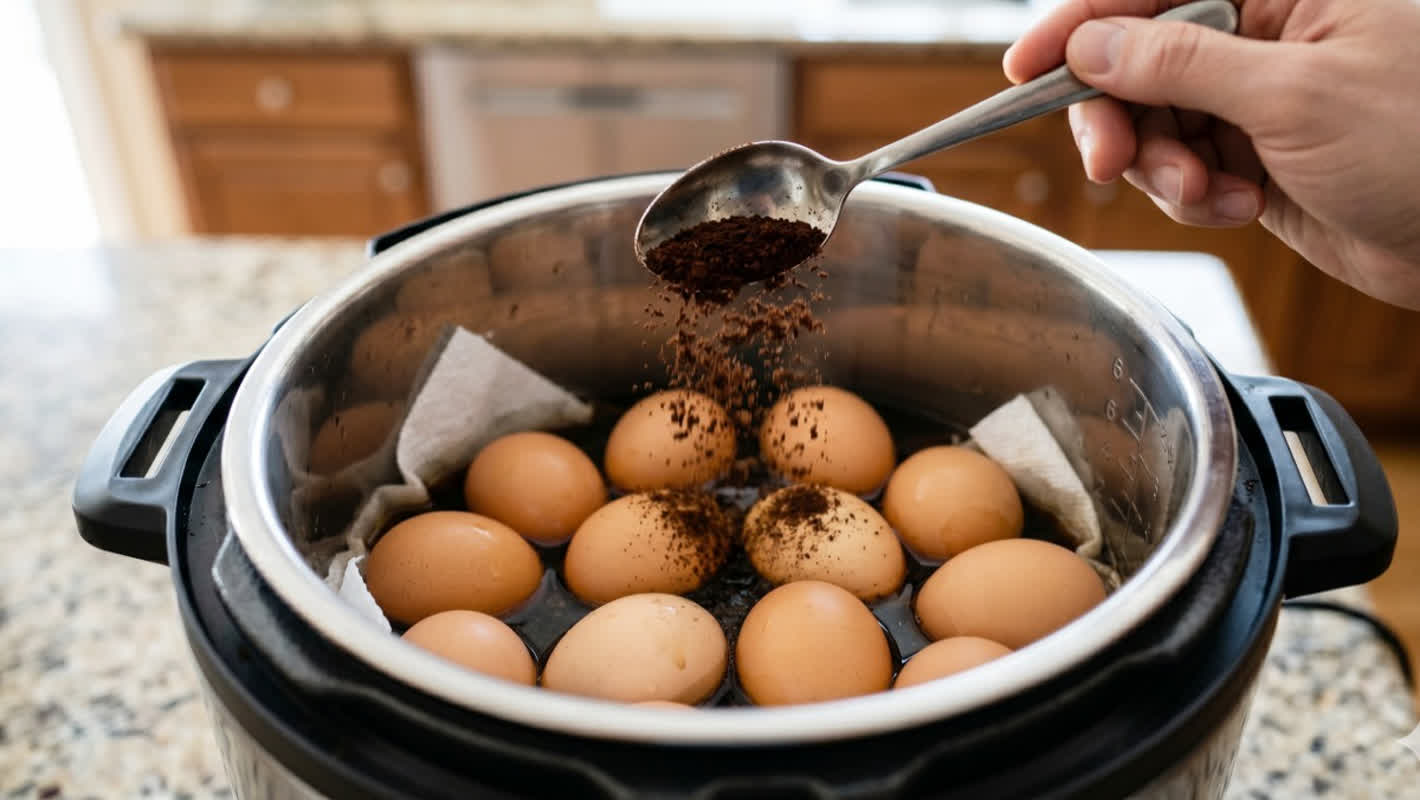
You can get the deep color and chewy, slightly springy texture of Korean spa-style hot-stone eggs at home—no fancy ingredients required. The secret? black instant coffee granules with no sugar or creamer.
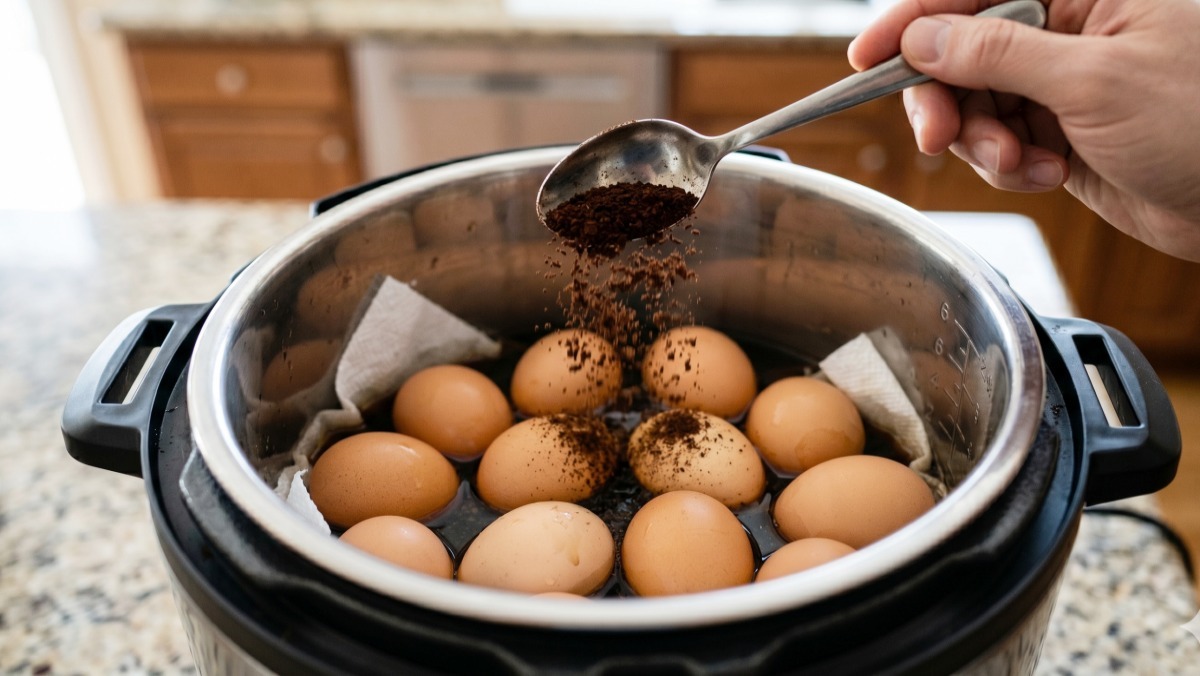
Coffee adds color and aroma
Cooking eggs with coffee granules tints the shells and whites a warm brown and leaves a delicate coffee note. That gentle bitterness also helps mask any eggy odor. If you’re aiming for the rich look of spa-style hot-stone eggs, coffee granules give them a more appetizing appearance.
Stick to black instant coffee with no sugar or creamer. Mix-in instant coffees introduce sweetness and dairy that can muddy the flavor. Ground beans work, but they leave residue and can perfume the eggs more intensely, so black instant coffee granules are the easier, cleaner option.
Coffee alone will color the eggs, but adding soy sauce and salt rounds out the seasoning. Dark soy sauce brings savory depth while salt balances everything. Start with small amounts—too much soy sauce can make the eggs overly salty and, combined with coffee, accentuate bitterness.
Make coffee eggs in a pressure rice cooker
You can easily make coffee eggs in an electric pressure rice cooker. For 10 eggs, use 200 ml (about 6.8 fl oz) water, one packet or 1 tablespoon black instant coffee granules, 1 tablespoon dark soy sauce, and 1/2 tablespoon salt. If you cook more eggs, increase water and seasonings proportionally, but never exceed the inner pot’s max fill line.
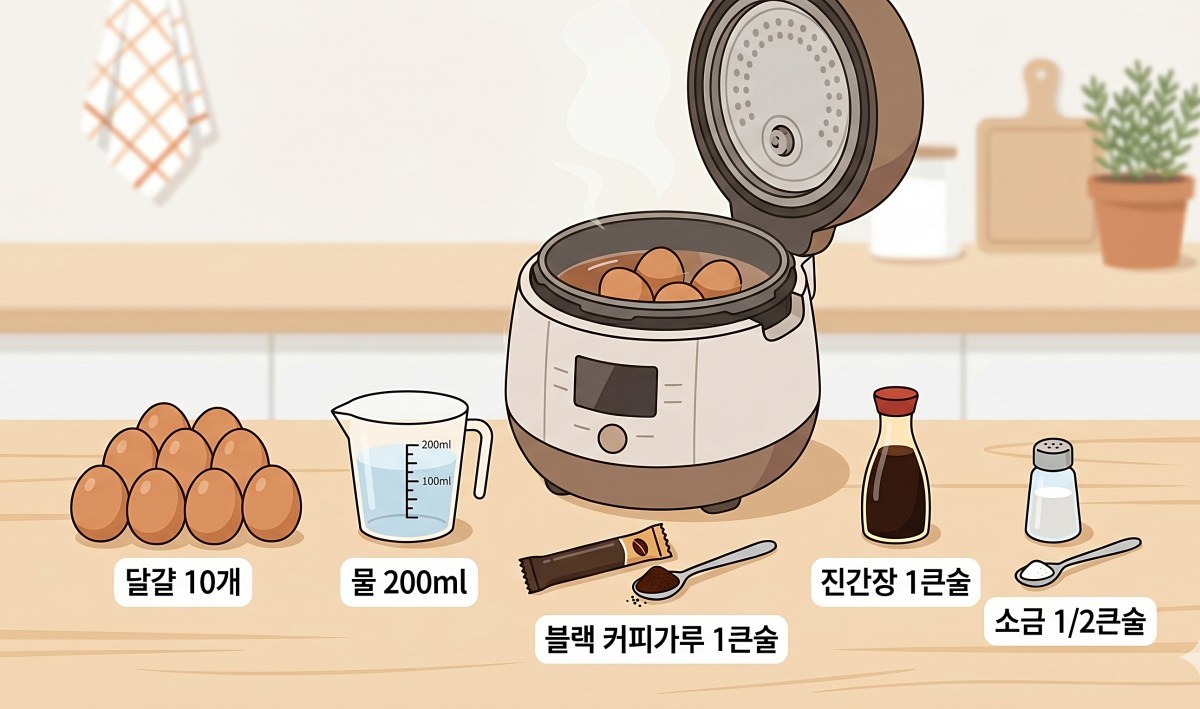
Take refrigerated eggs out at least 30 minutes before cooking so they reach room temperature. Dropping cold eggs straight into high heat can crack the shells. Rinse off any dirt under running water, and skip eggs that already have cracks—if one leaks while cooking it can ruin flavor and appearance.
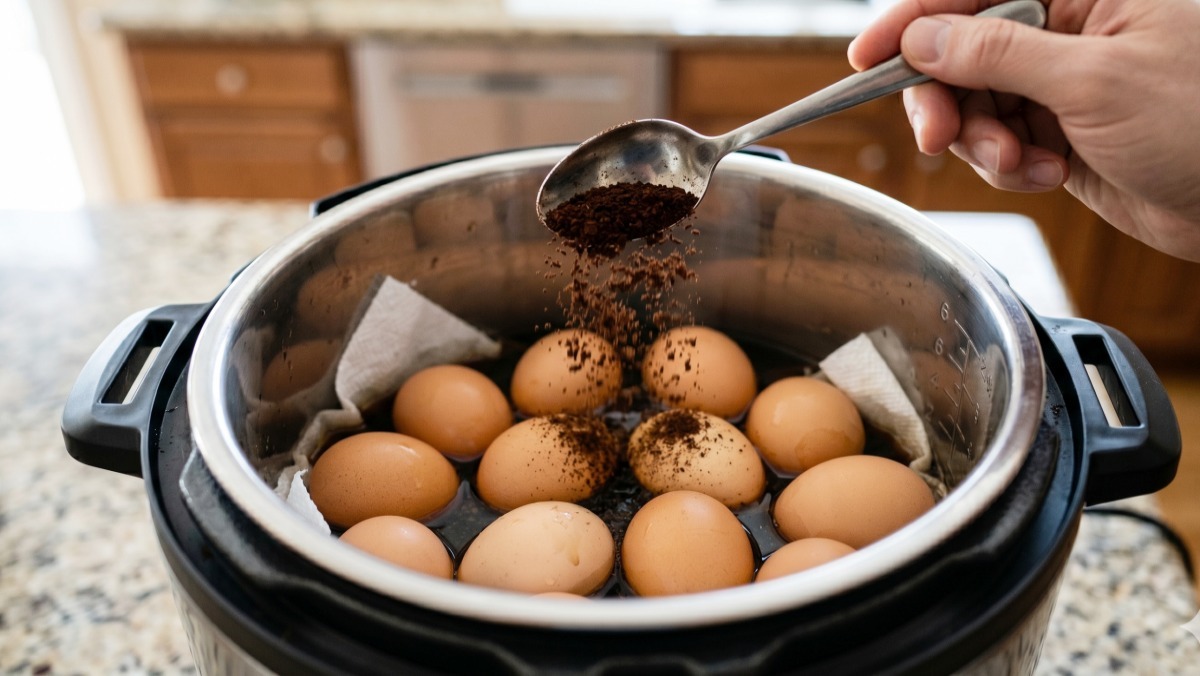
Line the inner pot’s bottom with a wet kitchen towel to keep the eggs from touching it directly. Arrange the eggs on the towel, then add the water, coffee granules, dark soy sauce, and salt. Dissolve the coffee in the water first to prevent clumping and help the color spread evenly.
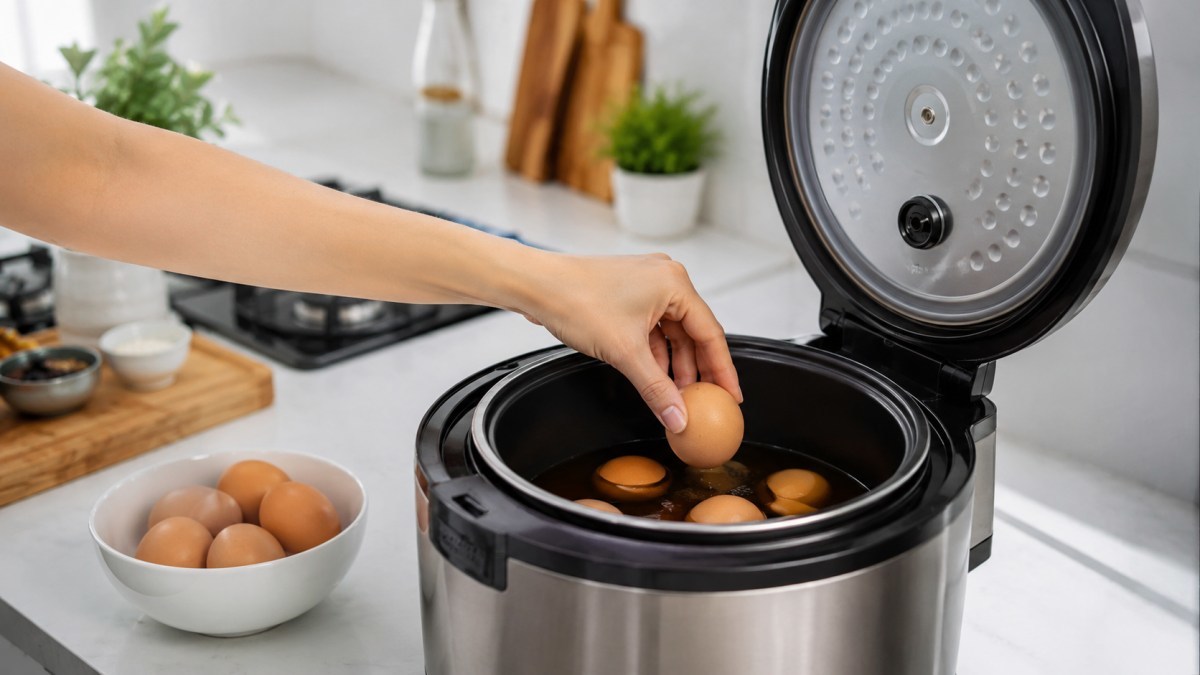
If your rice cooker has a steam setting, cook the eggs about 60 minutes. For a chewier, more elastic texture, extend to 70–90 minutes. If there’s no steam mode, use the regular cooking function but follow your model’s manual—heating methods vary. When cooking finishes, wait about 5 minutes before opening the lid to let the steam settle.
Instead of plunging the finished eggs into cold water right away, let them cool briefly before peeling or storing. If you want that elastic hot-stone texture, avoid rapid chilling. Quick temperature changes make shells easier to peel but can reduce firmness and chewiness.
You can also make them in a pot
No rice cooker? No problem. Use a pot. Pour enough water to cover the eggs, add 1 tablespoon black instant coffee granules, 2 tablespoons dark soy sauce, and 1/2 tablespoon salt. Bring to a boil over medium heat, then lower to a gentle simmer and cook another 30–40 minutes after it starts boiling.
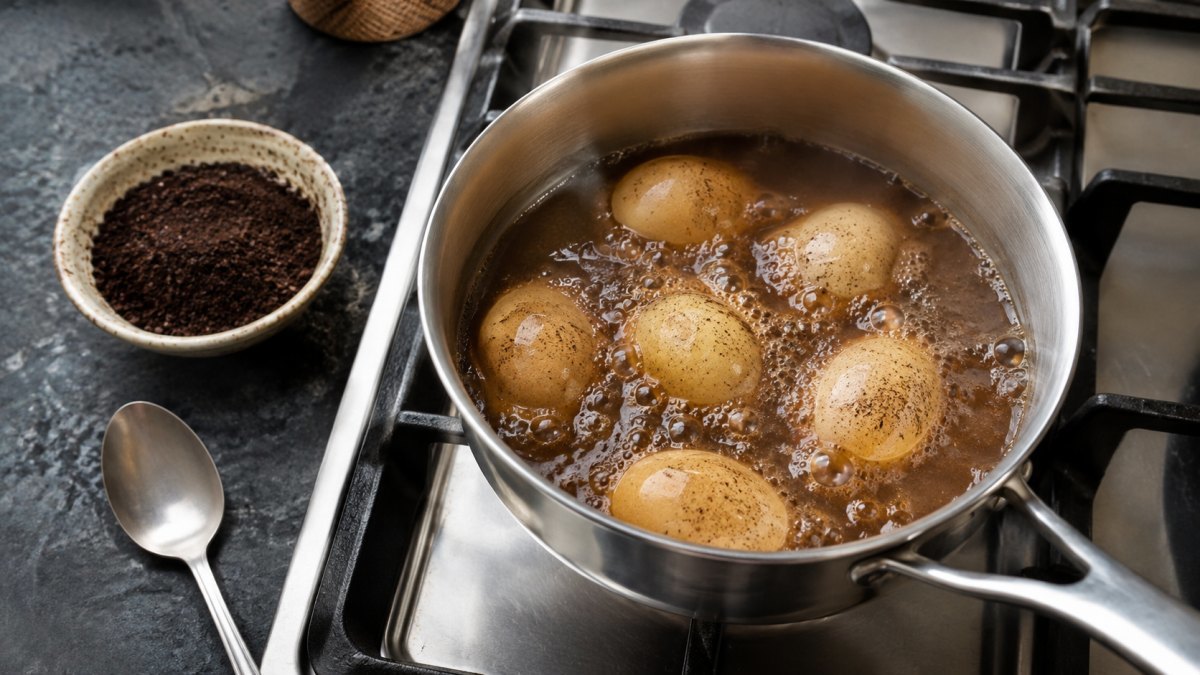
For deeper color, fully cook the eggs first, then crack the shells and return them to the coffee-infused liquid. Lightly tap the shells all over with a spoon to create hairline cracks so the coffee and soy sauce seep in. Keeping the shells on produces natural marbling and gently colors the whites.
Heat control is key with the pot method. Boiling too long on high reduces the water quickly and can over-salt the eggs. If the water falls too low, eggs may hit the bottom and crack—check occasionally and add small amounts of hot water to avoid temperature shock.
More coffee or soy sauce won’t automatically make the eggs taste better. The color will deepen, but bitterness and saltiness intensify too. Start mild, then tweak the amounts in future batches.
Chewiness comes down to cooking time and cooling
Texture depends on cooking time and how you cool the eggs. Shorter cooks give a texture similar to regular hard-boiled eggs. Longer cooks firm the whites and make them springier. For that chewy spa-style bite, cook well and cool slowly.
Avoid soaking rice-cooker eggs in running cold water for long. If you must peel quickly, a brief cool-down works, but to preserve texture, let them release heat at room temperature first. Once fully cooled, store them in an airtight container in the fridge.
Longer cooking reduces moisture and tightens the whites’ texture, but overcooking can make whites tough and yolks dry. Start at about 60 minutes, then add 10 minutes at a time in later batches until you hit your preferred texture.
Basic steps to prevent cracked shells
The most common issue is cracked shells. Eggs are sensitive to sudden temperature changes, so heating them straight from the fridge risks cracks. Let eggs sit at room temperature for at least 30 minutes before cooking to reduce that risk.
When rinsing eggs, don’t scrub—just rinse gently under running water. Pull out eggs that already have hairline cracks; they can leak during cooking. If a cracked egg goes in, the coffee liquid can seep inside and over-season the white.
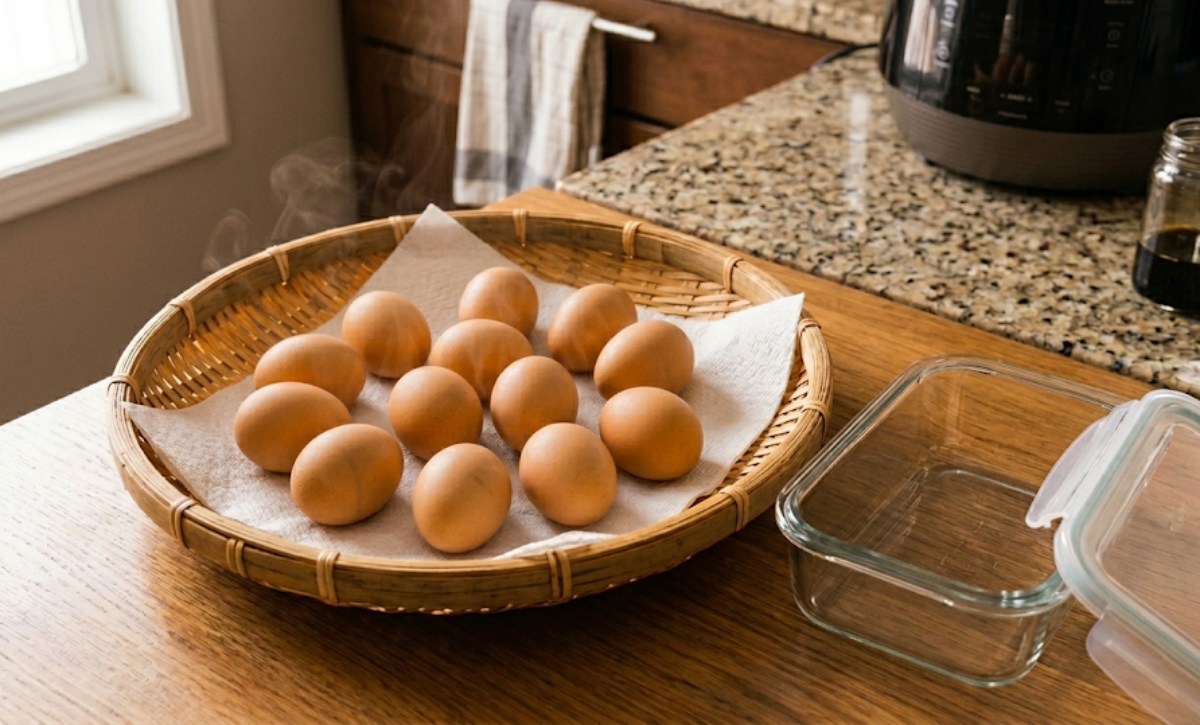
Keep eggs from touching the bottom of the rice cooker or pot. Use a steamer tray, wet kitchen towel, or silicone mat to reduce direct heat. When cooking many at once, leave space so the eggs aren’t packed tightly.
How to get an even color
Even color depends on how well the coffee granules dissolve. If they clump, some eggs will take on more color than others. Dissolve coffee and soy sauce in the water before adding the eggs to ensure a uniform tint.
Avoid rolling the eggs during cooking in a pressure rice cooker—opening the lid disrupts pressure and temperature. Instead, make sure the liquid and seasonings are evenly distributed before you start. If you use a pot, you can carefully reposition eggs mid-cook with a spoon or tongs to avoid cracking.
To deepen color, leave eggs in the coffee liquid a while after cooking instead of removing them immediately. Don’t soak too long—saltiness and bitterness can build up. Eggs with cracked shells absorb seasonings faster, so shorten soaking time for those.
Tips for easy peeling
Coffee eggs can be harder to peel than regular boiled eggs because prolonged heating firms the whites and the inner membrane may stick. For easier peeling, cool them completely, then create hairline cracks across the shell.
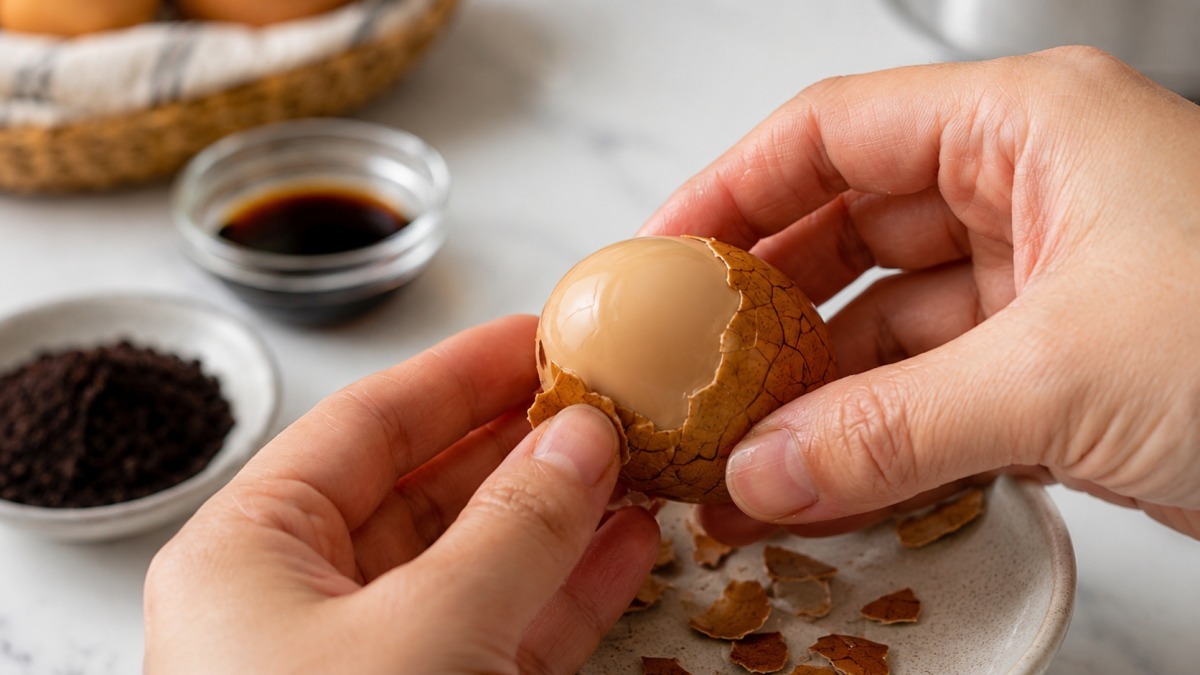
Roll an egg gently in your palm or tap it with a spoon to make cracks all over. Start peeling at the rounded end where there’s usually an air pocket. If the shell clings, peel under running water—small bits wash away and it’s much easier.
Brown marbling on the white after peeling comes from coffee and soy sauce seeping through shell cracks. It may look blotchy, but it’s a natural result of the process. Discard eggs that smell off or feel slimy.
Store only after fully cooling
Cool finished coffee eggs thoroughly before sealing them in an airtight container and refrigerating. Putting hot eggs into a sealed container creates condensation and leaves surface moisture, which shortens quality. Let them release some steam first.
Unpeeled eggs are best eaten within 3–5 days. Peeled eggs are exposed to air and should be eaten sooner—store them in an airtight container, and blot off excess moisture with a paper towel before sealing if needed.
Eggs flavored with coffee and soy sauce have a stronger aroma than plain boiled eggs. Use airtight containers to keep smells from transferring to other foods. Also avoid storing them next to strong-smelling items like kimchi or fermented seafood.
Label the cooking date so you can track storage time. If you made a large batch, eat cracked-shell eggs first—they absorb more seasoning and have more air exposure.
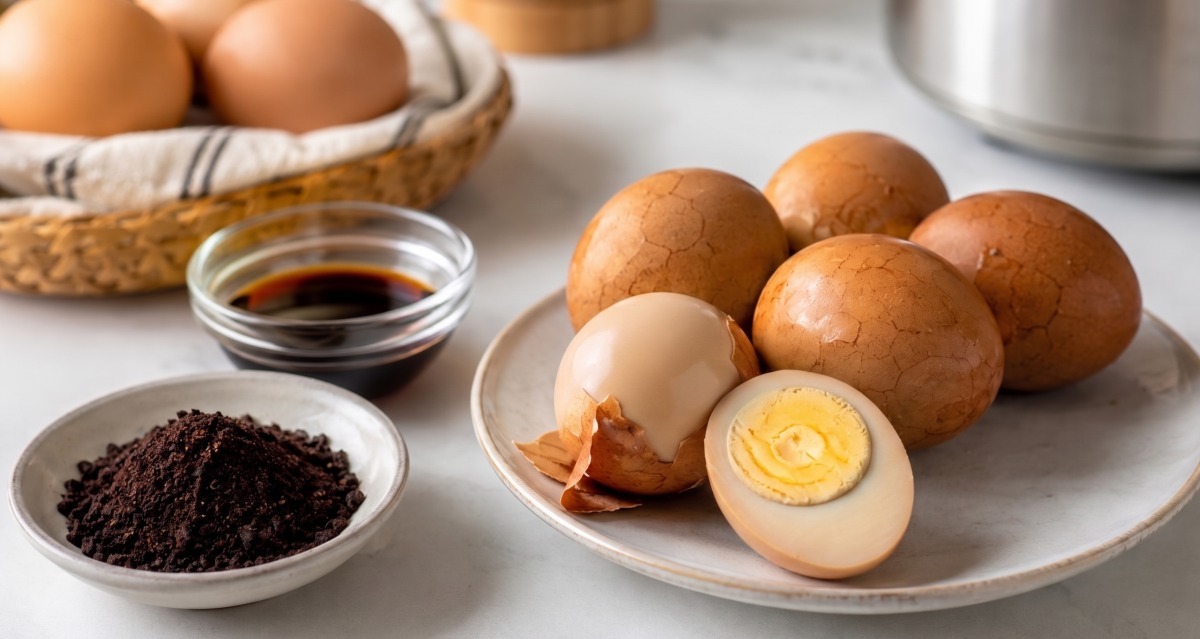
Key points when making coffee eggs
Eggs cooked with coffee granules pick up the subtle color and aroma of coffee and soy sauce. You can achieve the deep color and chewy texture of Korean spa-style hot-stone eggs, but results vary with your rice cooker’s heating method, egg size, water amount, and cooking time.
When using a pressure rice cooker, don’t add too little water—the long cook time can dry out the inner pot. But don’t overfill either; excess water can boil over, so check the pot’s fill line. Coffee and soy sauce can stain the pot, so wash it promptly after cooking to reduce odor and discoloration.
Use tongs or a spatula to remove eggs; they and the inner pot will be very hot immediately after cooking—don’t handle them with your bare hands. Cool the eggs fully before peeling, and don’t leave finished eggs at room temperature for long—especially in summer or on warm days, cool them and refrigerate right away.
Coffee eggs are an easy snack you can make with few ingredients. Balance black instant coffee granules, soy sauce, and salt, and tweak egg temperature and cook time to get the color and chew you want. Start mild and adjust to taste—it's an effortless way to upgrade simple boiled eggs.