Daesang Receives Minister of Food and Drug Safety Award
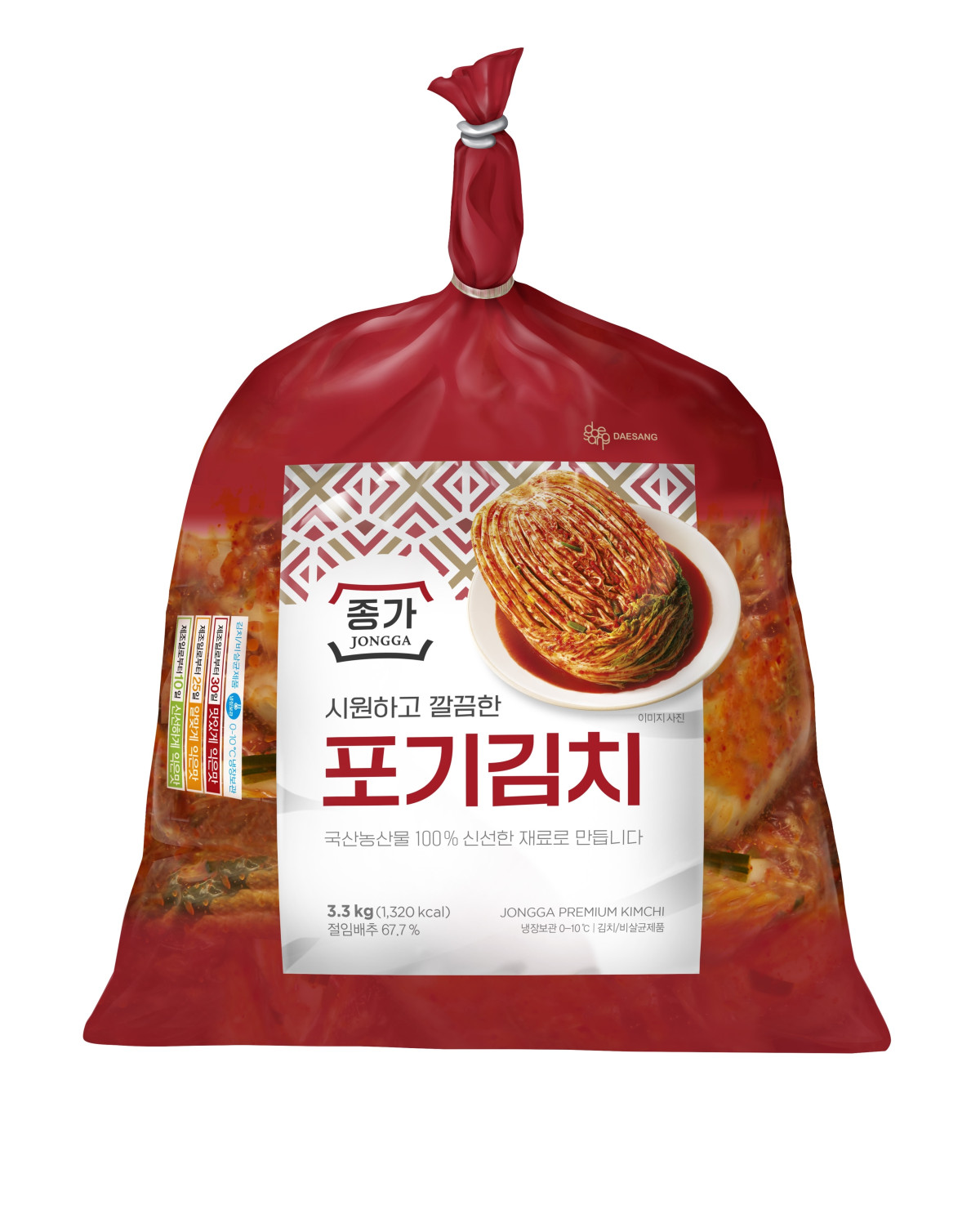
Daesang launched Jongga (then Jonggajib) kimchi in 1987 as part of its push to bring this traditional Korean staple to the world. From the start, the company has stuck to a strict rule: use 100% Korean-grown ingredients, and select only the highest-grade items among those domestic supplies.
Using entirely domestic ingredients sounds straightforward, but it’s far from easy. Weather affects availability, and prices swing dramatically from one harvest to the next. To stabilize supply, Daesang developed Jongga Kimchi’s proprietary storage techniques to stockpile napa cabbage for longer periods, expand reserves, and ensure steady sourcing.
Jongga Kimchi is produced under rigorous hygiene controls—foreign-object sorting, X-ray inspection, and sanitation systems at every stage. To reinforce systematic quality and safety, the company earned ISO 9001 certification in 2001, HACCP in 2004, and the kimchi industry’s first LOHAS certification in 2008, among Korea’s top food-safety credentials. The finished products are distributed to stores nationwide via a fresh logistics network.
To deliver a standardized flavor for both domestic sales and export, Jongga patented packaging technology that preserves taste over time. The biggest hurdle in commercializing kimchi was managing carbon dioxide. Because kimchi “breathes” during fermentation and aging, it produces gas; vacuum packaging sometimes caused packages to swell.
In 1989, Jongga developed a gas-absorbing insert to capture that carbon dioxide inside the package. The innovation kept kimchi’s flavor and quality intact, maintained package shape, and effectively reduced damage during distribution. Jongga filed a patent the following year, won the industry’s first KS mark in 1991, and received the Traditional Food Certification Mark in 1995—helping the product earn recognition as a world-class offering.