When winter ends and a warm spring breeze arrives, it’s easy to lose your appetite. That’s when a cold, tangy dongchimi hits the spot. Many picture dongchimi as a fussy dish that needs whole radishes packed into a big jar and fermented for ages. But there’s a method anyone can do at home in five minutes—just a few radishes and no complicated steps.
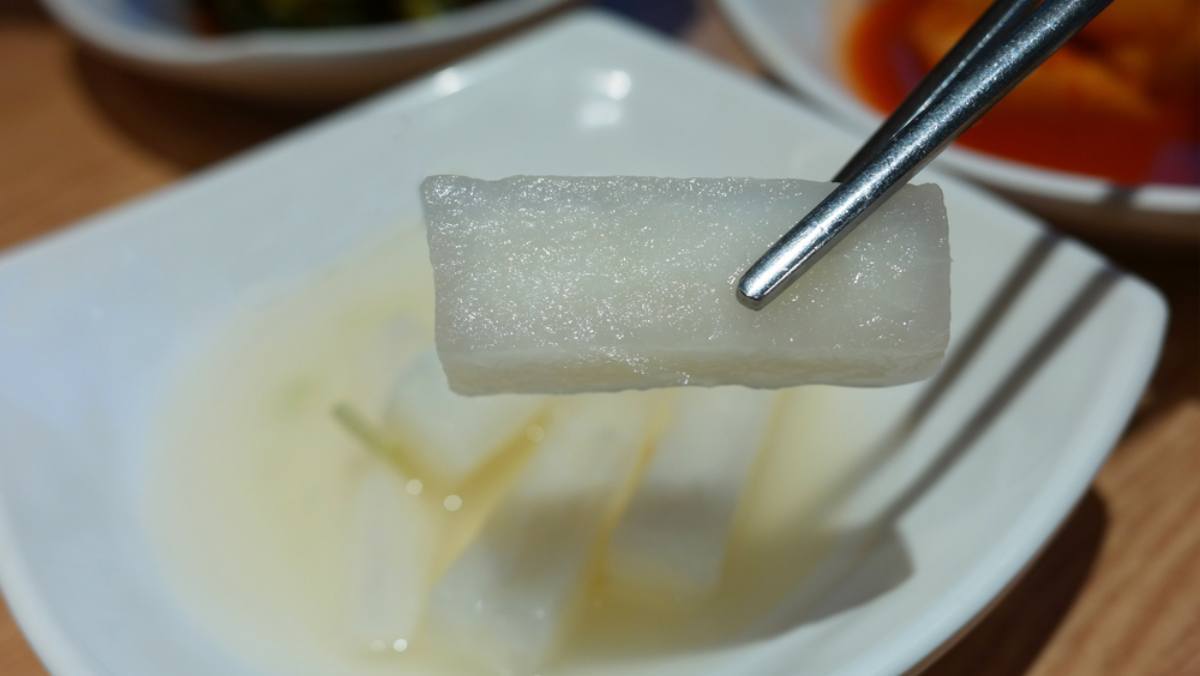
This dongchimi recipe started as a “throw-it-together” experiment. I didn’t want to waste three or four extra radishes, so I roughly chopped and soaked them—and the result surprised me: crisp, refreshing, and utterly delicious. You don’t need any secret ingredients; the radish’s natural sweetness combined with salt and garlic gives plenty of depth.
People often add apples or pears or prep a bunch of extras to build flavor. But really, radish, salt, garlic, and scallions are enough. The simpler the ingredients, the more the radish’s clean, refreshing taste shines.
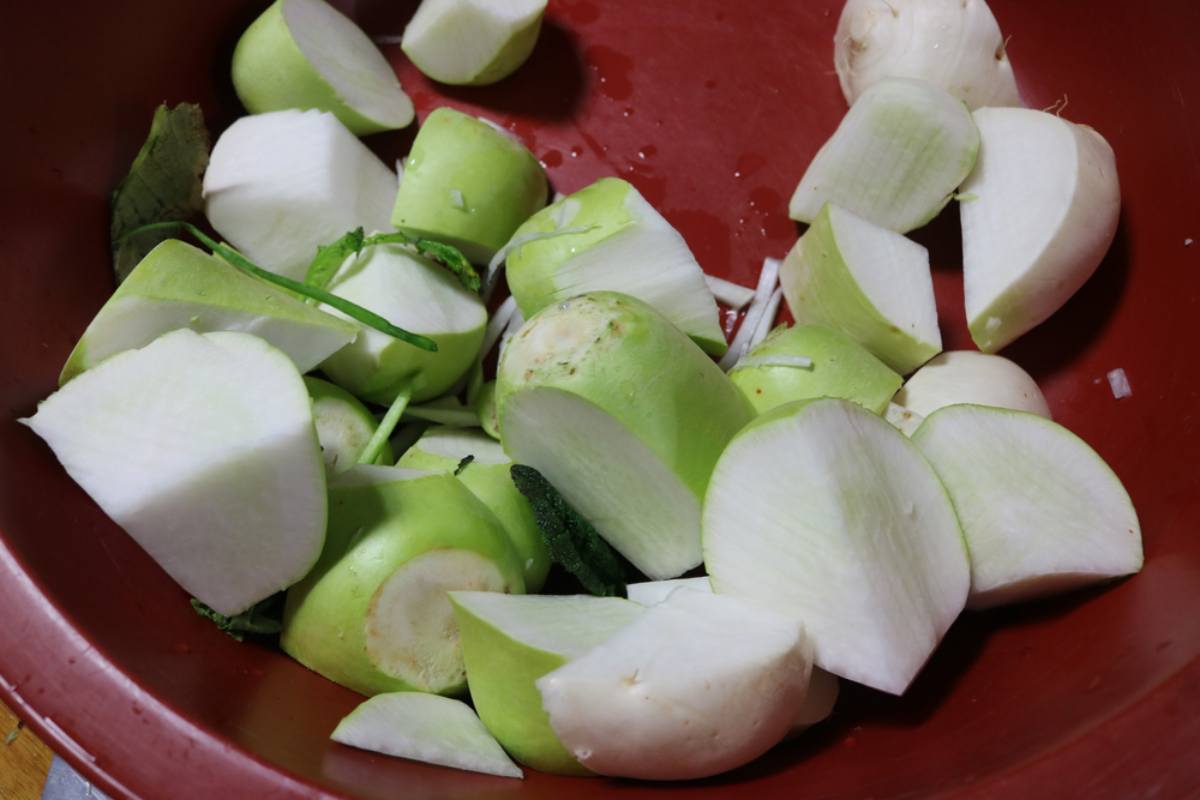
Start with the radishes. Wash them well. Cut them to suit the people you’re serving. If you have older relatives with weak teeth, slice the radish thin and flat so it’s easy to chew. If you love a crunchy bite, cut pieces about the width of a finger.
Once the radish is sliced, more than half the job is done. Put the slices in a bowl and add water to cover. You only need enough water to submerge the radish—about 2 liters is ideal for a typical batch of sliced radish.
Salt is what sets the seasoning. Aim for about 1½ tablespoons of salt per liter of water. If you used 2 liters, add three tablespoons. Stir well so the salt dissolves completely—if salt remains in clumps, the broth won’t season evenly.
Next add the essential flavor: chopped garlic. A generous, heaping tablespoon of minced garlic brings a bright, spicy aroma, smooths the radish’s sharpness, and adds savory depth to the broth. You’ll notice a clear difference in complexity when garlic is included.
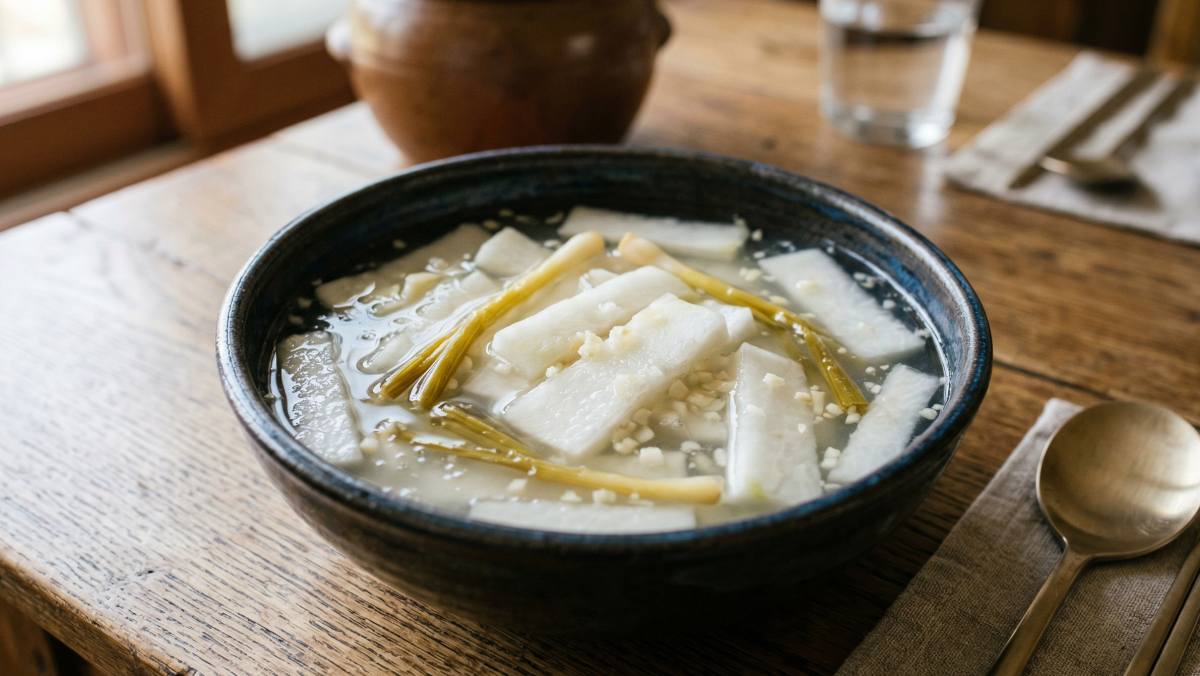
Finally, toss in a few scallion stalks from your kitchen. Scallions give the broth a fresh scent and make the dish look more appealing. Once the salt is dissolved and everything is mixed, your dongchimi is ready. It’s almost shockingly simple—but it works.
After you make dongchimi, you’ll probably wonder when it’s ready to eat. People often quote a fixed number of days, but it’s smarter to judge by how the dongchimi looks and tastes. Fermentation speed changes with the weather and your indoor temperature.
The easiest sign is the scallions. When their bright green tops start to turn yellow, it means the broth has matured. Taste the liquid then—you should get a sharp, refreshing tang. A well-fermented dongchimi’s broth is so clear and invigorating that sipping just the liquid can feel like a reset for your whole system.
Once the scallions yellow and the flavor develops, remove the scallions and refrigerate the dongchimi. Chilled dongchimi is fantastic with somyeon noodles or as a crisp side for grilled meats.
Dongchimi helps digestion and leaves your mouth feeling clean. If you’ve put it off because it sounded elaborate, try starting small with one or two radishes. You don’t need to peel and add apples or pears, or fuss with fancy seasonings.
All you need are radish, salt, and garlic. When your stomach feels heavy or you crave a cool, restorative broth on a spring day, this simple bowl of dongchimi becomes a trusty fridge staple. Using common ingredients and keeping the method simple is the real secret to great dongchimi.
Why not grab a radish at the market today—for your family or for yourself—slice it up, and try it? Spend five minutes now, and in a few days you’ll have a refreshing dongchimi ready to brighten the table.
Your daily horoscope! How will your day go?