As spring deepens, the scents of the season grow stronger on our tables. Among fleeting seasonal treats, dureup (aralia shoots) is a prized ingredient. With its floral aroma, pleasant bitterness, and crisp bite, it’s a springtime favorite. Here’s a recipe for 고추장 두릅 장아찌 — gochujang dureup jangajji — that can turn those shoots into a reliable, flavorful side all year long.
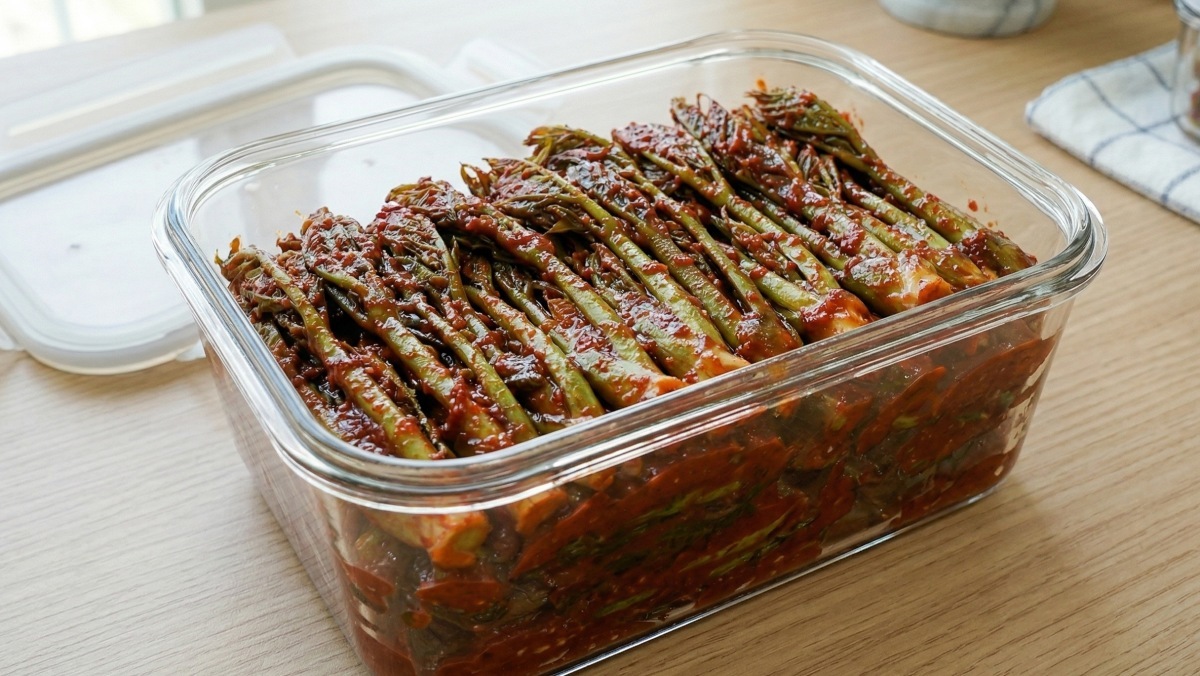
When selecting fresh dureup, avoid stems that are too thick or fibrous. Choose shoots with a vivid color and a slight springiness when gently pressed — that’s the sign of freshness.
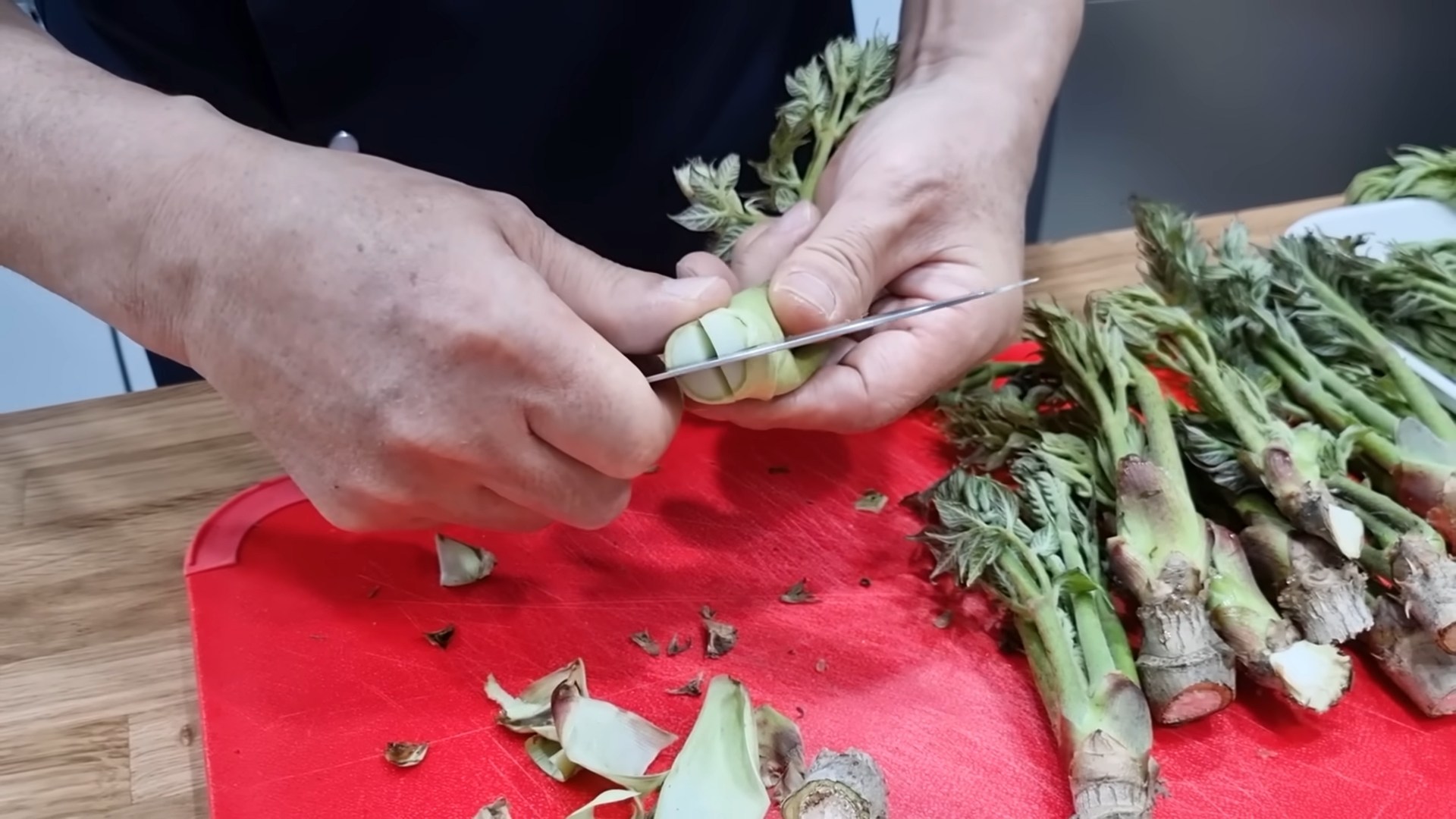
Proper trimming is essential for jangajji. Trim off the base and peel away the outer skin so the shoots are tender to eat. Make a small cross-cut at the base to help the seasoning penetrate and to improve texture. Removing any tough fibers is a key step for a polished result.
After trimming, blanch the dureup in boiling water — don’t eat them raw. Dureup contain mild toxins, so a quick blanch is necessary. Add one tablespoon of coarse sea salt to boiling water, drop in the shoots, and blanch for about 1–2 minutes. Immediately plunge them into cold water to preserve that crisp snap.
Next, remove all moisture. Any lingering water can shorten the pickles’ shelf life. Squeeze the shoots gently to release water, then use a dehydrator or sunlight to dry them further. If air-drying, allow about a day. This step helps the jangajji retain its flavor and stability during long-term storage.
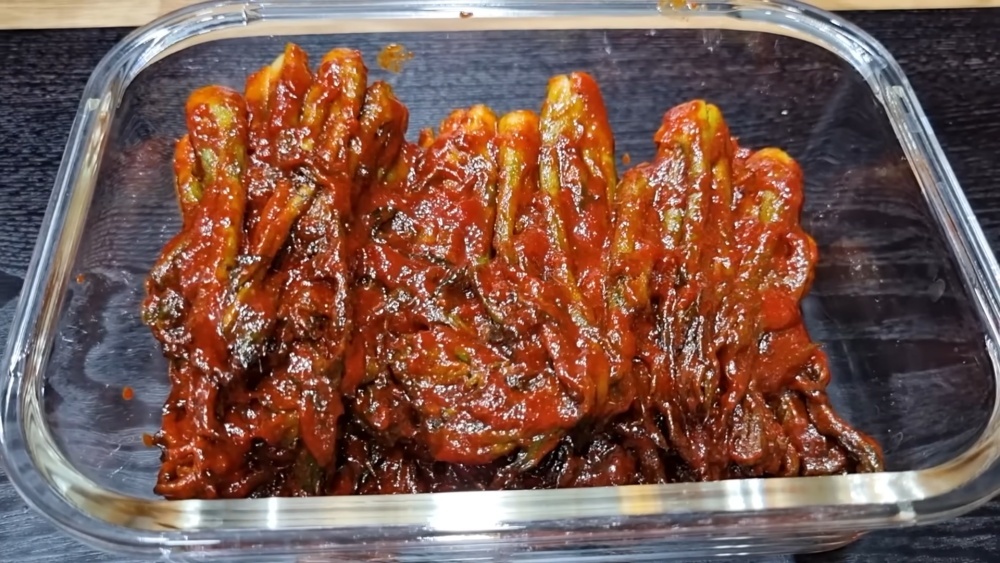
While the shoots dry, make the gochujang seasoning. Measure the gochujang to suit the amount of dureup, then sift in about half a cup of fine gochugaru (Korean red pepper powder). Add two to three tablespoons of jocheong (Korean syrup) for a balanced sweetness, and pour in 1/3 cup of soju to help with preservation. Stir everything until the sauce is smooth and glossy.
Toss the dried dureup in the prepared seasoning, making sure each shoot is evenly coated. Pack the finished jangajji into a jar, then spread any leftover gochujang on top to limit air exposure. A light sprinkle of salt on the surface can further extend storage life.
Dureup aren’t just flavorful — they’re nutritious too. Rich in saponins, they may help with fatigue recovery and support vascular health. Their dietary fiber also benefits digestion. Still, people with sensitive constitutions should enjoy them in moderation to avoid discomfort.
Beyond jangajji, dureup can be used in many ways. Blanch and dip them in cho-gochujang (vinegar-and-gochujang dip), fry them into crispy tempura, or dress them with doenjang for a milder, savory side.
If you spot dureup at a spring market or grocery store, don’t pass them up — grab a generous bunch. With these tips, you can capture the scent of spring and keep a little of the season lingering on your table long after it’s gone.
Your daily personal horoscope report! How will your day go?