Korean beauty labels are getting major glow-ups. Domestic cosmetics brands have rolled out a wave of large-scale rebrands, updating logos, slogans, flagship product lines and packaging. Many companies aren’t just launching new items or tweaking individual lines—they’re rethinking entire brand identities. As K-beauty presses further into global markets and competition heats up, brands want to communicate a distinctive image and compelling story to international shoppers.
Industry sources said that on the 8th, Manyo Factory, which launched in 2012, completed the biggest brand refresh in its history earlier this month. To make the name clearer, it removed the colon—switching from 'ma:nyo' to 'manyo'—and updated its slogan from 'As you wish, skin wizard' to 'Everyday magic for your skin.'
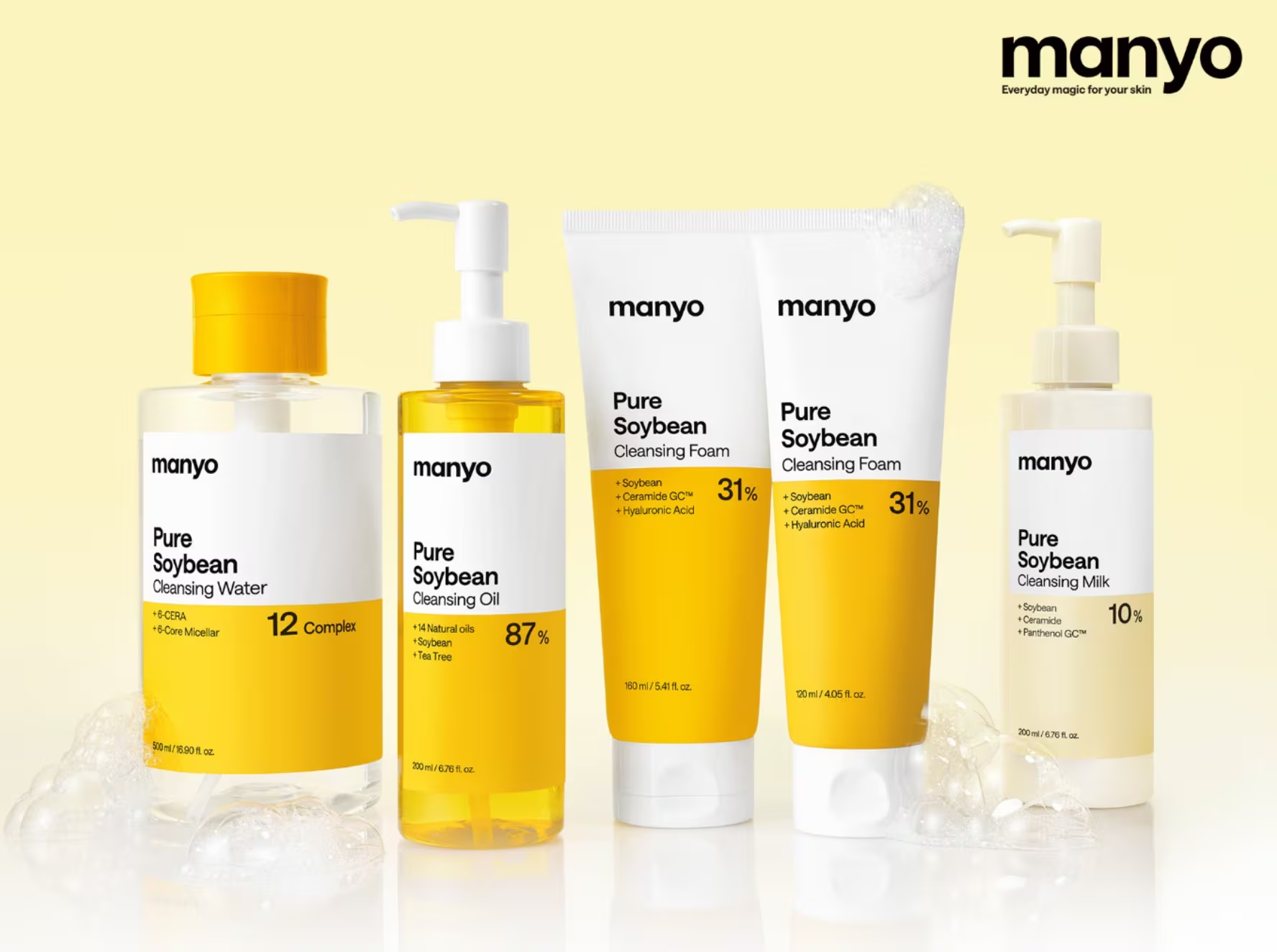
Manyo Factory also said it’s shifting its positioning from a focus on the safety of existing ingredients and formulations—often labeled 'clean beauty'—toward an 'active beauty' approach that emphasizes restoring skin balance and proactively improving skin condition.
Amorepacific’s Mise-en-Scène, launched in 2000, also went through its first rebrand at the end of last year to mark its 25th anniversary. The brand redesigned its logo, adopted the new slogan 'SHINE YOUR SCENE,' and repositioned itself as a 'global hair fashion brand.'
Shinsegae International’s first-generation beauty label Vidivici likewise overhauled its brand for its 20th anniversary last year. Aside from keeping the brand name, Vidivici revamped its logo, concept, core products, packaging and distribution strategy. It redefined itself as a 'Skin Core Beauty' brand focused on skin essentials and even applied woven fabric labels—more common in apparel—to its packaging.
Brands are also sharpening their image by renewing signature products. Amorepacific’s Sulwhasoo relaunched its essential line last year, upgrading core items like Jaum Soo EX, Jaum Emulsion EX and the firming cream EX to boost ingredients and efficacy, while underscoring Sulwhasoo’s well-aging message—aging gracefully, healthily and elegantly.
Amorepacific’s Hera refreshed its bestseller 'Sensual Nude Balm' earlier this year and introduced new base-makeup products last year. Those moves aim to keep the brand competitive in both color cosmetics and base makeup while drawing in new customers.
Industry observers point to overseas expansion and fiercer competition as the main drivers behind all these rebrands. With global interest in K-beauty surging and many brands rising quickly, simply being 'Korean cosmetics' no longer guarantees differentiation.
Among long-established brands, there’s a clear push to borrow the quick, youthful communication style of indie labels that connect fast with younger shoppers. The goal is to preserve core brand assets while restyling logos, slogans, packaging and flagship lines in a cleaner, more intuitive way to keep pace with market changes.

Marketing to boost recognition after a rebrand is also stepping up. Manyo launched its first brand-supporter program, 'manyo Muse,' to deepen consumer conversations; Vidivici tapped LE SSERAFIM’s Kazuha as a global ambassador to amplify its refreshed image; and Mise-en-Scène expanded international touchpoints through a TikTok challenge featuring aespa and influencers.
Still, experts warn that a rebrand can backfire if it erases the brand assets that customers already love. Innisfree’s major 2023 rebrand—which expanded its 'Jeju naturalism' identity into a fictional island concept called 'THE NEW ISLE'—aimed to attract younger shoppers and global buyers. But critics inside and outside the industry argued the change diluted the identity Innisfree had built around naturalism and Jeju-sourced ingredients. Innisfree’s sales declined from KRW 299.7 billion (≈ $224.8 million) in 2022 to KRW 273.8 billion (≈ $205.4 million) in 2023, then to KRW 224.6 billion (≈ $168.5 million) in 2024 and KRW 209.8 billion (≈ $157.4 million) in 2025.
An industry official said, “To establish a brand overseas, you need more than strong products—you also need a clear image that sticks with consumers. If you erase the core assets that existing customers remember, you risk weakening your differentiation, so brands must pursue rebranding strategies carefully.”