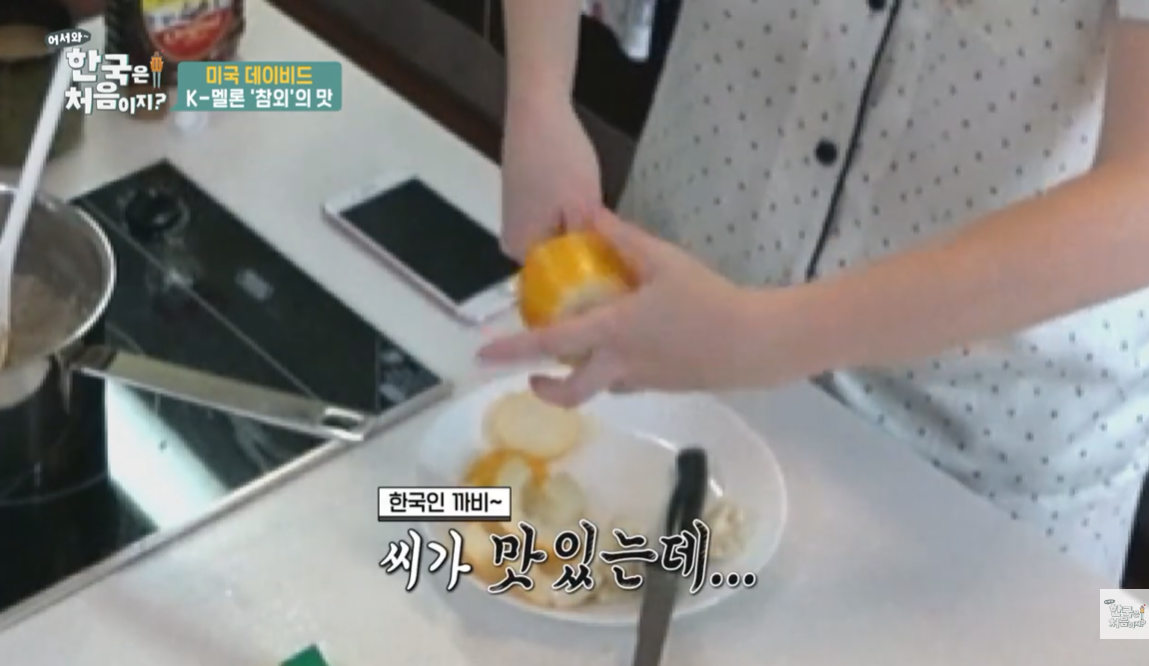
 [Herald Economy = Reporter Han Ji-suk] A post claiming that eating chamoe (Korean melon) seeds reveals a person’s social status spread online and drew sharp criticism toward the author.
On the 29th, the online community The Ku published a thread titled "My husband eats chamoe seeds," a post that had been circulating on Instagram and other social platforms and quickly drew attention from netizens.
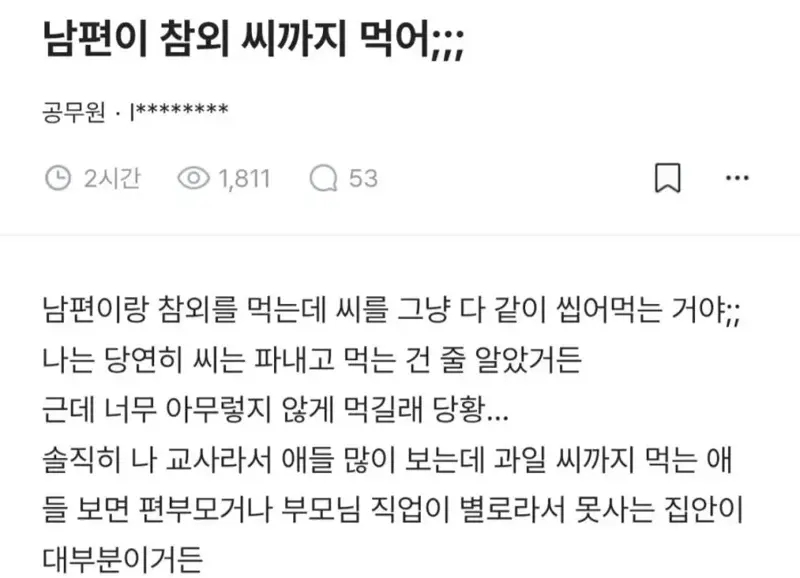 The original post first appeared on the workplace forum Blind. That site requires users to list their employer to join, and the author identified her occupation as a public servant.
The author, identified only as A, wrote, "My husband and I were eating chamoe, and he just chews the seeds right along with it." She added, "I thought you were supposed to scoop out the seeds, so I was taken aback that he ate them so casually."
She continued: "To be honest, I'm a teacher and I see many kids. When children eat fruit seeds, they usually come from single-parent homes or families where the parents' jobs aren't well regarded and they don't have much. Seeing an adult do the same feels unkempt, and honestly, it put me off."
A went on: "I've learned these manners since childhood. I didn't notice during dating, but after we married, these little differences hit me hard. We're newlyweds—do I have to put up with every little thing like this?"
Commenters quickly condemned her post. Responses included: "You're the one with poor upbringing for removing the seeds. The best part of chamoe is the seeds," "You're drunk on your 'teacher' ego and spouting empty words," "I wonder how biased your teaching must be," "I doubt your qualifications as a teacher," "If you scrape that part off, what's the point of eating chamoe?" and "How did a matter of taste turn into an attack on someone's family background?"
Chamoe, a summer fruit, is sweetest from June through August. It contains more folic acid—a nutrient that helps prevent fetal neural tube defects—than any other fruit, earning it the nickname "a fruit for pregnant women." This folic acid is concentrated in the white area that holds the seeds (the seed cavity, or placenta), where levels are about five times higher than in the flesh, along with vitamin C. Some people remove that white part to avoid an upset stomach. Chamoe also has high water content and is rich in potassium, which helps the body excrete sodium and can support weight loss. The bitter compound cucurbitacin, found around the stem, has been shown to inhibit cancer cell growth.