It’s time to bring zip-top bags out from the back of the kitchen cabinet. You may have used them for portioning food or storing leftovers, but these clear, sturdy pouches can serve many more practical purposes than just holding extra vegetables or frozen meat.
You don’t need fancy supplies or special skills. Pick up a bag, seal it with a simple slide or a press of your fingers, and you’ll notice small but meaningful improvements from the living room to the bathroom and inside your drawers.
How to clean zipper bags
To reuse zip-top bags safely, remove all food residue through a proper cleaning routine.
Turn the bag inside out before washing. Flipping the bag helps dislodge debris from the corners. Use a soft sponge with a mild detergent, and rinse thoroughly under running water so nothing remains in the zipper channel.
You should also sanitize the bag. Use warm—not boiling—water, since LDPE plastics typically tolerate heat roughly between 70–100°C, and boiling water can deform the material. To sanitize without warping the plastic, soak the bag briefly in a solution of vinegar or baking soda and water.
Drying after washing is important. Leaving moisture inside the bag encourages mold and bacterial growth. Hang the bag with its opening facing down, or prop it open with a cup so air can circulate, and let it dry completely in the shade.
Be cautious: if the zipper no longer seals tightly, the bag has lost transparency, or the surface shows fine scratches, bacteria can flourish. In that case, dispose of it with your plastic waste stream or according to local recycling rules rather than in regular trash.
Living and clothing care
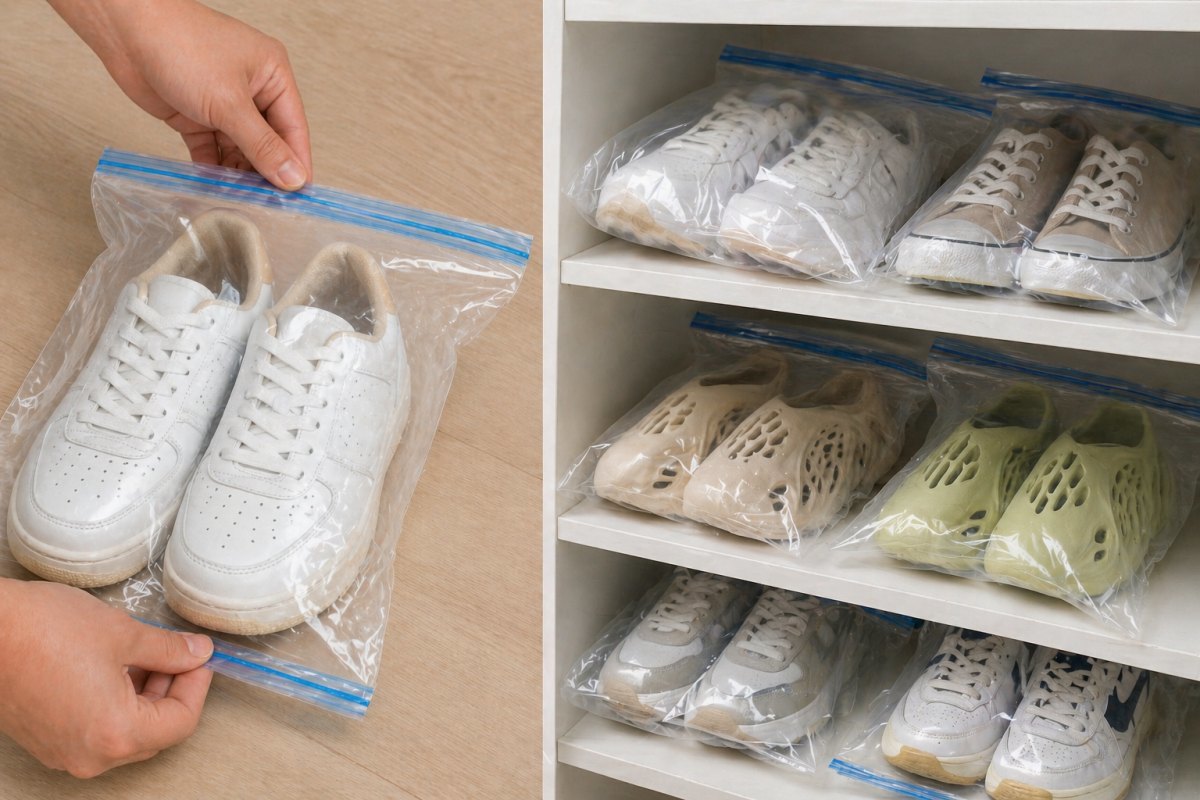
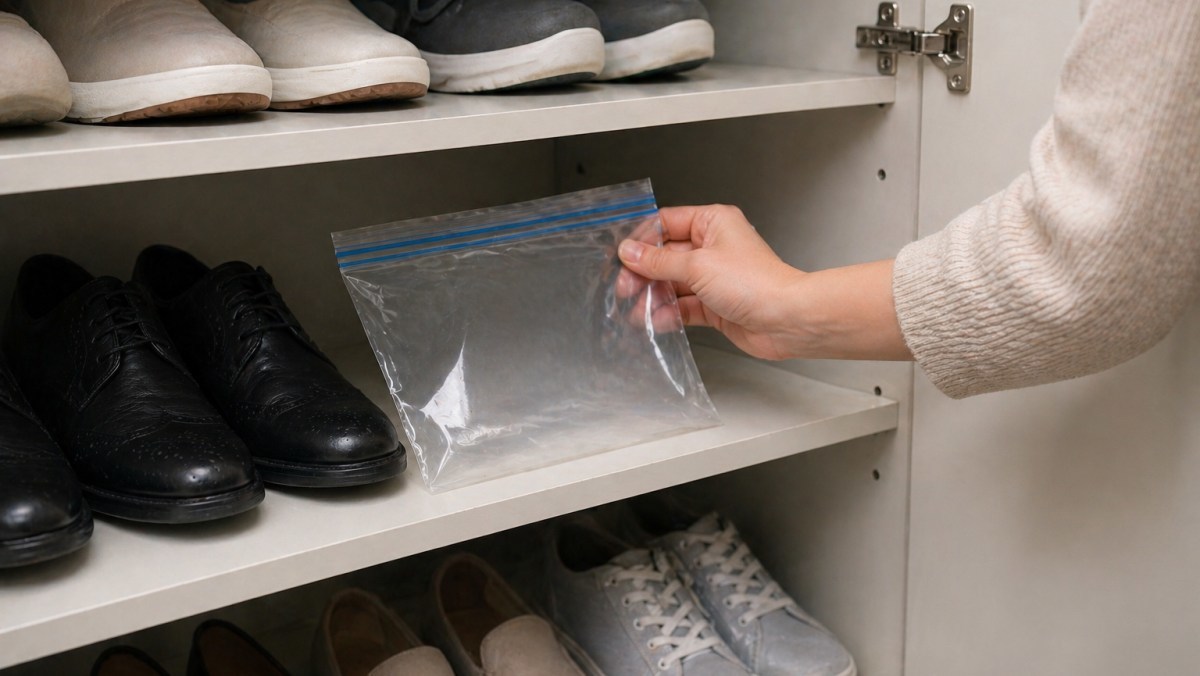
To slow it, store shoes in sealed zip-top bags. Wipe off dirt and make sure the shoes are completely dry, then put them in a bag and press out as much air as possible before sealing. That sealed environment slows oxidation and helps prevent mold and odors in your shoe cabinet.
Collectors of high-end or limited-edition shoes frequently use zip-top bags to preserve color and maintain shape in storage.
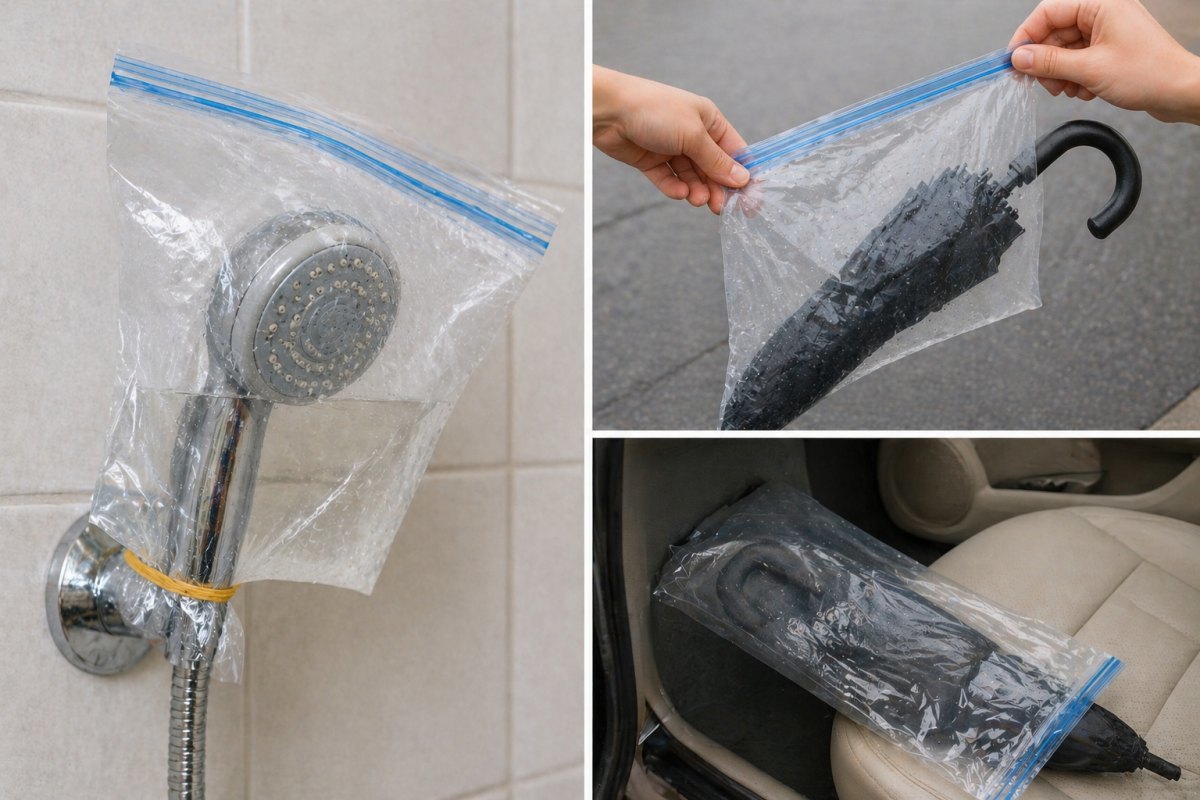
Mix equal parts vinegar and warm water in a zip-top bag, slip it over the showerhead so the fixture is fully submerged, and secure the bag with a rubber band. Let it sit for about an hour; the vinegar’s acidity breaks down alkaline mineral deposits and grime. Remove the bag and run the water at high pressure to rinse away loosened residue. This restores water flow and offers a mild disinfecting effect—without harsh chemical cleaners—making it an eco-friendly method for routine maintenance.
On rainy days, use zip-top bags to contain wet umbrellas. Carrying a wet umbrella onto public transit or into indoor spaces can drip and create discomfort for others. Disposable plastic covers tear easily and contribute to waste, but a large zip-top bag is a durable alternative.
A folding, three-section umbrella fits into a large zip-top bag (L size or bigger). Shake off excess water, place the umbrella inside, and seal the top. The bag keeps your bag or briefcase dry, helps prevent slippery floors on trains or buses, and eliminates the need for an indoor umbrella stand—handy for commuters and students alike.
Maximizing space while traveling
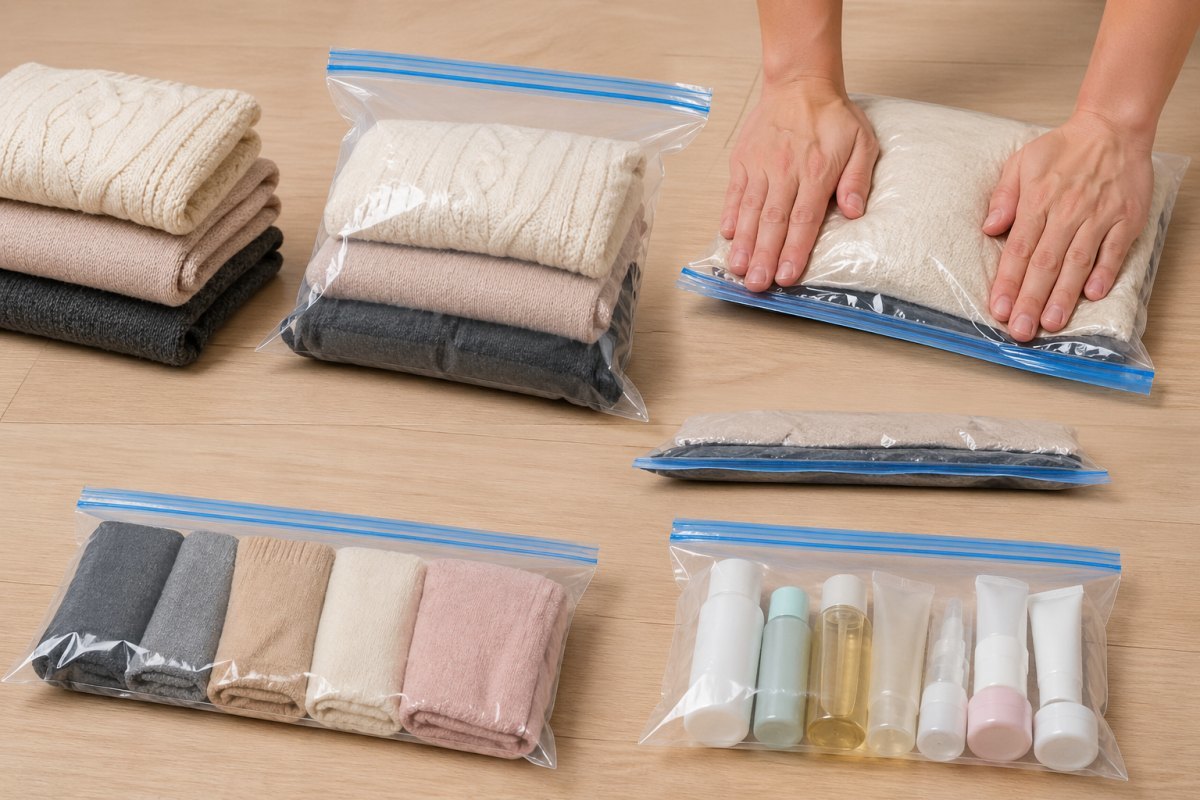
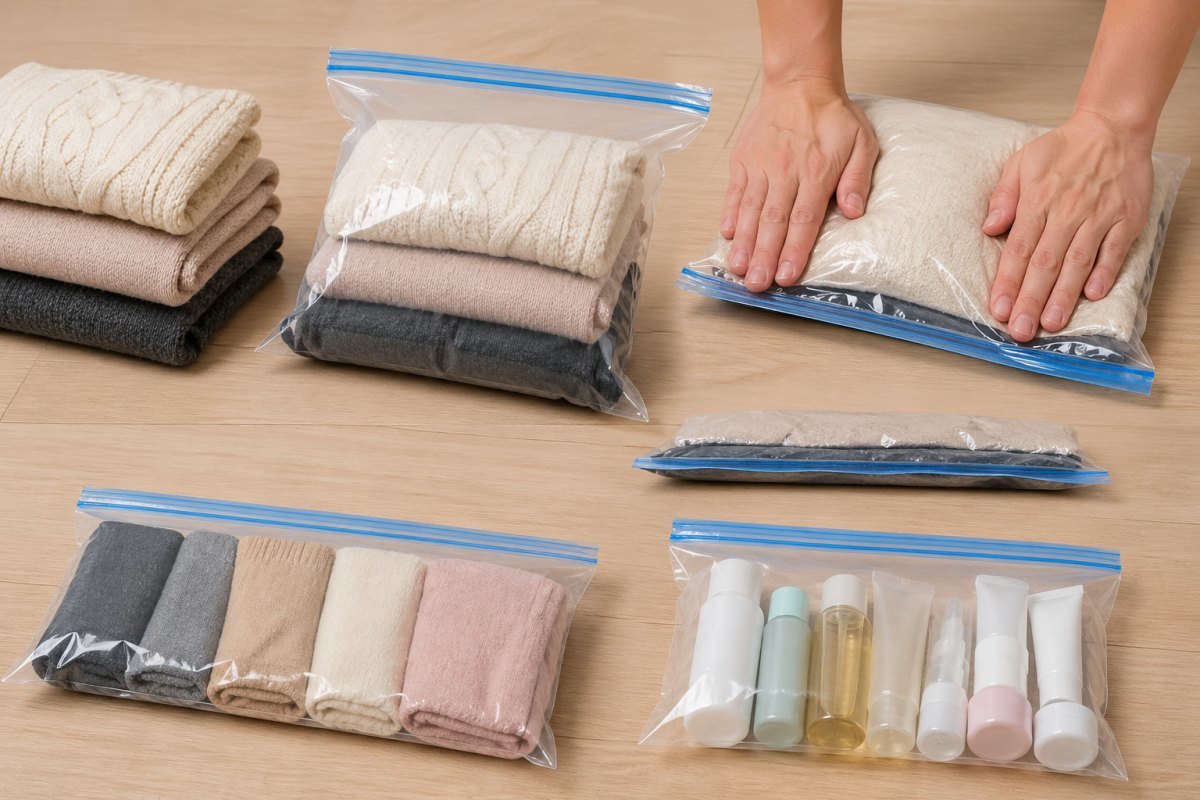
Fold clothes to fit the bag, close about 90% of the zipper, and leave the remaining 10% open. Lay the bag on the floor, press down slowly with your body weight or roll the bag from one end to push air out through the unsealed gap. Once the air has escaped, quickly seal the rest of the zipper to lock in the reduced volume. You can shrink bulk by more than 50% using this method.
Zip-top bags also protect other items while traveling. Liquids and personal-care products can expand under reduced cabin pressure at altitude, causing caps to pop or contents to leak.
Sealing items inside a bag provides a second layer of protection against leaks. This is especially important for oily or viscous products—serums and oils—that stain and are difficult to remove.
Store wet swimsuits, sweaty workout clothes, or soiled underwear in zip-top bags so they don’t mix with clean garments in your suitcase. Sealing contaminated laundry traps odors and bacteria, which is useful when you move between accommodations. Separating each day’s worn clothes into individual bags also saves time at home: you can toss each bag straight into the washer without sorting.
Use zipper bags at home and outdoors!
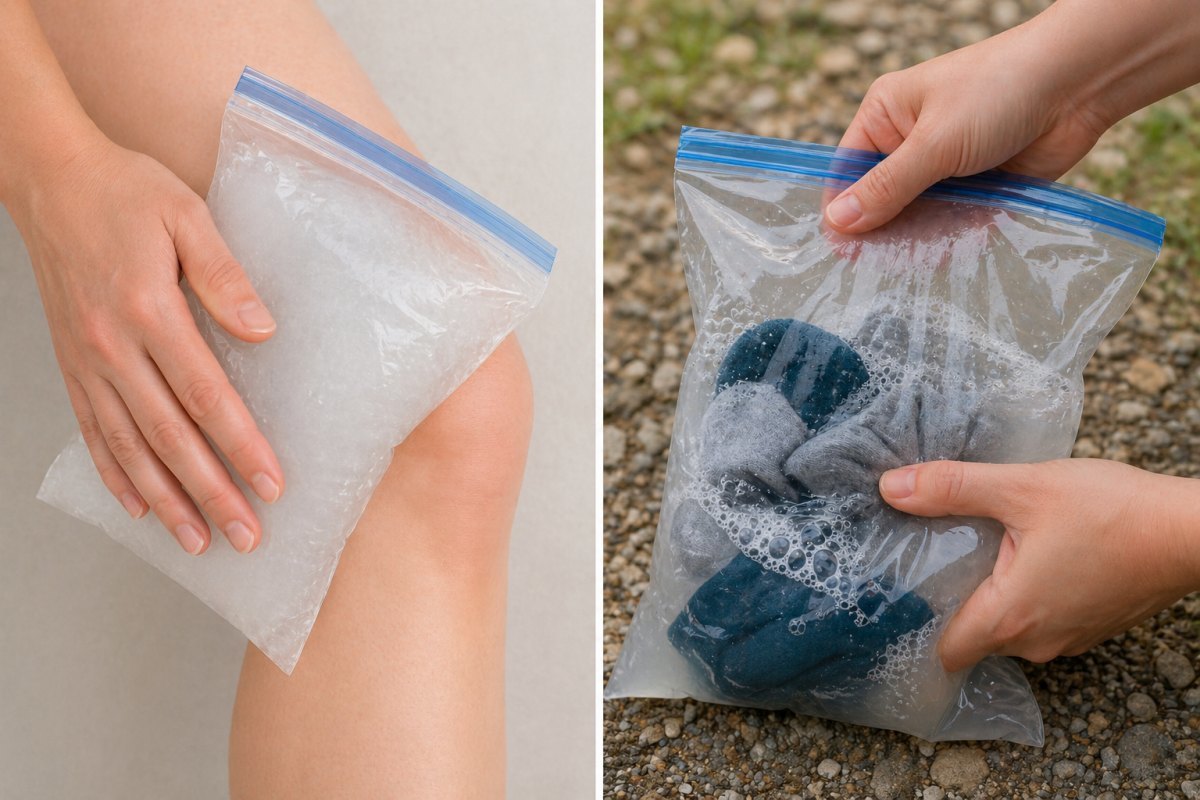
On camping trips, zip-top bags can double as a mini washing machine. Put socks or underwear in a bag with a little water and detergent, seal it, and shake—an efficient way to clean small items using minimal water.