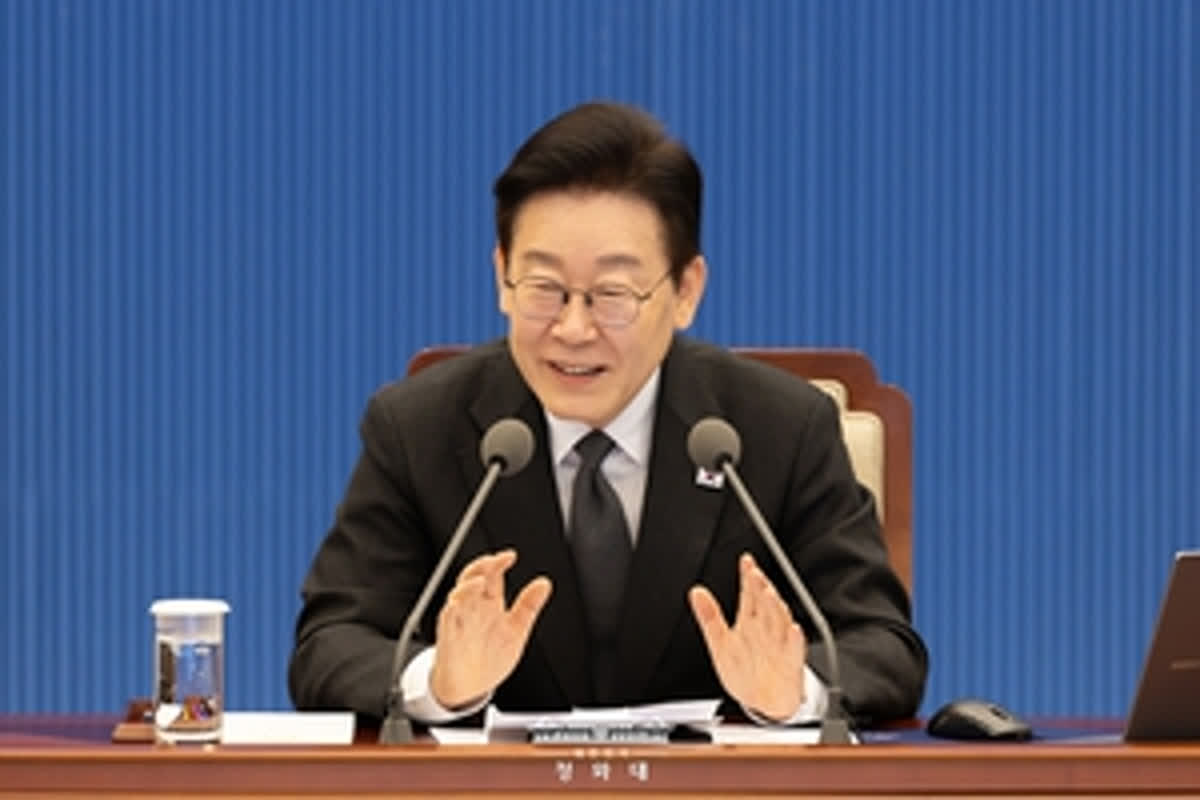
 [Herald Economy=Yang Dae-geun Reporter] “I read the government’s press release and had hopes, but when I examined the details, they only increased service volumes to claim a statistical price cut. There’s nothing here that consumers will actually feel,” Rep. Lee Hoon-ki said.
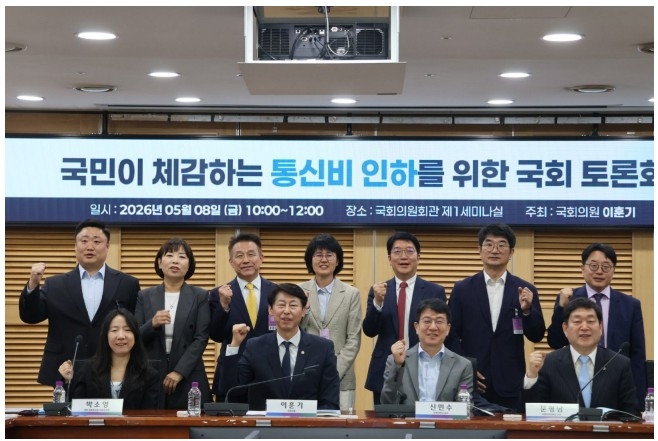
Lee Hoon-ki, a Democratic Party lawmaker representing Incheon’s Namdong-eul district and a member of the National Assembly’s Science, ICT, Broadcasting and Communications Committee, convened a forum at the National Assembly on May 8 titled “Parliamentary Forum on Lowering Telecom Fees That Citizens Can Feel.” He characterized the government’s telecom policy as “fine-tuning that preserved the market structure” and urged a fundamental paradigm shift.
Lee argued that, just as an amendment to the Commercial Act drove up stock prices, meaningful reductions in telecom fees require addressing the market’s underlying structure. He singled out the government’s recently announced 5G plans priced in the 20,000 KRW range (approximately 15 USD) as insufficient without structural reform.
At the forum, experts said the tariff reform the government announced in April has a negligible effect on user-experienced quality or household financial relief.
Moon Hyeong-nam, dean of the Korea International College at Sookmyung Women’s University, conducted a close analysis of the government’s figures and said, “The government’s stated per-person monthly saving is 488 KRW (approximately 0.37 USD), but after excluding carriers’ revenue reductions and related adjustments, the user-perceived saving is only about 180 KRW (approximately 0.14 USD) per month.” He also criticized the low QoS baseline of 400 kbps, noting that a speed incapable of supporting high-definition video like YouTube does not meet the stated goal of protecting citizens’ basic rights.
Some participants dismissed the government’s fee-reduction efforts as an annual PR exercise. Im Hyung-do, a special-appointed professor of computer engineering at Kyung Hee University, argued, “We would be better off skipping the yearly negotiations between the three major carriers and the government.”
Panelists also examined structural reasons why telecom prices rarely decline. Jung Ji-yeon, secretary-general of the Korea Consumer Federation, warned that the market has ossified into an oligopoly that severely limits competition. “Resolving these competition constraints decisively and creating a market environment where consumers have real choices must be a priority,” she said.
The forum was chaired by Shin Min-su of Hanyang University. Presentations were delivered by Moon Hyeong-nam of Sookmyung Women’s University and Park So-young, a legislative researcher at the National Assembly Research Service. Panelists included Im Hyung-do; Yeom Su-hyun, head of KISDI; Jung Ji-yeon; Song Cheol, director at KTOA; Cho Su-hyung, CEO; Kim Hyup, vice chairman of the Korea Policy Forum; and Kim Jun-mo of the Ministry of Science and ICT.