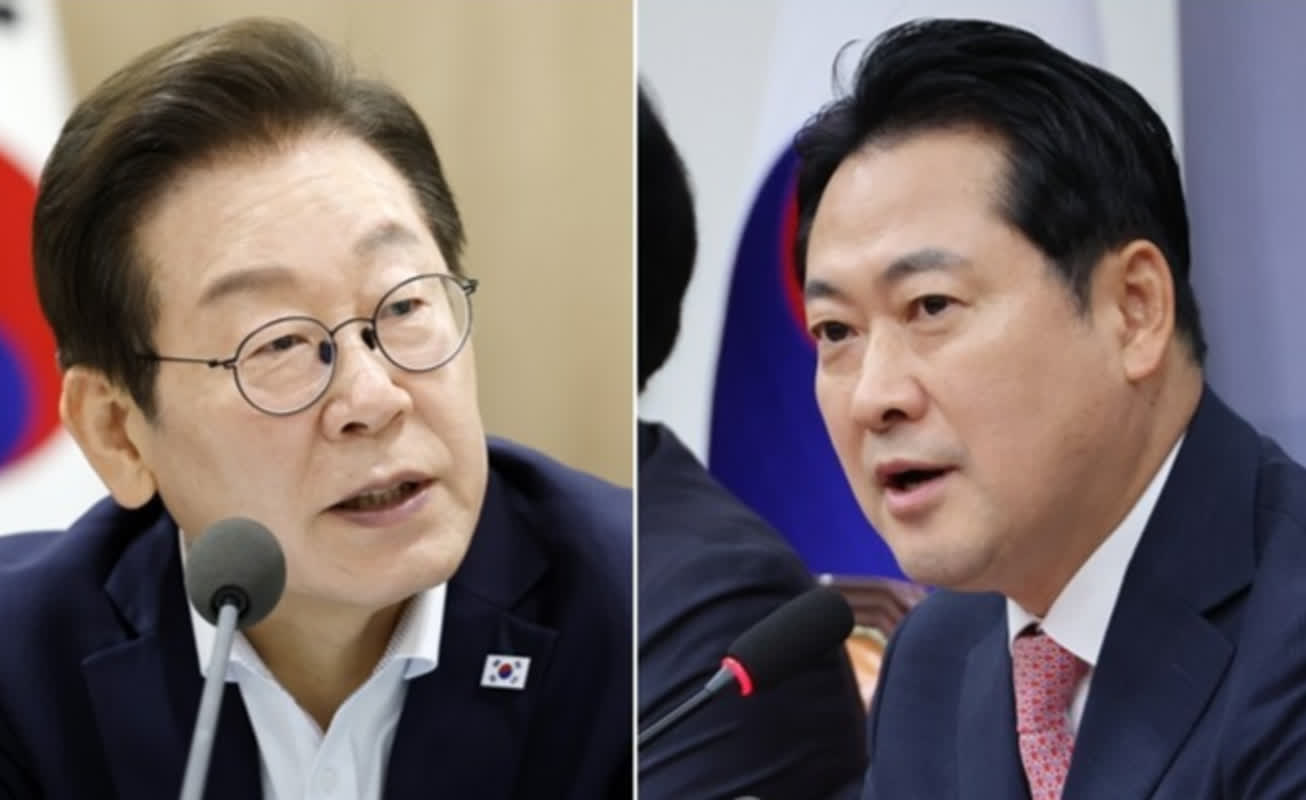
[Anchor] The proposal by Blue House policy chief Kim Yong-beom to consider a so‑called \"national dividend\" that would return excess tax revenue from the AI industry to the public has sparked growing controversy. The Blue House says his remarks were personal views, but opposition parties have denounced the idea as socialist. This is Lee Da‑hyun. [Reporter] Kim Yong-beom raised the prospect of a national dividend. In a social media post, he wrote that if a strategic position in the AI infrastructure supply chain produces a structural boom that leads to unprecedented excess tax receipts, how to use that money is not simply a matter of choice but a design issue that must be addressed. He added that the gains from the AI infrastructure era will not belong to any single company, and therefore some of those gains should be structurally returned to all citizens. The fallout from Kim's post has been mounting. Bloomberg covered the proposal and reported that it helped trigger a sharp drop in the KOSPI as it approached the 8,000 mark. Although Kim described the windfall as \"excess tax revenue,\" investors feared the state might step in to redistribute profits from AI‑related firms, undermining market sentiment. The Blue House drew a clear line, saying the policy chief's social media post reflected his personal opinion and was not part of any internal Blue House deliberation or review. The issue quickly spilled into partisan politics. The opposition attacked the proposal as anti‑market. Jang Dong‑hyeok, leader of the People Power Party, accused the administration of revealing its \"communist colors,\" asking who would work harder or invest more if the government takes all the gains when people earn a lot. Song Eon‑seok, the party's floor leader, said Kim Yong‑beom had sown instability in the capital markets and demanded his immediate dismissal. The Democratic Party framed the backlash as a political attack and moved to defend Kim. Ahn Do‑geol of the Democratic Party clarified that the idea was not for the government to forcibly seize corporate profits. Rather, he said, the point is to avoid spending a large windfall in corporate tax receipts without principles or long‑term planning if an AI and semiconductor boom produces massive excess revenue. This is Lee Da‑hyun for Yonhap News TV. [Video reporting: Lee Il‑hwan, Yoon Je‑hwan, Jung Chang‑hoon] [Video editing: Park Eun‑joon] [Graphics: Kang Seong‑hoon] [News review] Yonhap News TV inquiries and tips: KakaoTalk/LINE jebo23 Lee Da‑hyun (ok@yna.co.kr)
AI 산업 초과 세수, 국민 배당금 제도의 필요성은?
Lee Da-hyun. | 2026.05.13
[Anchor] The proposal by Blue House policy chief Kim Yong-beom to consider a so‑called \"national dividend\" that would return excess tax revenue from the AI industry to the public has sparked growing controversy. The Blue House says his remarks were personal views, but opposition parties have denounced the idea as socialist. This is Lee Da‑hyun. [Reporter] Kim Yong-beom raised the prospect of a national dividend. In a social media post, he wrote that if a strategic position in the AI infrastructure supply chain produces a structural boom that leads to unprecedented excess tax receipts, how to use that money is not simply a matter of choice but a design issue that must be addressed. He added that the gains from the AI infrastructure era will not belong to any single company, and therefore some of those gains should be structurally returned to all citizens. The fallout from Kim's post has been mounting. Bloomberg covered the proposal and reported that it helped trigger a sharp drop in the KOSPI as it approached the 8,000 mark. Although Kim described the windfall as \"excess tax revenue,\" investors feared the state might step in to redistribute profits from AI‑related firms, undermining market sentiment. The Blue House drew a clear line, saying the policy chief's social media post reflected his personal opinion and was not part of any internal Blue House deliberation or review. The issue quickly spilled into partisan politics. The opposition attacked the proposal as anti‑market. Jang Dong‑hyeok, leader of the People Power Party, accused the administration of revealing its \"communist colors,\" asking who would work harder or invest more if the government takes all the gains when people earn a lot. Song Eon‑seok, the party's floor leader, said Kim Yong‑beom had sown instability in the capital markets and demanded his immediate dismissal. The Democratic Party framed the backlash as a political attack and moved to defend Kim. Ahn Do‑geol of the Democratic Party clarified that the idea was not for the government to forcibly seize corporate profits. Rather, he said, the point is to avoid spending a large windfall in corporate tax receipts without principles or long‑term planning if an AI and semiconductor boom produces massive excess revenue. This is Lee Da‑hyun for Yonhap News TV. [Video reporting: Lee Il‑hwan, Yoon Je‑hwan, Jung Chang‑hoon] [Video editing: Park Eun‑joon] [Graphics: Kang Seong‑hoon] [News review] Yonhap News TV inquiries and tips: KakaoTalk/LINE jebo23 Lee Da‑hyun (ok@yna.co.kr)

Recommended Posts
Is It Time for a Change? Inside the Controversy Surrounding the Leadership of South Korea's People Power Party
Is South Korea's Debt Ratio Really Low? President Lee Jae-myung's Bold Claims Explained
How Kim Tae-heum's Vision for Chungnam is Transforming Local Governance in 2026
Political Violence Threatens Democracy: Insights from President Yoon's Response to the Trump Shooting Incident

Busan Education Chief Race: Why Are Candidates Fighting Over Unification?
Shocking Allegations: Personal Data Leaked in Shin-an County Election Scandal
Latest Popular Posts
Real-time TOP
1
2026 지방선거: 국민의힘 장동혁 대표의 전략과 민심 분석
2026.05.05