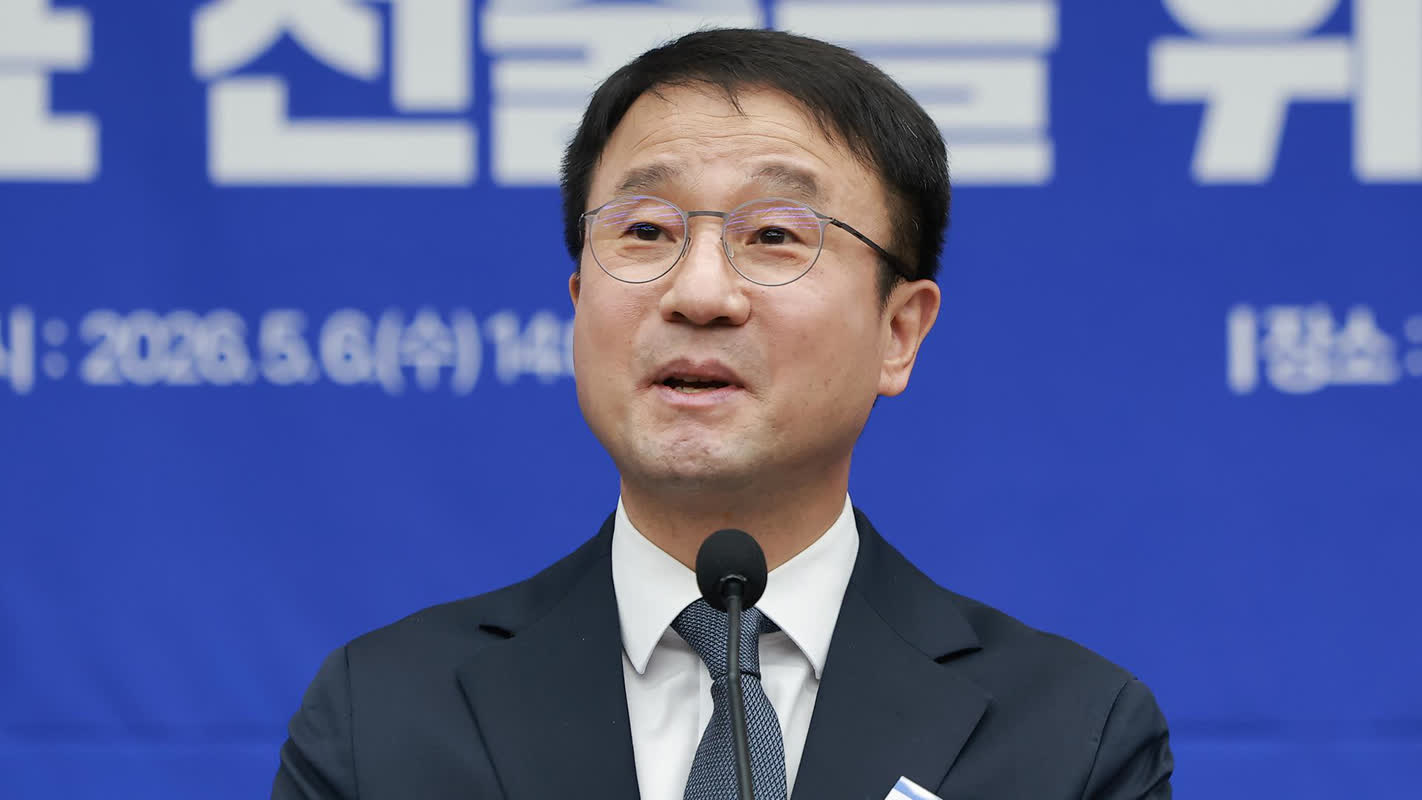
[Asia Times Yeongnam Bureau=Reporter Gu Jin-hong] Ahn Byeong-guk, the candidate for District La (Jukdo–Jungang-dong) for the Pohang City Council, has left the People Power Party and announced he will run as an independent for a fourth term. On the 9th, Ahn opened his campaign office in Jukdo-dong, Buk-gu, Pohang, and formally launched his campaign.
Ahn said, “I will inject new life into the stagnant original downtown using the legislative experience and expertise I’ve built over the years,” explaining his reasons for running as an independent and his determination. He stressed that this election should be about choosing leaders who can deliver regional development, not merely a contest between parties, and he appealed to residents for their support.
His strongest asset is practical, field-based policy expertise. A three-term councilor, he continued his studies while in office and earned a Ph.D. in Urban and Regional Planning from the graduate school at Handong University.
He turned past electoral defeats into an opportunity for research on regional development, studying the hollowing out of Pohang’s downtown from an urban engineering perspective—an experience local political circles regard as a distinctive asset.
Ahn has made “completing the revival of the original downtown” the centerpiece of his campaign. “Now is the time to turn the long-prepared blueprint for improving the downtown’s structure into reality,” he said, and he laid out four specific initiatives.
His main pledges include: expanding housing through redevelopment of roughly 5,000 housing units in the Jukdo–Jungang area; transforming the Jungang commercial district into an economic hub that blends youth entrepreneurship and cultural activity; creating a stay-focused tourism corridor linking Jukdo Market and the Yeongildae commercial area; and developing a civic mixed-use cultural space around the old Pohang Station and Haksan Park. In particular, his plan to link housing improvements with attracting young residents reflects his expertise in urban regeneration.
On his decision to leave the party, Ahn said, “Leaving the party I long belonged to is painful, but I have decided to focus on the core meaning of local elections—the lives of residents—rather than disputes over nominations.” He added, “Free from party constraints, I will be a true local representative for the people of Jukdo and Jungang-dong.”
Ahn’s independent bid is likely to complicate the district’s race. Local observers say the key question is whether his solid organizational base and expertise in urban regeneration can offset the disadvantages of running without party backing.
The decline or growth of a city depends on effective administration and well-crafted policy, not political slogans. Observers will be watching whether Ahn’s downtown regeneration blueprint can move beyond campaign promises and become a practical force that reshapes Pohang.
This independent challenge will be an important test of whether local politics can shift from party-centered contests to ones focused on individuals and policy. Its outcome could serve as a benchmark for the future competitiveness of Pohang’s original downtown.