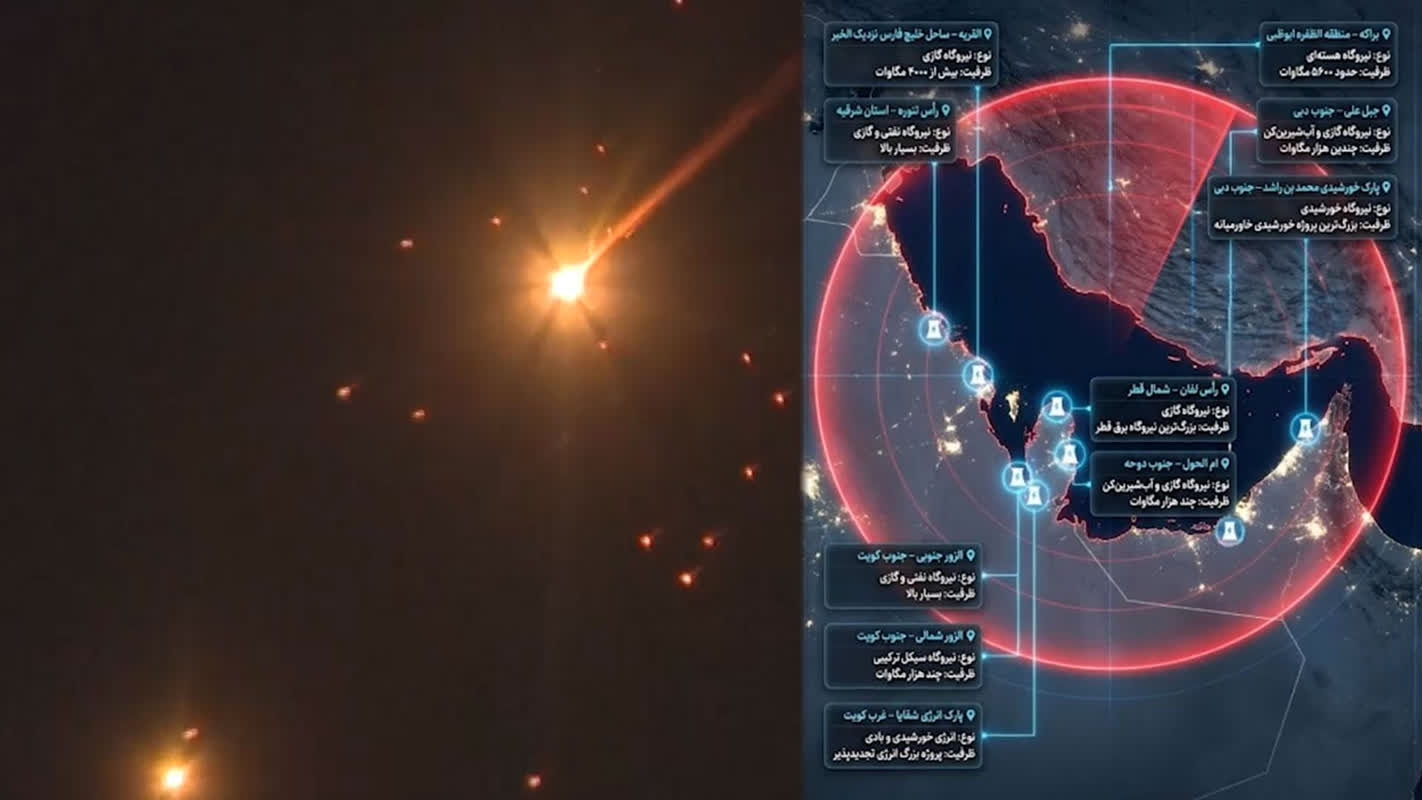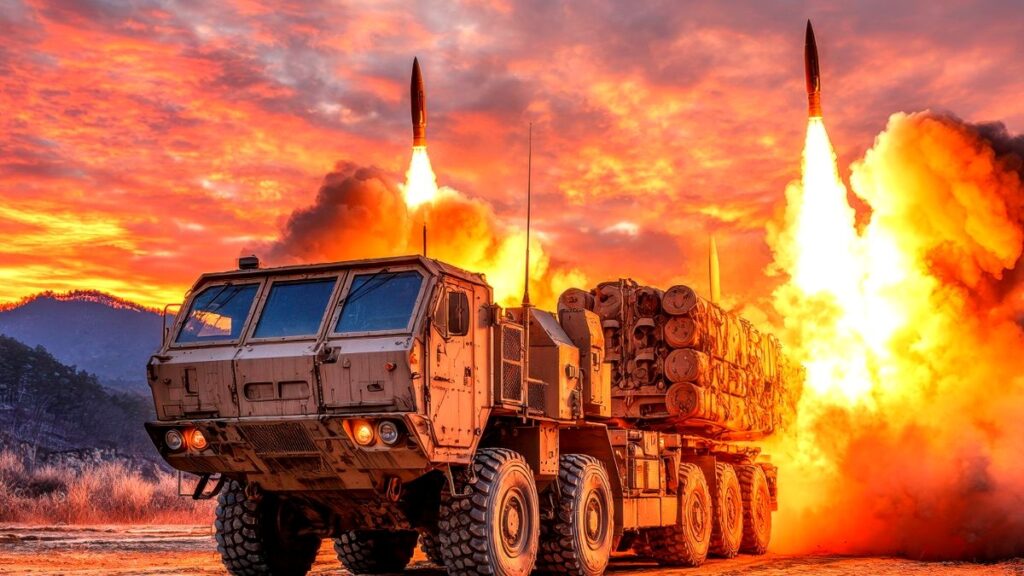
The South Korean medium-range surface-to-air missile Cheongung-II, deployed in the United Arab Emirates, reportedly intercepted 90.3% of incoming Iranian missiles during a recent attack, drawing interest from the global defense market.
Developers, however, reacted with measured calm. "This figure isn't surprising," said Song Kyung-rok, lead researcher at the Agency for Defense Development. "We passed every test during development, so the result was within expectations."
That isn't mere modesty. Since its first ballistic-missile interception test in 2016, the system has not recorded a single failure, a record that underscores Cheongung-II's technical maturity.
Detection-to-intercept times are under one minute, and the interceptor can strike a rapidly descending ballistic missile near its center — within tens of centimeters — delivering pinpoint accuracy. Song likened the challenge to "hitting a bullet with a bullet."
UAE combat data, however, remain classified; developers have not received detailed reports. That secrecy could limit future performance upgrades and complicate export negotiations.
How Side Thrusters Make the Difference: Agility in the Final Moments
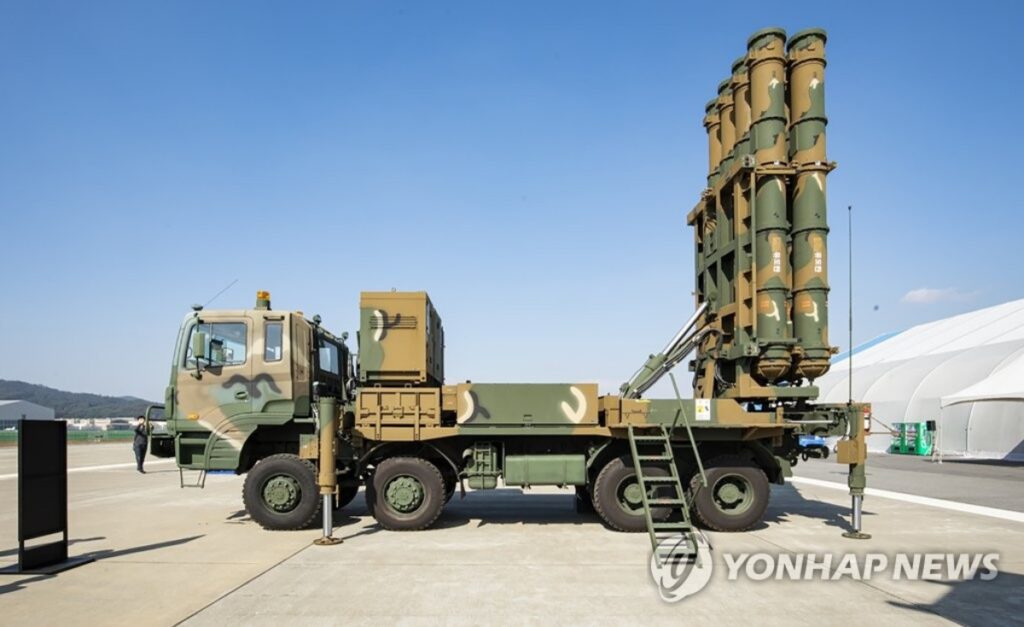
Cheongung-II's chief advantage is its side thruster. In the terminal engagement phase the interceptor can execute near-instantaneous lateral maneuvers to strike a target's center — a sophisticated flight-control capability.
Some systems, such as the Patriot, also use hit-to-kill techniques, but Cheongung-II distinguishes itself with pronounced agility in the final seconds of engagement.
The capability is particularly useful against North Korea's maneuvering ballistic missiles.
Song noted that the Hwasong-11ga (KN-23) and Hwasong-11na (KN-24) families perform pull-up maneuvers that complicate trajectory prediction, but their low-altitude gliding reduces speed and can actually make interception easier.
Cheongung-III, scheduled for completion in 2030, will be optimized for such targets: range and altitude will double, simultaneous engagement capacity will triple, and the defended area will expand four- to fivefold.
In the Drone Era, the Dilemma of Expensive Missiles
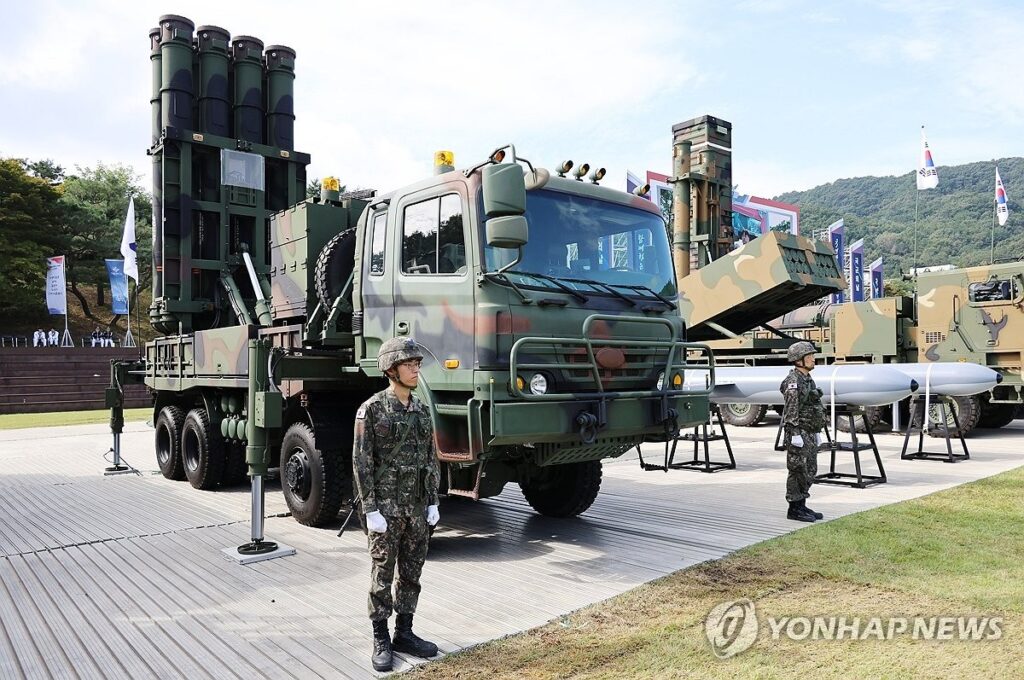
Cheongung-II's success does not solve every threat.
Song warned that employing Cheongung-II or Patriot interceptors against long-range drones such as Iran's Shahed or Ukraine's Palyanytsia is economically unsound — it means launching costly interceptors at low-cost drones.
A more cost-effective option is directed-energy weapons. Israel's Iron Beam and South Korea's Cheonggwang reportedly cost roughly the price of a cup of coffee per shot and operate at light speed, making them well suited for drone interception.
Song emphasized that on modern battlefields — where ballistic missiles, cruise missiles and drones can arrive simultaneously — no single system can handle every threat. He called for development of integrated, networked defenses that link drone and ballistic-missile protection into a layered architecture.
Cheongung-II's roughly 90% intercept rate represents a high point for South Korea's air-defense technology, but it also highlights the growing complexity of future battlefields.
Surviving a threat environment that mixes advanced ballistic missiles and low-cost drones will require high-performance interceptors, economical directed-energy weapons, and integrated command-and-control working in concert.
The maturity of Cheongung-III and Cheonggwang by 2030 will help determine the future shape of South Korea's air-defense network.