“DAPA office shows irresponsible behavior trying to push KF-21 operational schedule back by about four years”
Criticizes KF-21 delay and plan for 500,000-drone force…Calls for a new government defense industry control tower
Criticizes KF-21 delay and plan for 500,000-drone force…Calls for a new government defense industry control tower
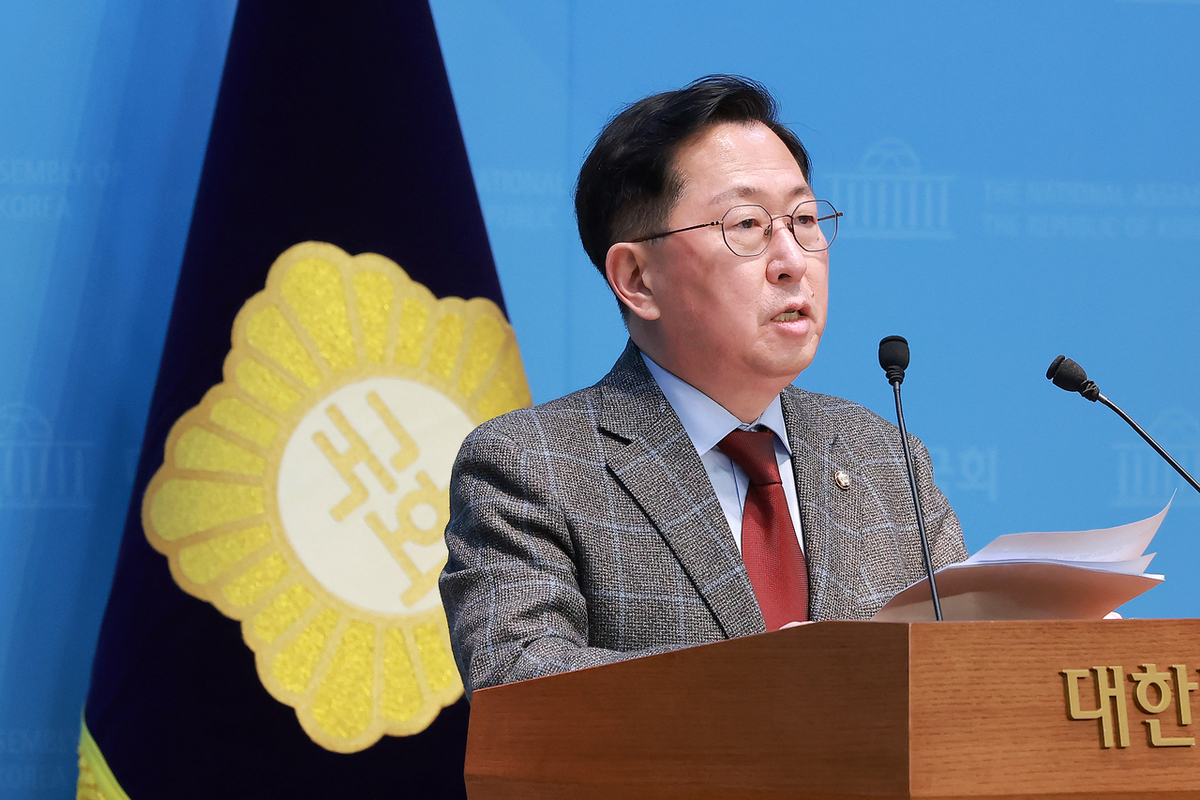 Yoo Yong-won, a People Power Party member of the National Assembly’s National Defense Committee, called for a full overhaul of the Ministry of National Defense and the Defense Acquisition Program Administration (DAPA), accusing the government of lacking strategy and allowing complacency to squander major opportunities.
 Yoo leveled pointed criticism at delays in the Republic of Korea–U.S. Reciprocal Defense Procurement Agreement (RDP-A), controversy over adjustments to the KF-21 fighter’s operational timeline and the government’s plan for a 500,000-strong drone force, saying Korea’s defense-industry “control tower” is failing to do its job.
At a press briefing in the National Assembly on the 30th, Yoo warned that lingering delays in finalizing the RDP-A are blocking Korean firms’ access to the U.S. defense market.
He cited the recent withdrawal of a Korea Aerospace Industries (KAI)–Lockheed Martin consortium from the U.S. Navy’s next-generation advanced trainer competition as a cautionary example. Yoo argued that institutional backing was needed to overcome local procurement barriers that heavily favor U.S.-made components.
Yoo said the RDP-A could shape future exports of vessels and land systems, and urged the government to mobilize all levers — including high-level channels between the Presidential Office and the White House — to secure the agreement.
He condemned the consortium’s withdrawal from the roughly 10 trillion KRW (about $7.5 billion) Navy trainer bid, saying the setback also undermines chances to compete for forthcoming U.S. Air Force trainer programs and could cost Korean industry access to a market worth tens of trillions of KRW (tens of billions of USD).
Yoo noted that U.S. procurement rules that favor domestic parts — often setting a roughly 75% threshold — make an RDP-A essential for Korean companies to bid competitively. He said the Ministry of National Defense and DAPA failed to advance negotiations on the RDP-A between 2022 and 2024, allowing other issues to push the agreement off the agenda and costing Korea critical contracts.
He also criticized the government for leaving the KAI CEO slot vacant for nine months at a time when close coordination with Lockheed Martin and U.S. officials was required ahead of major export bids. Yoo added that measures such as privatization to boost competitiveness were not even discussed. “Our firms, deprived of institutional support and price competitiveness, were forced to withdraw from bids — a failure rooted in the government’s lack of diplomatic clout and execution,” he said.
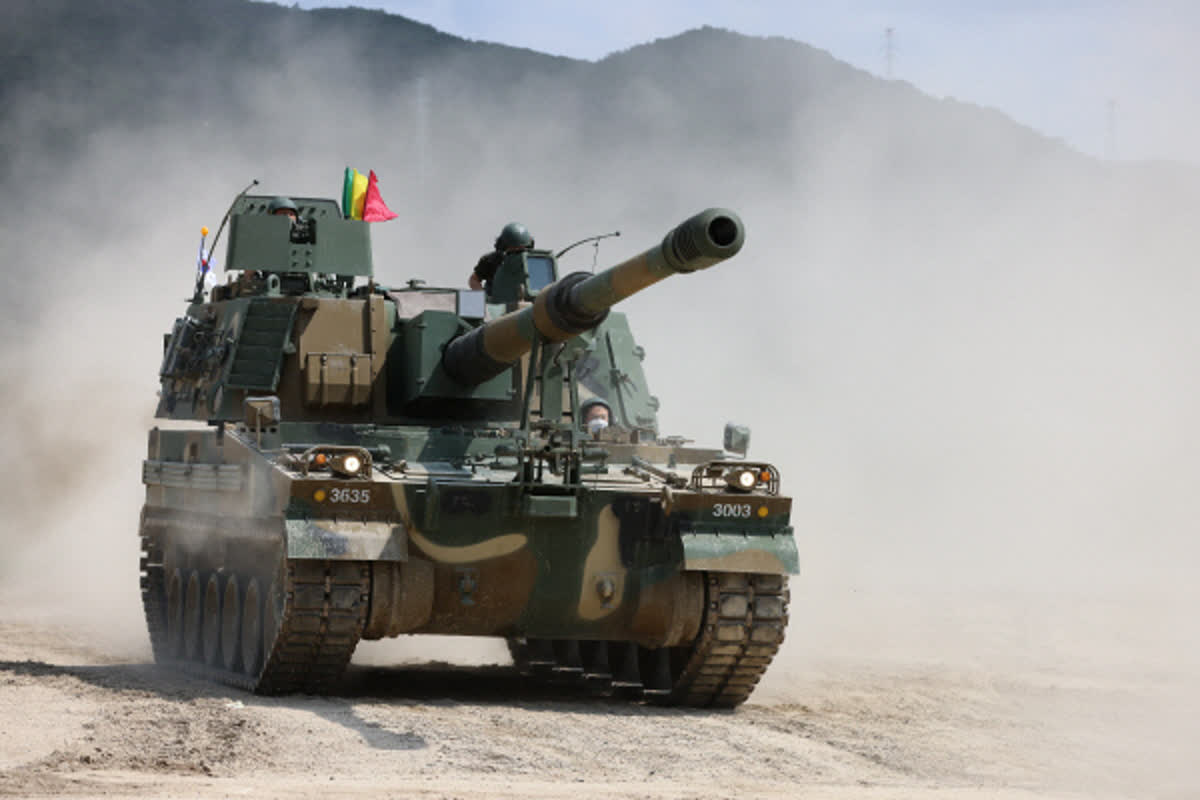
Yoo warned that successful entry into the U.S. market would significantly elevate Korea’s global defense competitiveness. He argued that delays in the RDP-A threaten projects such as MASGA ship exports and the U.S. market prospects for systems like the K9 self-propelled howitzer, and urged immediate, high-level action to finalize the pact.
Yoo pressed his critique on plans to delay the KF-21 operational timeline. Recent reports say the government is weighing postponing the KF-21’s entry-into-service date, citing budget pressures.
“The government has promoted KF-21 development as a rapid success. President Lee Jae-myung even attended the rollout of the first production aircraft destined for our Air Force,” Yoo said. “Yet DAPA, invoking the finance ministry’s defense budget ceiling, the need to balance resources across services and funding for other Air Force programs, is now attempting to unilaterally push back the KF-21 operational schedule by about four years — disregarding approved requirements and the Defense Mid-Term Plan. That is irresponsible.”
He challenged the administration’s fiscal stance, noting the reported 25 trillion KRW (about $18.8 billion) supplementary budget and President Lee’s repeated public exhortations to spend well rather than not spend. “Are the Ministry of Economy and Finance and DAPA acting contrary to the president’s intent?” Yoo asked.
Yoo also criticized the government’s drone program, calling the “500,000-drone force” slogan hollow given plans to procure roughly 60,000 small, first-person-view (FPV) drones primarily for training — platforms that have limited tactical value in high-end combat environments. “What is the target timeline for building a 500,000-drone force?” he demanded.
He emphasized that modern unmanned systems are now strategic assets, integrating advanced battlefield networks, long-range strike, and AI-enabled target tracking. Yoo said there is no coherent plan to develop drone forces as weapon systems, to integrate AI, or to build mass-production infrastructure — only a plan to buy tens of thousands of small training FPV drones. “What operational capability do they expect from that approach?” he asked.
Yoo also accused the Defense Ministry’s training plan of being “more than a decade behind” the types of drones used in recent conflicts and described Korea’s defense-industry control-tower structure as detached from reality and prone to desk-bound policymaking.
Arguing that a government’s ability to support acquisition programs is central to overseas bid competitiveness, Yoo called for a cross-government defense industry control tower that brings together defense, foreign affairs, economy and industry. He urged the government to take responsibility for repeated policy confusion and to redraw its defense-industrial growth strategy.
Yoo recommended placing the control tower in the Presidential Office and elevating the current senior administrative officer for defense industry to a defense-industry secretary-level position.