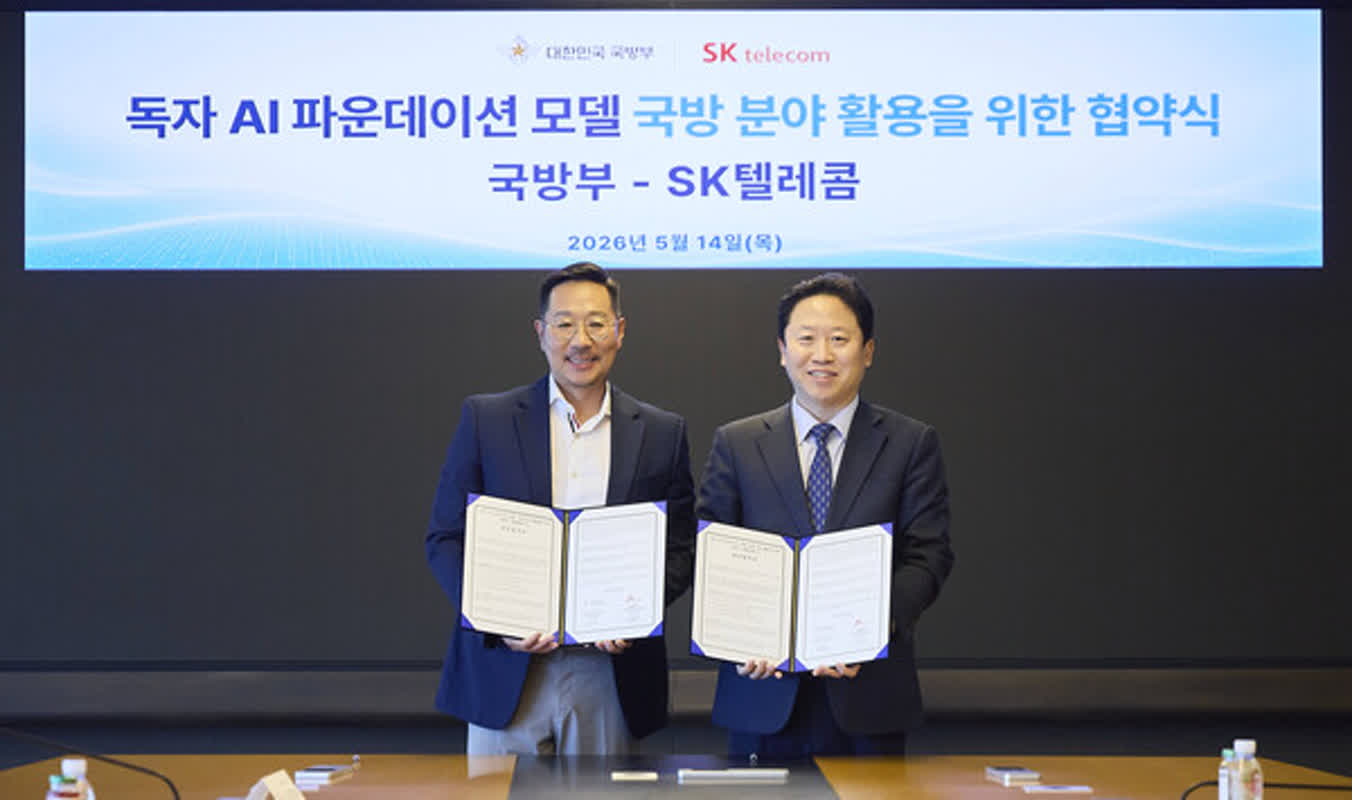
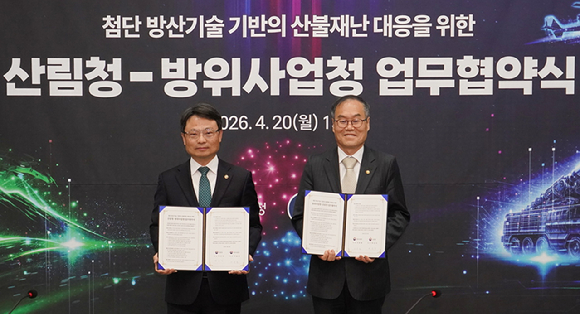
[JoyNews24 reporter Kim Yang-su] The Korea Forest Service, led by Director Park Eun-sik, and the Defense Acquisition Program Administration, headed by Administrator Lee Yong-cheol, signed a memorandum of understanding April 20 at the Korea Forest Aviation Headquarters in Wonju, Gangwon Province to bolster wildfire response capabilities using advanced defense technologies.
With climate change driving larger and more complex wildfires, officials say strategic wildfire response has become a national security priority. To strengthen on-the-ground disaster response, agencies must urgently coordinate across ministries to identify and apply convergent technologies.
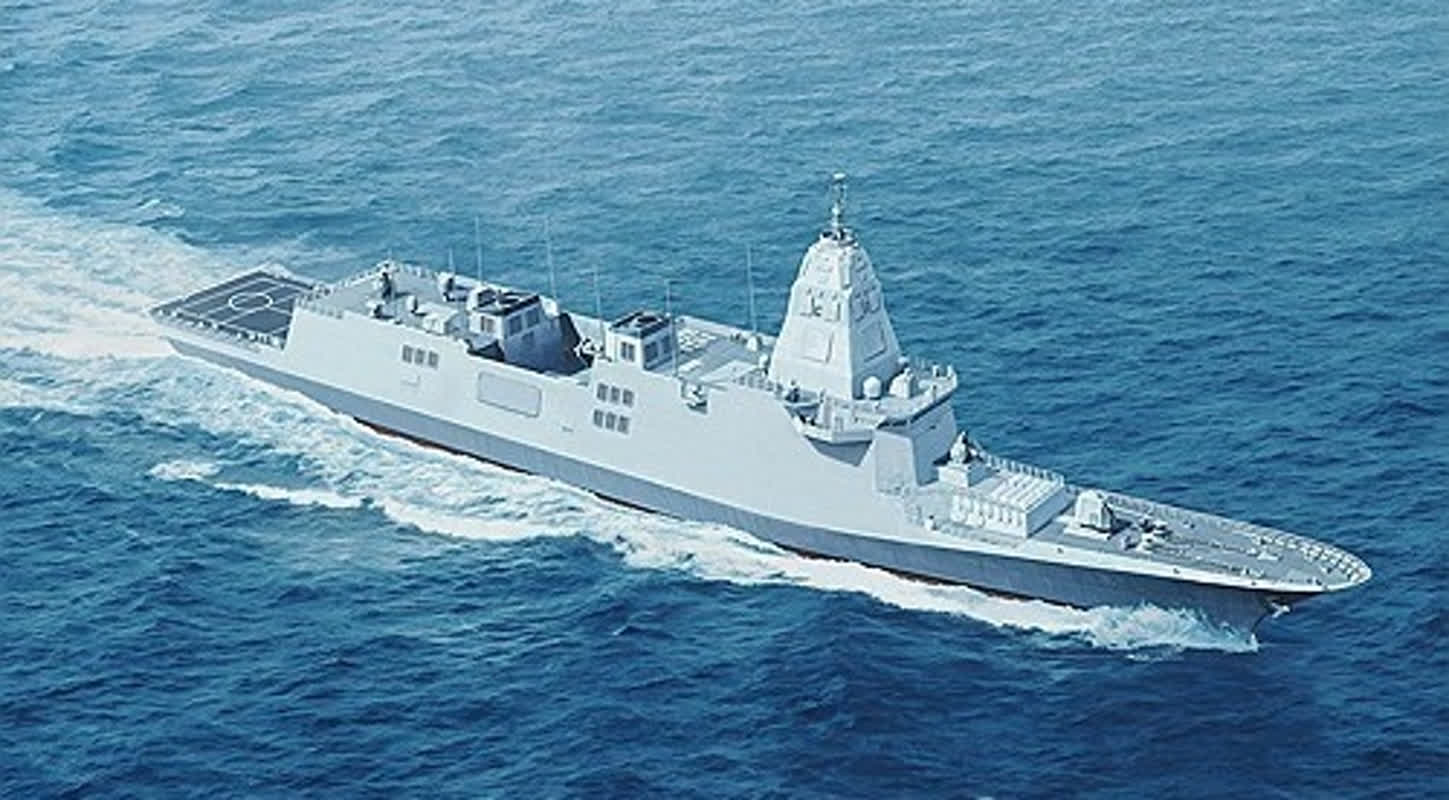
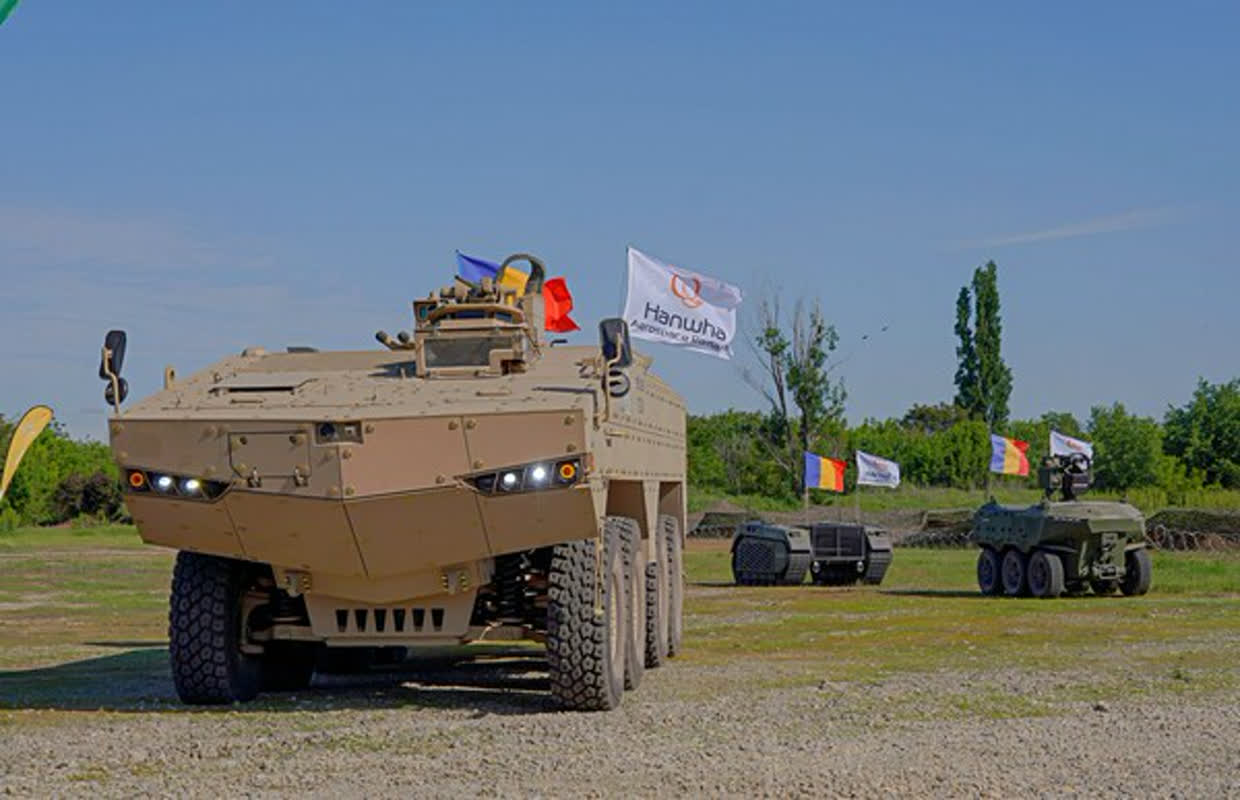
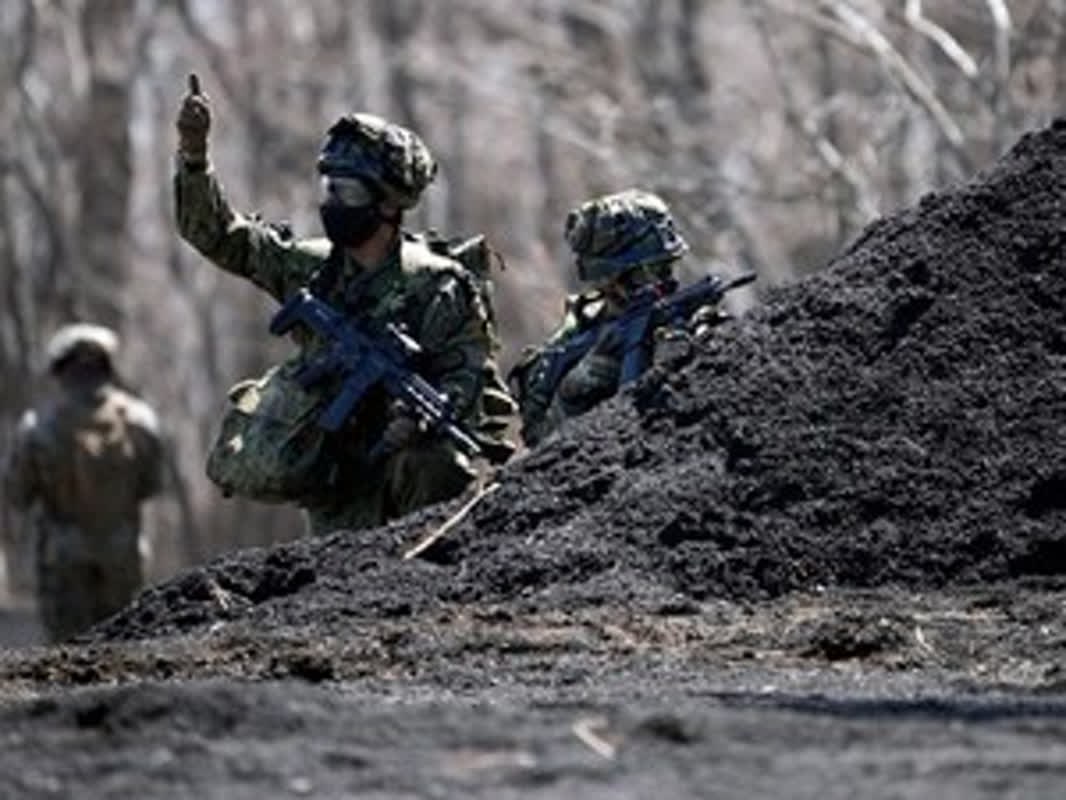
Against this backdrop, the MOU is intended to transfer cutting-edge K‑defense technologies—recently demonstrated on high-intensity battlefields—to civilian use and to modernize the national wildfire response architecture.
Under the agreement, the two agencies plan to rapidly pursue: △technology and policy exchanges to implement an interagency comprehensive wildfire-prevention plan △identification and joint development of research projects and programs for wildfire response based on advanced defense technologies △cooperation on the acquisition and deployment of equipment to improve firefighting effectiveness △development of an AI-based wildfire suppression system for military helicopters.
Notably, the pact is expected to accelerate precision wildfire-suppression R&D that the agencies have been discussing since forming a working group in November last year. The organizations are collaborating closely to improve water-drop accuracy for military helicopters by adapting K‑defense precision-strike technologies and to design a Korean wildfire-defense concept tentatively dubbed "Fire-Dome."
They also plan to expand civilian outreach so the Defense Acquisition Program Administration can broaden applications of its technologies, help incubate new industries and inject momentum into the national industrial base.
Korea Forest Service Director Park Eun-sik called the agreement "a first milestone in applying K‑defense's advanced DNA to wildfire response." He added, "This MOU will help establish a science-and-technology‑based, nationwide wildfire response capability. Through sustained research, technical cooperation and exchanges, we expect defense technologies to be adapted to other areas, including worker safety in forestry."
Administrator Lee Yong-cheol of the Defense Acquisition Program Administration said applying advanced defense technologies to wildfire response would not only improve disaster response effectiveness but also expand demand channels for defense systems, spurring civilian diffusion and creating a virtuous cycle of industrial and technological growth. "We expect the high-end technologies developed in the defense sector to spread into diverse civilian fields, including forestry, and to contribute to new sources of economic growth," he said.