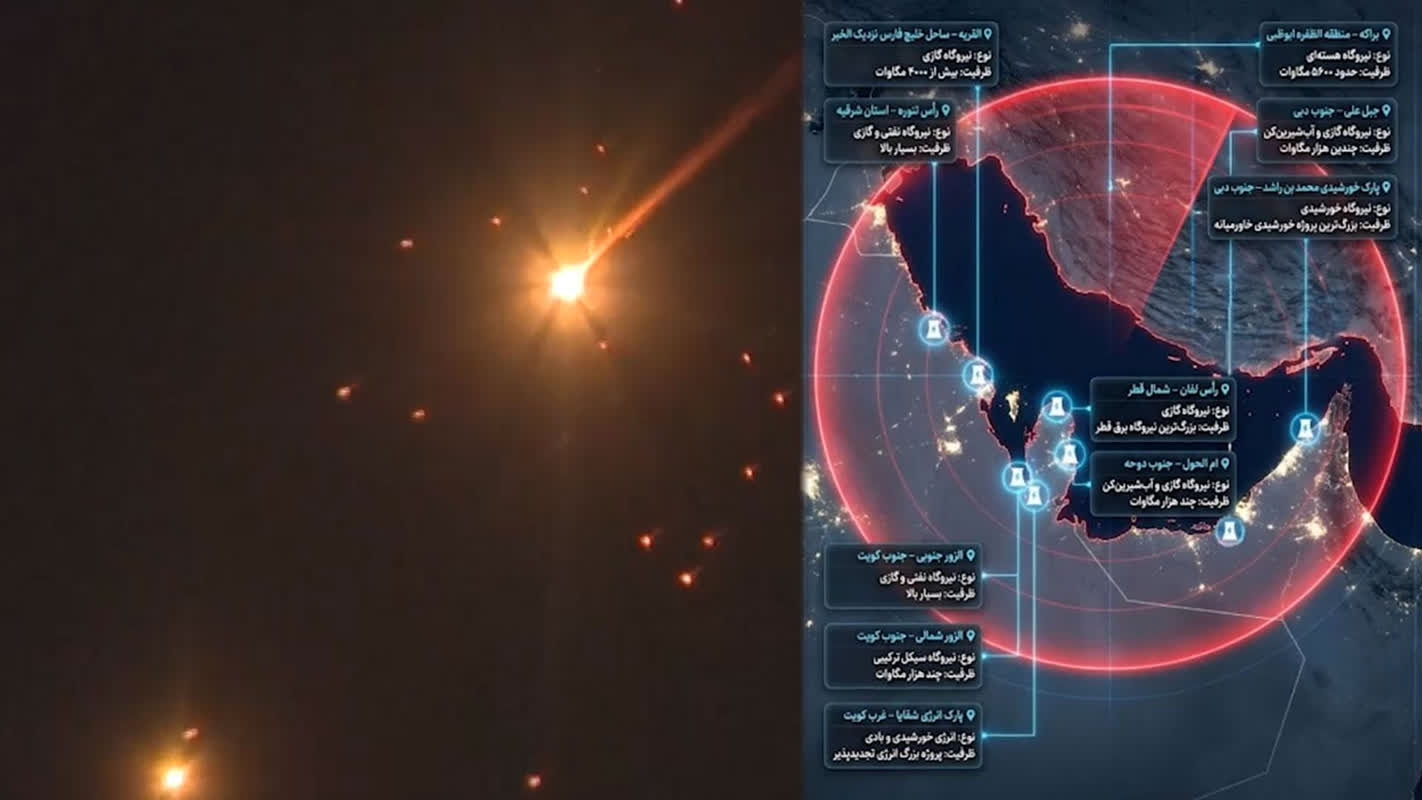
The Iran crisis appears to be sliding back into uncertainty. With less than 24 hours before the ceasefire deadline, U.S.-Iran talks still have not closed the gap.
On the 21st, banking sources said that if this round of negotiations collapses as the first ceasefire talks did, the key question for global investors will be whether the U.S. resumes military operations. Analysts warn a hard U.S. posture could prompt Iran to play the “new card” it has threatened, while the ongoing Russia‑Ukraine war could compound tensions and rapidly escalate the geopolitical crisis. That would bring the defense industry even more sharply into focus.
◆ Even if the Iran crisis ends, K‑defense could be more than a theme stock... Export channels widen for non‑U.S. defense firms
Analysts say that even if the Iran crisis concludes with a ceasefire, investor interest in defense stocks is unlikely to evaporate overnight.
Chae Un‑saem, a researcher at Hana Financial Investment, said demand in the Middle East after hostilities subside is likely to translate into bigger defense budgets and increased weapons purchases. He added that while the region’s arms imports will remain U.S.‑centric, buyers may increasingly seek non‑U.S. suppliers that can offer faster delivery, local production and technology partnerships — a development that would favor South Korean defense exporters.
Han Seung‑han of SK Securities also cautioned that K‑defense stocks are not merely wartime \"theme\" plays. He argued that the structural shift toward self‑reliant defense amid deglobalization represents a long‑term growth cycle. In short, Korean defense firms, whose strengths the Iran crisis has highlighted, could become market mainstays rather than temporary speculative bets.
◆ Has Hanwha fully transformed into a defense group? About 60% of group operating profit now comes from defense
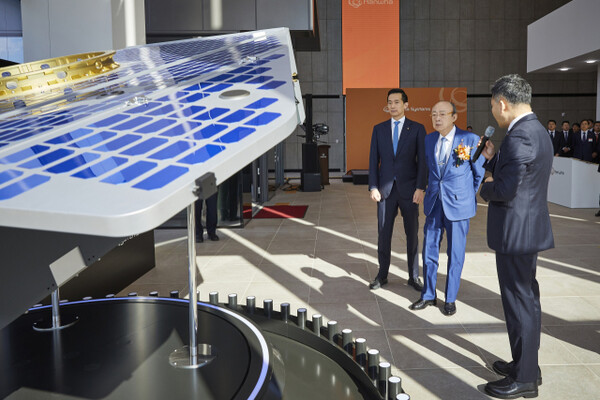
Hanwha traces its roots to explosives, but its deep reach across defense sectors is a more recent development. The group’s major defense deal with Samsung effectively reshaped Hanwha’s identity.
Today, the group’s profit mix has tilted sharply toward defense and shipbuilding, turning defense into a new cash cow.
For example, NICE Credit Rating’s 2026 H1 e‑seminar report shows Hanwha Group’s operating profit mix last year was 59% defense and 36% shipbuilding — a combined 95% (renewables 4%, distribution 2%). Petrochemicals recorded nearly a 1 trillion KRW loss (approximately $750M).
Kim Seo‑yeon, a senior researcher at NICE, noted that since 2023 Hanwha’s top‑line growth and profit generation have continued to expand centered on defense and shipbuilding.
One of Hanwha’s core defense units, Hanwha Aerospace, posted operating profit above 3 trillion KRW last year — the largest result in Korea’s defense industry history (approximately $2.25B). Hanwha Ocean also appears to have hit a stable trajectory with revenue of about 12.6884 trillion KRW (approximately $9.52B) and operating profit of roughly 1.1091 trillion KRW (approximately $831.83M).
Hanwha Systems is also receiving positive growth assessments. Kim Tae‑ho of DS Investment & Securities said Hanwha Systems has positioned itself as a key builder of military observation and communications satellite networks, based on Hanwha Group’s space value chain, prompting a re‑evaluation of its medium‑ to long‑term growth prospects.
That said, risks remain. NICE notes that while Hanwha Ocean’s revenue mix has shifted toward higher‑margin contracts and profitability has improved, the unit faces significant investment and working‑capital demands. Hanwha Aerospace’s strong operating results could continue amid prolonged conflict, but its large investment needs raise questions about cash‑generation capacity.
◆ LIG rises on Cheongung; Hyundai Rotem hasn’t taken off yet, but tanks could lift it
LIG Defense & Aerospace (formerly LIG Nex1), commonly called LIG D&A, is viewed as one of the biggest beneficiaries from the missile‑and‑drone phase of the Iran crisis. Middle Eastern countries’ frantic efforts to field air‑defense networks against missile threats have showcased Cheongung‑II’s impressive real‑world performance.
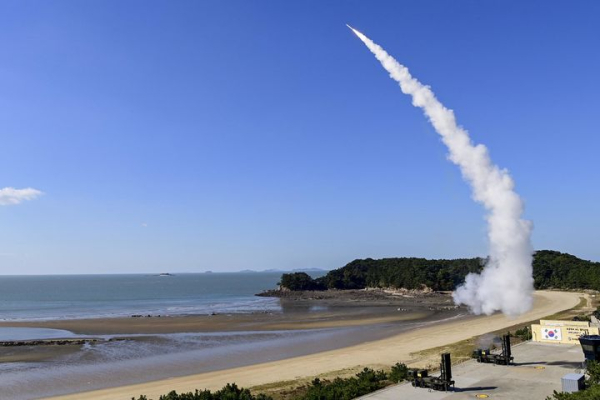
By proving rare real‑world performance, LIG has opened a clear path to becoming a core supplier in the global guided‑weapons market, analysts say.
DB Securities sharply raised its price target for LIG D&A to 1.20 million KRW (approximately $900). For context, Kiwoom set a target of 1.05 million KRW (approximately $787.50) and KB Securities 1.10 million KRW (approximately $825).
SK Securities expects LIG D&A’s earnings to grow and orders to expand over the next two to three years as global demand surges.
Jeong Dong‑ik of KB Securities said that despite rapid share gains, LIG D&A appears to be operating a virtuous cycle that links orders, capital investment and earnings — reinforcing its position as his top pick in the defense sector.
Hyundai Rotem, which did not ride the recent wave as strongly, may be close to becoming an export standout. Jang Nam‑hyun of Korea Investment & Securities expects gradual margin improvement in Hyundai Rotem’s defense export business and a pickup in new orders beginning in the second half of this year.
Of particular note is the potential for diverse tank exports to the Middle East and beyond. Jang said the K2 tank export pipeline — including potential third contracts with Iraq, Peru and Poland — could convert into actual deals worth roughly 20 trillion KRW (approximately $15B), driving backlog growth.