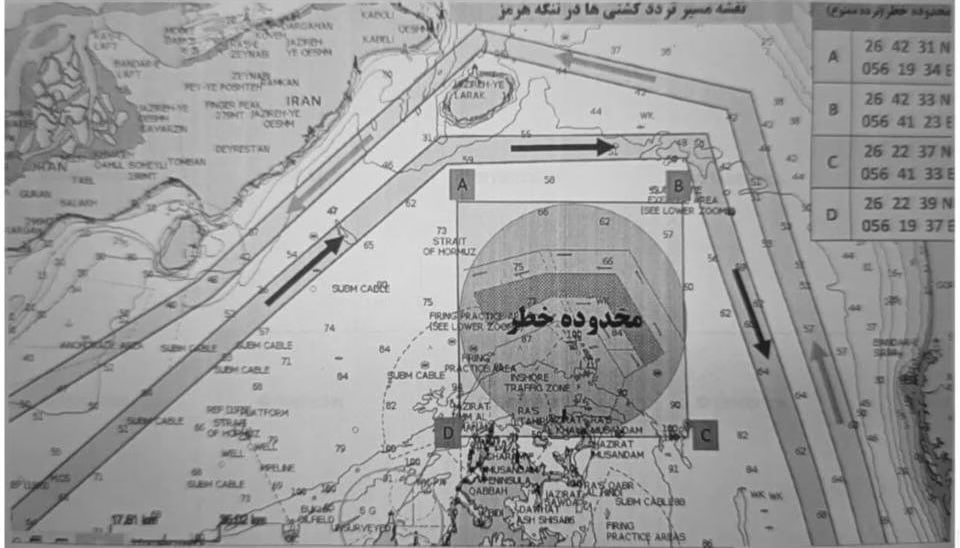
That day, the IRGC Navy released a chart showing the alternate route. The map circles areas deemed potentially mined and marks the recommended bypasses with black arrows.
The IRGC said, “All vessels transiting the Strait of Hormuz must cooperate with the IRGC Navy and use the following alternative routes until further notice to avoid possible collisions with mines.”
According to the guidance, ships entering the strait should come from the northern Gulf of Oman, pass by Iran’s Larak Island, and proceed into the Persian Gulf. Vessels exiting the strait should depart from the Persian Gulf, pass south of Larak Island, and continue toward the Gulf of Oman.
Earlier, state broadcaster IRIB, citing the Ports and Maritime Organization (PMO), warned that vessels wishing to transit the Strait of Hormuz must coordinate routes with the IRGC Navy and use designated channels because of the potential presence of anti-ship mines in main shipping lanes.
The alternate route lies north of the established channel, running through the narrower passage between Larak and Qeshm islands and closer to Iranian waters.
Observers view Tehran’s action as an effort to demonstrate compliance with the U.S.-linked, two-week ceasefire arrangement that hinges on reopening the Strait of Hormuz. The U.S. and Iran are scheduled to hold follow-up talks on the 11th in Islamabad, Pakistan, which has mediated the negotiations.
Still, other reports say the strait—briefly reopened under the ceasefire—has effectively closed again, with tankers turning sharply away, adding to confusion.
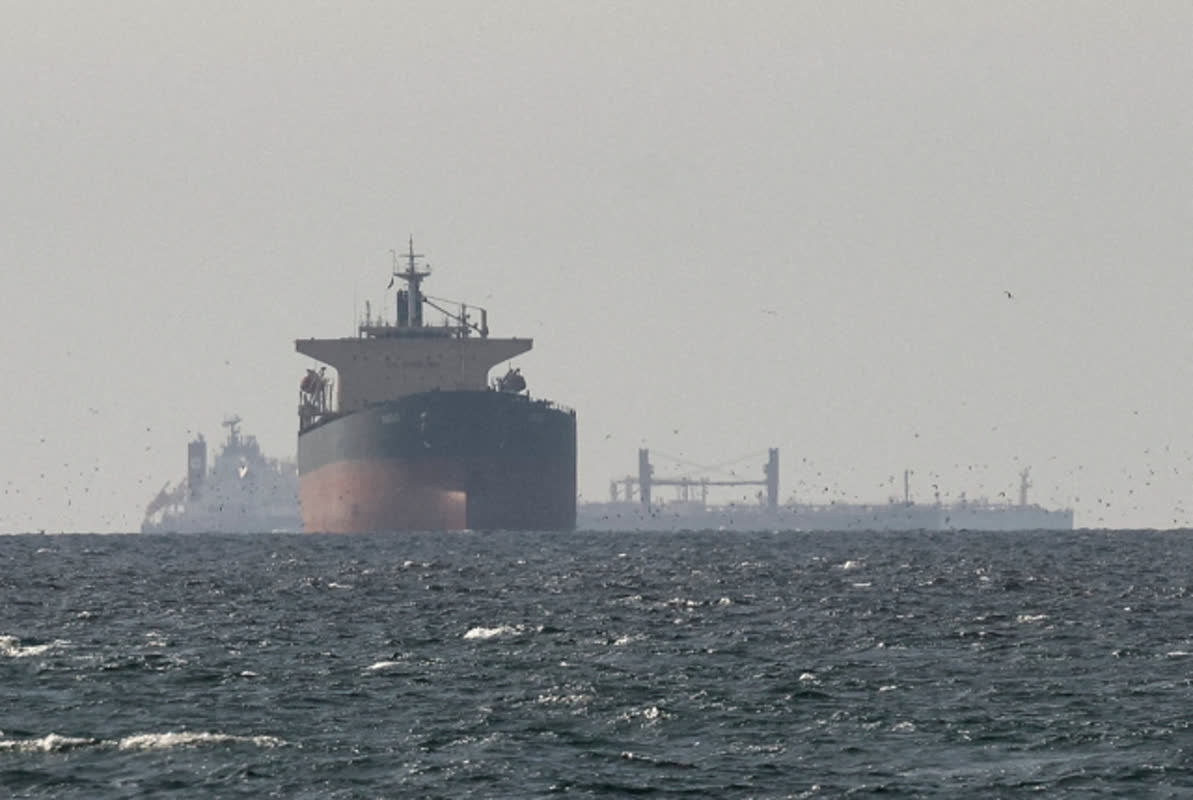
Maritime tracking data show the Panama-flagged tanker Aurora (AUROURA) abruptly altered course near Oman’s Musandam coast, made a 180-degree turn, and headed back deep into the Persian Gulf.