|
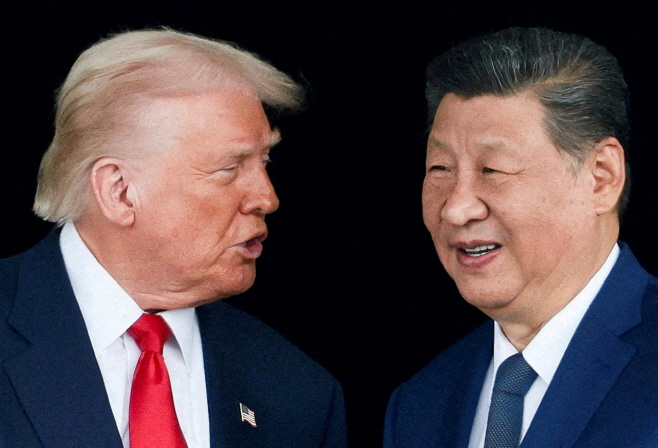
On March 17, the New York Times reported that President Donald Trump asked to delay a Beijing visit scheduled for later this month. He cited the war as the reason, but analysts say the request also reflects pressure on China to assume a military role.
Earlier, Trump warned he would consider postponing the summit if China did not deploy naval vessels to escort commercial shipping through the Strait of Hormuz. Iran has effectively blockaded the strait — a vital artery for global oil shipments — and the disruption is already affecting international oil prices and supply chains.
Trump said he has a very good relationship with Xi Jinping but that he could not be away amid the conflict. China, however, responded coolly. Lin Jian, a Foreign Ministry spokesperson, told reporters that \"all parties should immediately cease military operations.\"
Inside China, commentators pushed back against Trump’s demand. The state-run Global Times questioned whether Washington was trying to offload the risks of a war it started instead of sharing responsibility. Some outlets noted that the international community has largely given a cool response to the request.
Beijing draws a line at sending warships in part because of its bilateral ties with Tehran. Iran has targeted vessels linked to the U.S. and its allies while continuing to allow oil shipments bound for China. In the Middle East, Iran remains a strategic partner for Beijing.
Ding Long, a researcher at the Shanghai Institute for International Studies, said China would not under any circumstances take part in escort operations, arguing that deploying warships would amount to direct involvement in hostilities.
Experts say sending warships would also create a heavy political and strategic burden for Xi. Klaus Schong, a researcher at the Mercator Institute for China Studies, argued that \"this is America’s war, not China’s,\" adding that complying could leave Beijing appearing to follow U.S. directives.
Still, a Chinese decision to do nothing could damage the fragile trade truce between Washington and Beijing. Facing an economic slowdown, China had hoped the summit would ease U.S. pressure on issues such as U.S. support for Taiwan, technology export controls and tariff measures.
Despite expanding renewable energy capacity and boosting oil reserves, China remains heavily dependent on the Strait of Hormuz: roughly 40% of its total oil imports transit the waterway.
Yoon Sun, director of the China program at the Washington-based Stimson Center, said reopening the strait would benefit everyone and suggested China might mediate or apply discreet pressure on Iran. He added that Beijing could also press for a cease-fire from Iran as well as from the U.S. and Israel.
Some analysts say a summit delay could ultimately work to China’s advantage. If the conflict drags on and U.S. costs mount, Beijing’s leverage in any subsequent negotiations could grow.
Klaus Schong said, \"Both sides have pinned hopes on the summit, but the party that may need results more could be President Trump.\"