On the 20th, the Broadcasting, Media and Communications Committee held a public forum to explore ways to guarantee universal access to broadcasts of high-profile events such as the Olympics and the World Cup. The meeting came just three months before the start of the 2026 FIFA World Cup in North America. That the committee sought public input even before its membership was finalized underscores how urgent and significant the issue is.
Short-term negotiations over reselling World Cup broadcast rights matter, but the universal viewing-rights system itself needs a comprehensive overhaul.
The central task is adapting to the OTT era. In Japan, Netflix’s exclusive rights to stream every 2026 World Baseball Classic game provoked public backlash. And although not a sporting event, Netflix’s exclusive overseas streaming of BTS concerts—productions that benefited from substantial public support—has raised similar concerns in Korea.
Current broadcasting laws and related regulations provide no legal basis for applying universal viewing-rights rules to OTT platforms. Lawmakers should establish that foundation in the Broadcasting Act and fold it into deliberations over an Audiovisual Media Services Act that would redefine broadcasting for today’s media landscape. The Audiovisual Media Services Act is necessary both to promote media and to regulate it, but repeated debate has stalled passage. The National Assembly and the government must approach this session resolved to pass it, ideally through bipartisan agreement.
We also need measures to address viewing blind spots. In Europe, universal viewing rights typically cover channels that are “free to access,” but Korea’s high pay-TV subscription rate and relatively low fees weaken the case for blocking pay-TV acquisitions. Still, authorities must address the roughly 3 percent of households that could not receive terrestrial broadcasts and therefore missed last year’s Milan–Cortina Winter Olympics.
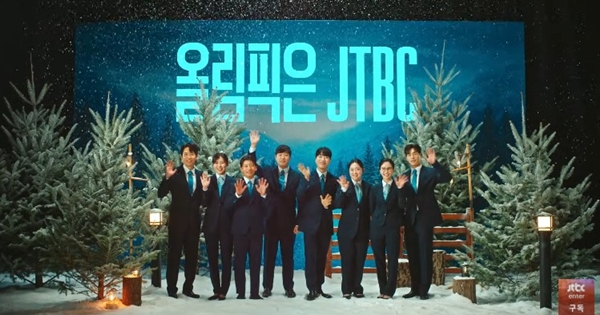
Other issues deserve attention. Critics have recently highlighted the harms of JTBC’s exclusive coverage, but in past Olympics the three major terrestrial broadcasters drew ire by running the same popular events simultaneously. Policymakers should also reconsider excluding the Paralympics from universal viewing-rights protections. At minimum, public-service broadcasters should receive institutional support to ensure stable Paralympic coverage.
Calls to reform the universal viewing-rights system are not new. Under the Korea Communications Commission, officials have carried out multiple studies on possible improvements. For various reasons, those efforts did not reach a conclusion and the debate stalled. This time must be different.