[Choi Bo-sik’s Media — Lee Byung-chul, Editorial Writer]
I usually walk at a fairly brisk pace. Two months after injuring my foot, I’m in rehabilitation and practicing slow walking. Measured against musical tempos, is my pace an adagio—or is it slower still?
I looked it up: a tempo slower than adagio is called largo. I don’t know much about music, so these terms still feel unfamiliar.
Adagio means “slow, very slow,” a calmer, slower step than andante. Largo conveys “very slow” but also “broad and majestic.” In traditional Korean music, it’s roughly equivalent to the slowest jin-yang-jo.
Since yesterday I’ve been walking the village at a tempo somewhere between adagio and largo, pausing to look at flowers and exchange greetings with neighbors.
When was the last time I walked this slowly? Apart from periods when I practiced walking meditation (haengseon), I can’t recall moving through daily life at such a deliberate pace. I usually drive even short distances, and when I do walk I tend to hurry. Taking up street photography slowed me in one way, but it also introduced moments when I had to rush.
When I stop to take a photo, I fall behind and then hurry to catch up. Now, by necessity, I take one very slow step at a time.
Walking slowly is a form of meditation, but it’s hard to practice amid everyday demands. For people conditioned to speed, being still or moving slowly can provoke anxiety.
That anxiety may be one of modern life’s defining traits: an inability to be alone, an inability to sit still. A simple example is not being able to look away from a smartphone even on a swaying subway.
Forced to relearn walking, I notice things with each step. What went unnoticed when I drove by or hurried past now reveals itself. Things that brushed past me at speed meet me fully in slowness.
I like to call these moments “meeting anew.” When I rush, certain things seem not to exist; when I walk slowly, I discover them. It feels like encountering another world—one that doesn’t reveal itself at high speed.
I think about the world we miss when we chase speed. Perhaps life’s richness isn’t found in haste but in slow, deliberate steps. Is there a law—some tangible rule—that shows the slower we move, the richer the world appears? Maybe the relativity of time is related to this idea.
Michael Ende’s novel Momo, often called The Time Thieves, comes to mind. I read it so long ago I barely remember the plot; only its message lingered, so I revisited its themes.
The story features gray gentlemen—the “time thieves”—who tempt people with the promise that if they save time, it will be kept and returned with interest. People respond by working faster and rushing through life to “save” time.
Paradoxically, the more they hurry to save time, the more their leisure and laughter disappear, and the quicker time seems to vanish. The book’s core message is that “time is life, and life lives in our hearts.” Rushing robs us of the present—the essence of life.
Beppo, the street sweeper, offers Momo advice that still speaks to time-pressed modern people.
“Don’t think about the whole road at once, understand? Think only about the next step you’ll take, the next breath you’ll rest with, the next sweep you’ll make. Keep your mind on the next thing. Then you can work with pleasure and find peace of mind. That’s what matters.”
Walking slowly feels like giving life room to breathe. Without that room, being alive doesn’t fully register. Why do we hurry so, and where are we headed?
In the end, life is a process. To savor its richness, walking slowly—one step at a time—seems a truer path than racing forward.
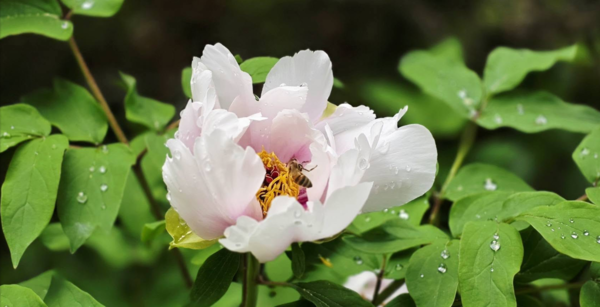
I walk the village at a slow pace, matching my steps to the rhythm of blooming and fading flowers. Their brief lives are not so different from ours. Today feels generous precisely because I did not rush.
Spring deepens and fills the air.
#SlowLiving #WalkingMeditation #EverydayDiscoveries #ElderPoet #PoetLeeByungChul #JiriMountainPoet