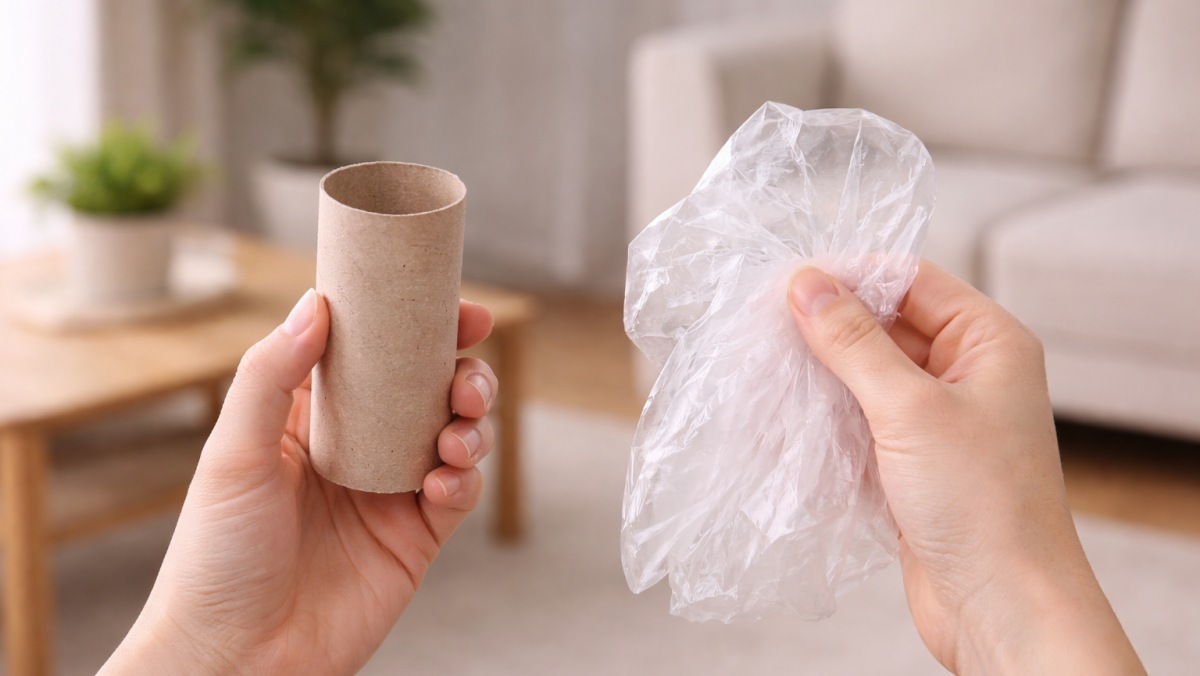
On a quiet afternoon after a meal, a quick sweep of the house can reveal a few small, annoying intruders: charging cables knotted like snakes in drawers, plastic bags that have migrated under the sink, and boots collapsed and misshapen in the back of a closet. Few people realize that the humble cardboard tube from a used toilet-paper roll can be the perfect fix for many of these everyday headaches.
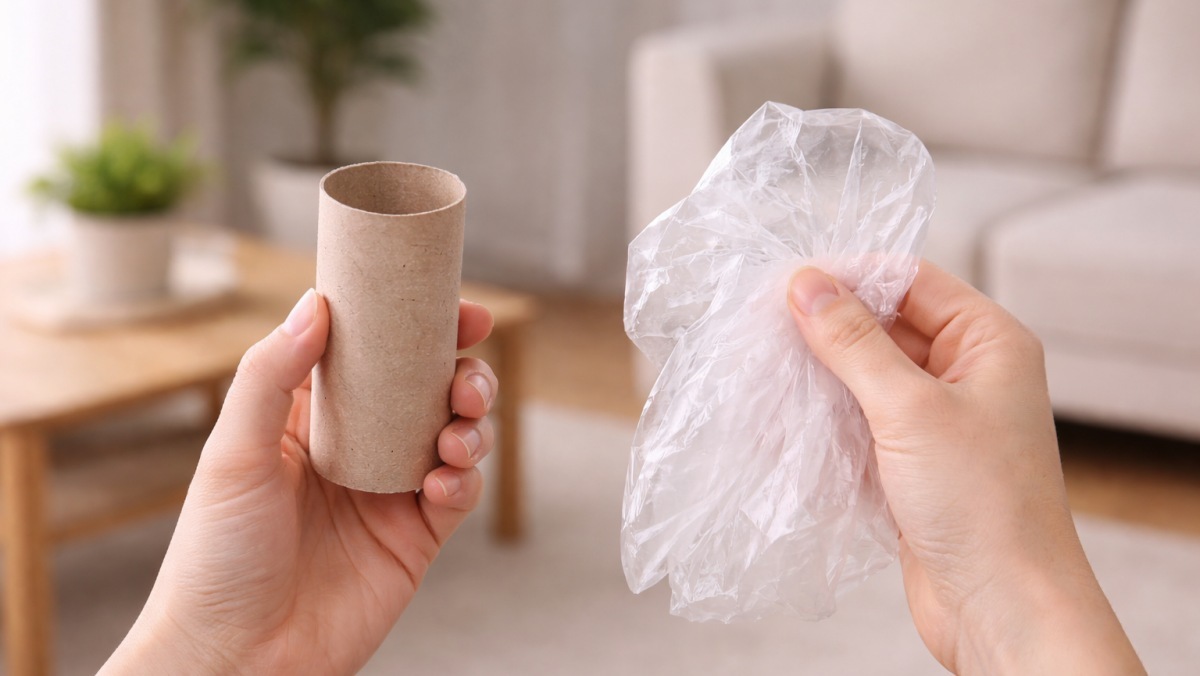
A toilet-paper tube is not just a scrap of paper. It’s a ready-made storage tool: uniform in size, sturdy enough for many uses, and practically engineered for organizing. So when you reach the last sheet, there’s no need to toss the tube. Instead, grab that little cylinder and see what it can do around your home.
From under the sink and the back of the closet to a child’s desk, the uses for a toilet-paper tube are broader than you might expect. One small idea can bring a surprising improvement in order and help you save resources. Rediscovering these tubes can make chores lighter and a bit more enjoyable. Take a look in your recycling bin right now.
Before you reuse toilet-paper tubes
Before putting a tube to work, check for cleanliness. Because these tubes come from the bathroom, verify they’re free of contamination—especially if you plan to use them in the kitchen or for plants. Choose only the cleanest tubes for those purposes.
If you want extra assurance, try one of these simple methods. The easiest uses household heat: a microwave can agitate tiny water molecules trapped in the paper fibers, producing heat that helps sterilize.
Stand or lay a hollow tube in the center of the microwave and heat it briefly for about 10 to 20 seconds. The generated heat helps suppress microbial growth inside the paper fibers.
Never microwave for more than 20 seconds. Paper can scorch or catch fire, so stay nearby and heat in short bursts.
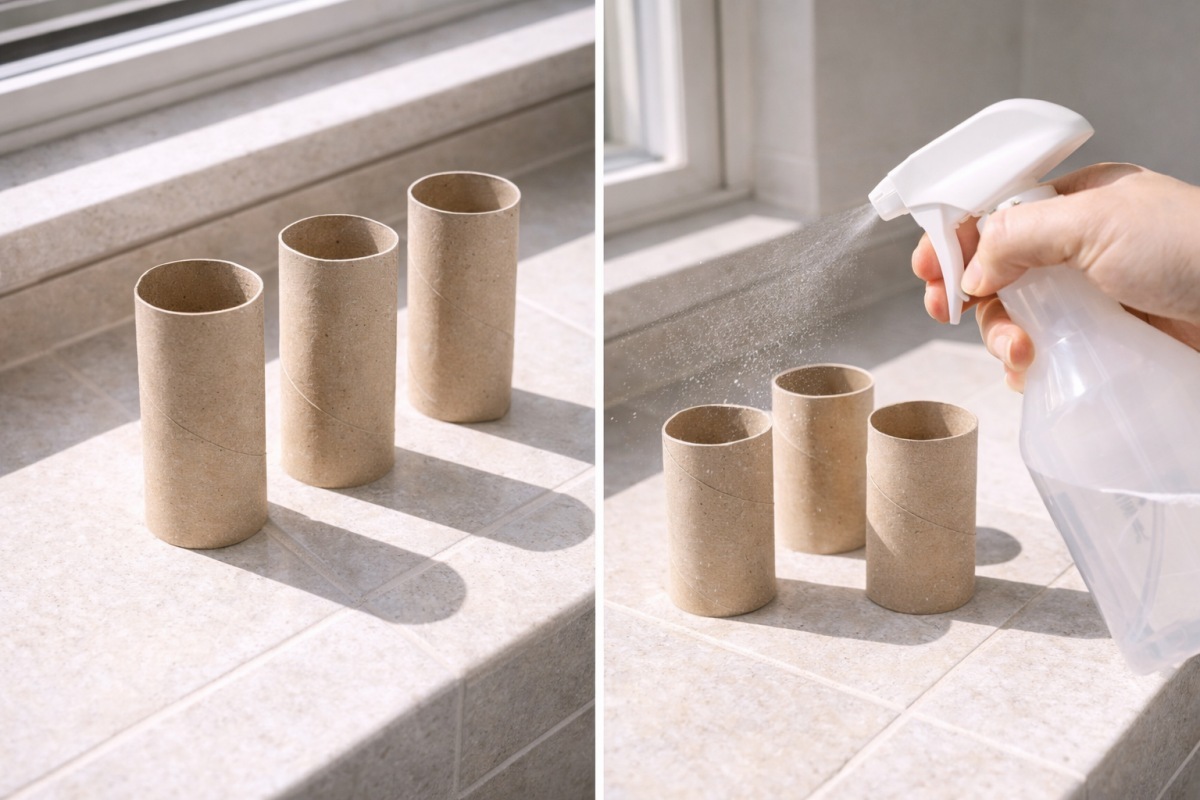
Sunlight is another option. Place tubes upright on a well-ventilated, sunlit windowsill or balcony for about an hour. UV rays reduce surface bacteria and the sun helps remove the dampness that makes bathroom paper limp, restoring firmness to the tube. Turn the tubes once so the interior gets exposed evenly.
Rubbing alcohol offers a more certain disinfect. Put alcohol-based disinfectant in a spray bottle and mist lightly from about 8–12 inches away. Don’t soak the paper—spray as a fine mist to coat the surface, then air-dry. Alcohol evaporates quickly and also neutralizes odors.
Because cardboard weakens when wet, reinforce tubes for use in damp areas. Covering the outside with clear adhesive film or transparent tape boosts durability.
Take safety precautions when cutting. Wear gloves when using scissors—the paper’s thickness can cause a slipping hazard—and work on a stable surface.
Practical ways to use toilet-paper tubes
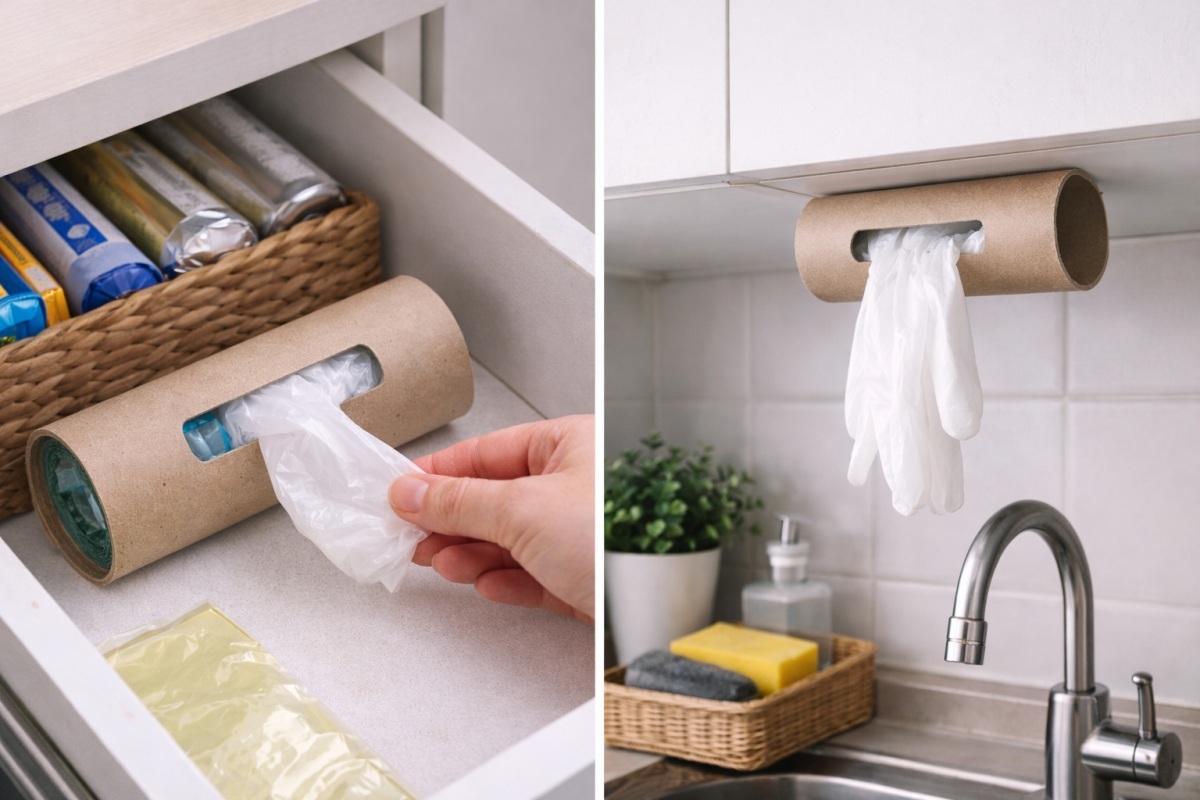
Toilet-paper tubes can be repurposed in many ways. One common trick is to cut a long rectangle along the tube to make a fixed dispenser. Roll up loose plastic bags or sanitary bags and stuff them inside the tube; pull them out one at a time through the slot. It saves drawer space and keeps things neat.
Apply the same idea in the kitchen by folding disposable gloves and stashing them in a tube mounted under an upper cabinet. It’s space-efficient and lets you retrieve a single glove at a time hygienically.
Tubes also make effective cable organizers. Tuck chargers and USB cords into tubes to prevent tangles. Label each tube with the cable’s purpose so you can grab the right one quickly.
For people living alone, tubes can become a compact organizer. Stand several tubes upright in a box to form a makeup organizer for lipsticks, mascara, and brushes—an efficient way to keep cosmetics upright and visible in a small space.
For shoes and clothing
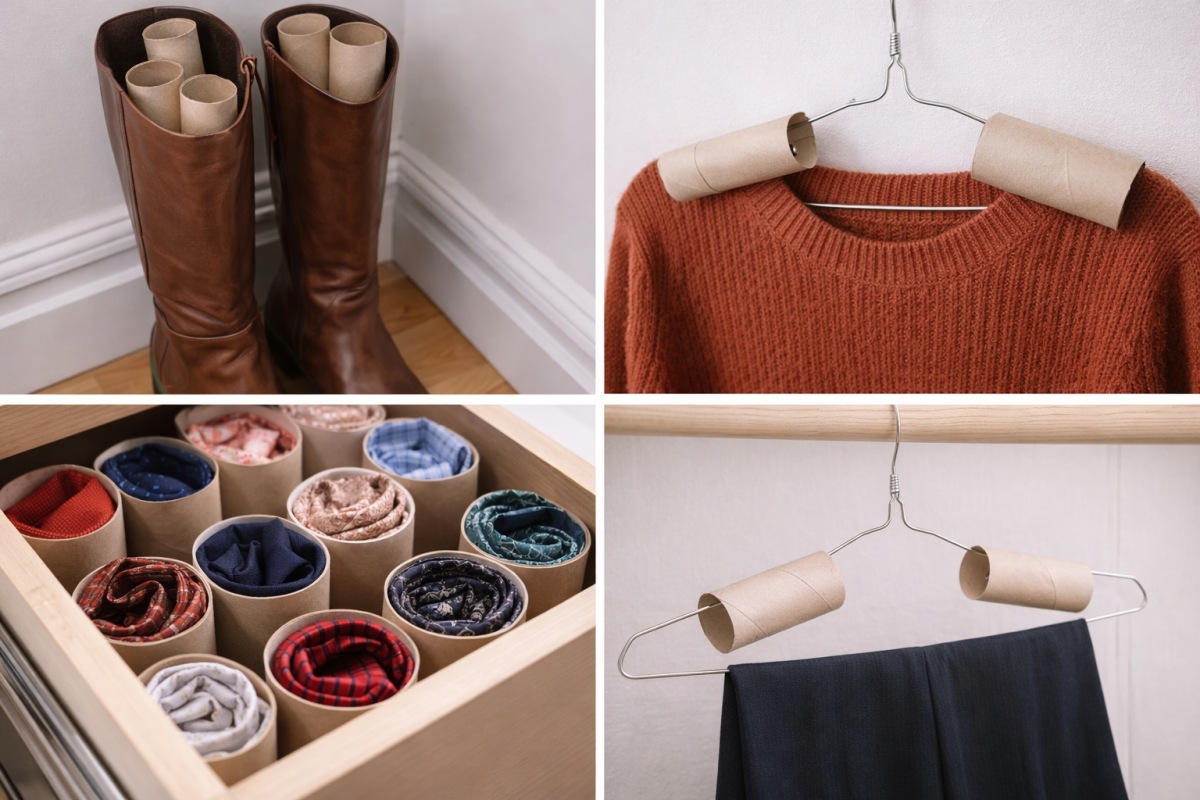
Toilet-paper tubes can act as simple shoe trees for boots. Long boots and rain boots tend to crease at the ankle; taping two or three tubes together and inserting them helps the boots keep their shape. The cardboard also absorbs some interior moisture.
Tubes can prevent shoulder bumps on thin hangers. Slice a tube lengthwise and slide sections onto the hanger’s shoulders—the gentler curve reduces fabric deformation on sweaters and tees.
Line up tubes in a drawer and roll scarves or ties into them for wrinkle-free storage that makes it easy to see and select each item.
To prevent pant creases, slit one side of a tube lengthwise and attach it to the bottom bar of a hanger. Hang trousers over it to avoid horizontal creases that thin hanger bars can cause.
Around the house
Make a simple air freshener by dropping two or three drops of essential oil into a tube and tucking it on the toilet-paper holder next to a fresh roll. Each time the roll turns, the tube releases a subtle scent like a natural diffuser.
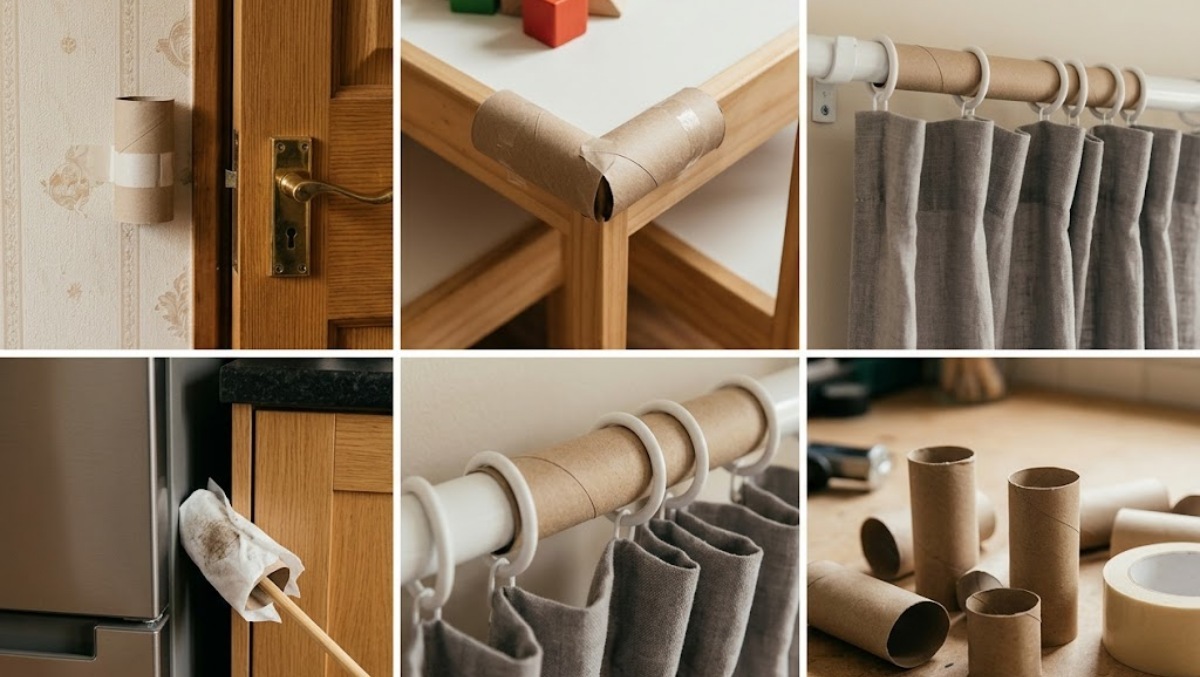
Cut a tube in half and place it where a door hits the wall to act as a temporary bumper, reducing noise and preventing wallpaper damage. You can also wrap a tube around sharp furniture corners to protect children.
For fuller-looking curtains, slip a tube between curtain rings. Placing tubes between rings helps create evenly spaced, hotel-style pleats when you draw the curtains.
To clean narrow gaps between furniture, slide a tube onto the end of a chopstick and wrap a wet wipe around it. You’ll reach dust in deep crevices where a regular cloth can’t fit.
For pets
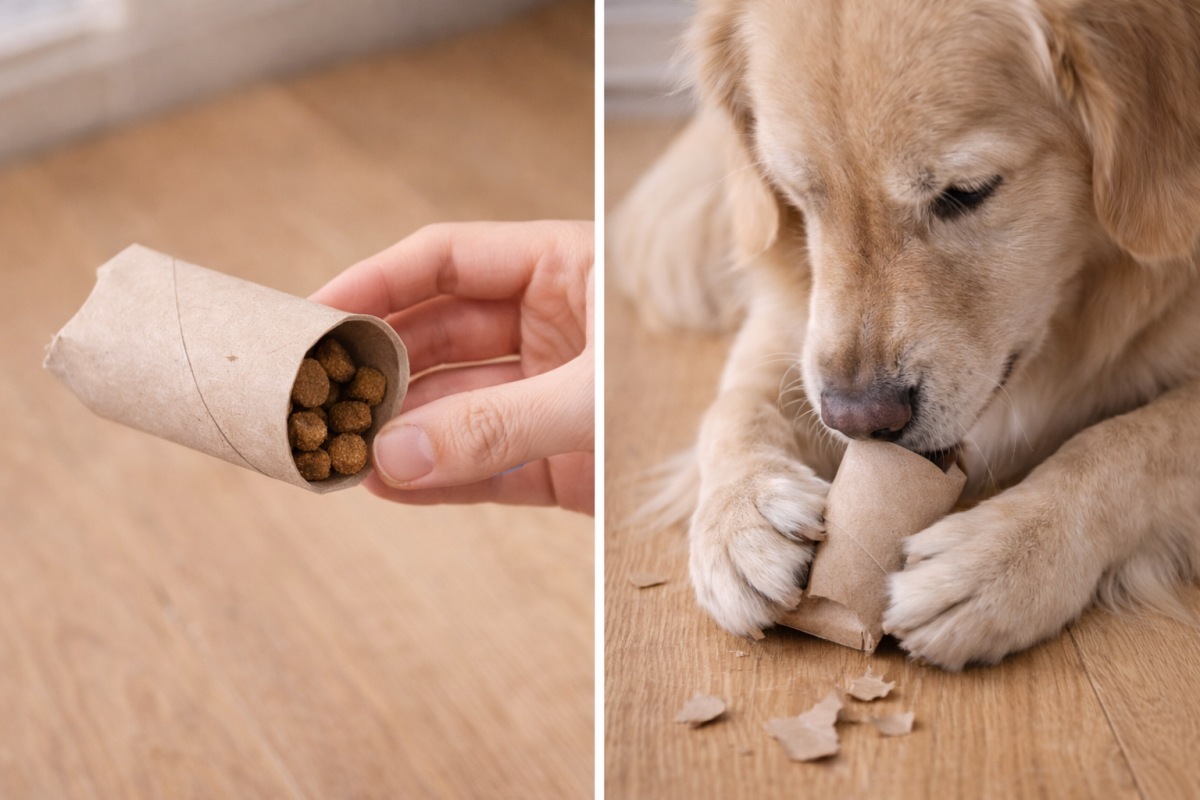
Stuff a tube with treats and fold both ends closed to create a nose-work toy for dogs; they’ll tear at the paper to find the reward. Supervise carefully to ensure your dog doesn’t swallow cardboard.
Toilet-paper tubes are more versatile than they appear. Before you toss the next one into the bin, consider giving it a second life around the house.