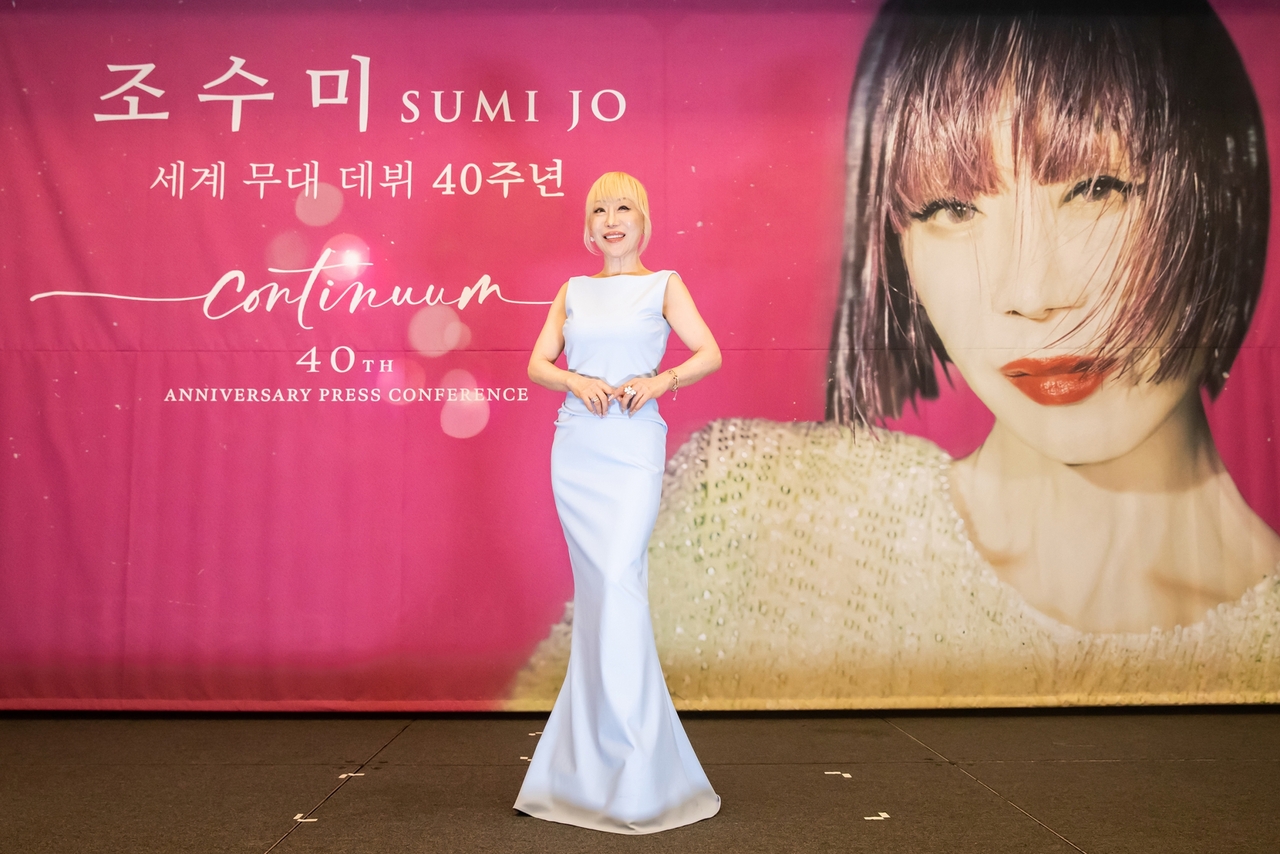
 [Herald Economy reporter Ko Seung-hee] On Oct. 26, 1986, at Teatro Verdi in Trieste, Italy, a slight soprano from the East stepped onto the stage as Gilda in Rigoletto and inscribed a fresh chapter in opera history. Forty years later, prima donna Sumi Jo’s path mirrors the broader story of Korean classical music breaking onto the world stage.
“When people see the 40th-anniversary album, many say, ‘I wasn’t even born,’ or ‘I was three,’” Jo said. “After 40 years, the two things I can tell myself are: ‘I’m truly grateful,’ and ‘Well done, Sumi Jo.’”
Marking her 40th year and preparing to release a special album titled Continuum, Jo sat with reporters and reflected on her career.
The journey to express ‘my language’ … an encounter with K-pop
“I don’t think life or art has a neat beginning or end. I’m still moving forward, still asking what I can do next,” she said.
True to its Latin title, Continuum treats the milestone as ongoing work rather than a finish line. Instead of assembling a greatest-hits package, Jo wanted to reinterpret the life she’s lived through new music and fresh idioms.
The album captures what she calls “Sumi Jo’s time”: the solitude of studying in Italy, a homesickness for Korea, the fear that accompanied the start of her career in France, and meditations on what may lie beyond death.
Yiruma’s “Encore” sketches a shard of Jo’s youth — trudging along the Seine, fretting about the future. Jo called it “a piece that pinpoints the sorrow and flutter of deciding whether to give up someone you love.” “Arirang Cantabile,” she said, is “music for the parents who always worry and love you.”
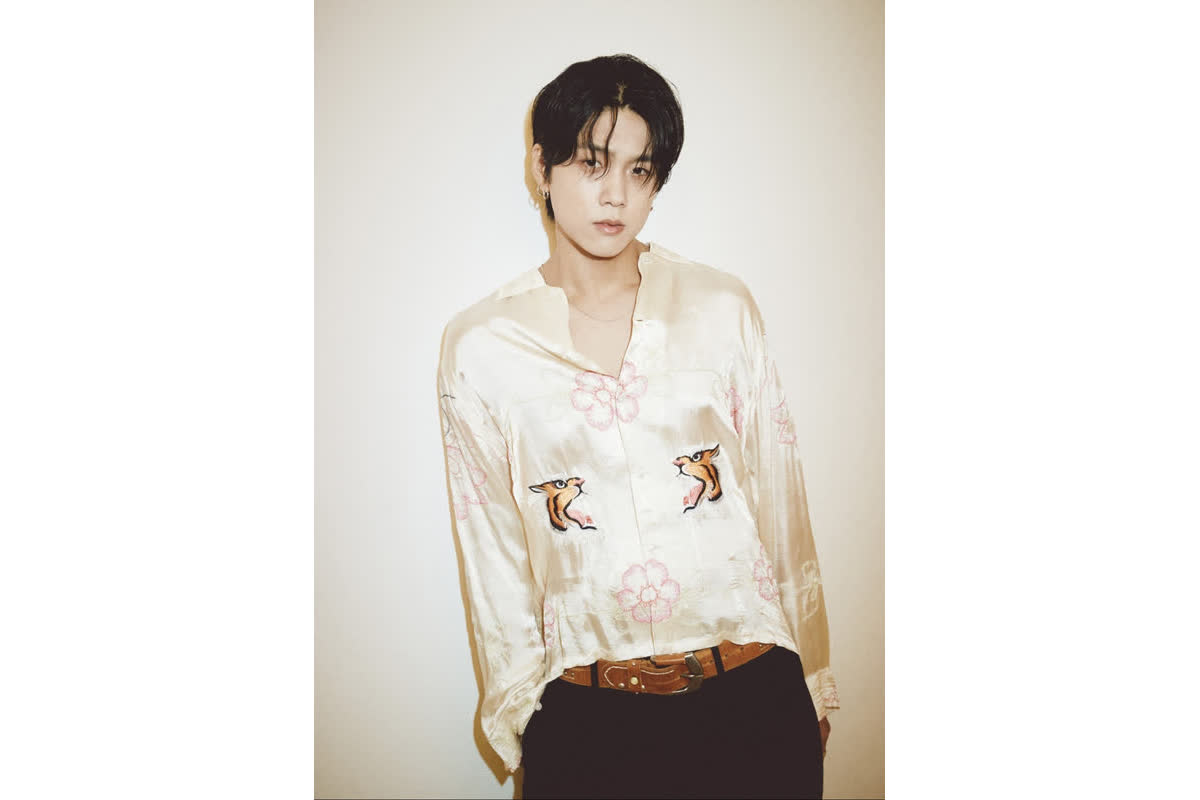
 The album also includes a duet with Suho of EXO. To some, pairing a world-class coloratura soprano with a K-pop idol might seem audacious. For Jo, it was a natural widening of her artistic horizons.
“I love K-pop and I’m proud of it,” she said, praising Suho as “an artist with a relaxed, appealing voice and the steadiness of a true leader.” She recounted watching Suho record via video link at 1:30 a.m. New York time after she had finished her own session, moved by how clearly his preparation showed.
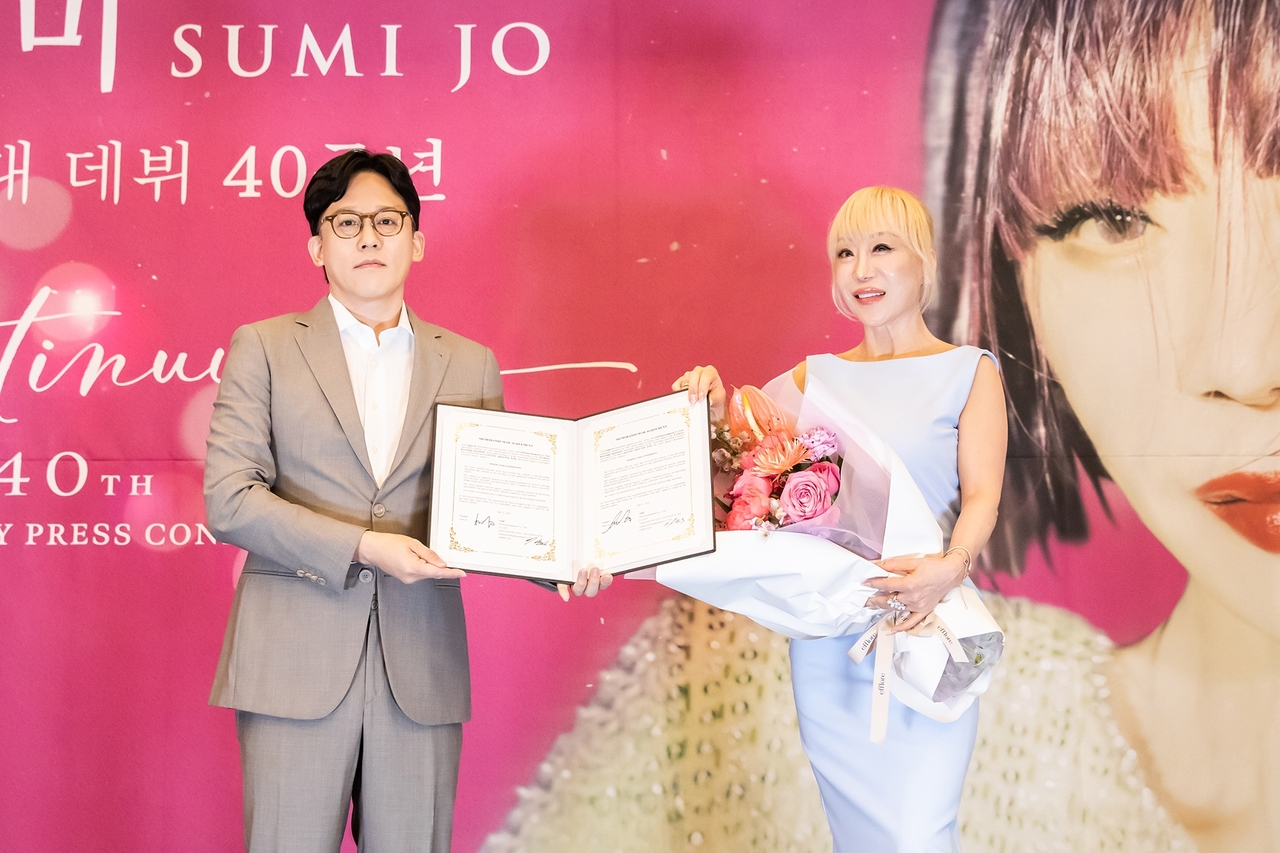
The project carries another significance: Jo has signed an exclusive recording contract with SM Classics, a label under SM Entertainment. It’s an intentional crossing of the boundary between classical music and K-pop.
Lee Sung-soo, SM Entertainment’s CAO, who joined the event, said, “K-pop reached the world because it aimed globally from the start. But it was Sumi Jo who introduced Korean music to the world a decade before SM.” Jo said she hoped to use SM’s global network to expose classical music to broader audiences. “I don’t want this to be genre-blending for its own sake,” she added. “I want artists who stand confidently in their fields to collaborate and create a new musical language.”
My mentors, my parents
The artistic foundation that made Jo who she is came from her parents.
Her mother, who gave up a dream of singing professionally, raised her daughter with one conviction: “I will make my daughter a prima donna.” Jo remembers her mother saying, “Be an artist loved by many, rather than a wife loved by one man.”
 Her father’s dedication reads like a movie scene. When Jo was 17, he showed up unannounced at the Royal Opera House in London and told the manager, “My daughter must stand on this stage.” The boldness of that moment has stayed with her. Before she turned 30, she had become a leading soprano on that very stage.
“My parents taught me how to become a global artist,” Jo said. “They played English cassettes in the morning and French ones at night.” The strict regimen — including eight hours of piano practice a day — gave her the resilience to face the world stage alone.
She will open the nationwide tour celebrating the album in Changwon, her parents’ hometown. Beginning the tour there is, she said, a filial gesture: a way to offer her parents’ memory the first live witness to her voice.
Imitation won’t do … an artist shaped by life and humanity
Jo’s rise to the top was not only about a gifted instrument. She points to an experience in Salzburg, Austria, that changed her approach.
Early in her career she attended a master class with Elisabeth Schwarzkopf. Jo thought she had prepared German lieder impeccably — pronunciation, phrasing, the whole package. Locals even said, “If you closed your eyes, you’d think she’s German.”
But after listening, Schwarzkopf asked a surprising question: “Do you know Goethe? How about Hofmannsthal?”
 Jo couldn’t answer. As the thought “Goethe? I’ve heard the name, but who is Hofmannsthal?” crossed her mind, Schwarzkopf told her, “You can’t sing German lieder if you don’t understand German poetry and philosophy,” and sent her away. Jo calls that moment a turning point.
“It taught me that imitation isn’t enough. You must fully understand what you sing. From that day, I lived with a German teacher and relearned the language, the philosophy, the poetry,” she said.
That realization reshaped her art. Jo learned to inhabit the worlds behind the words, not just reproduce notes and diction. As a result, her singing goes beyond dazzling coloratura; it carries an awareness of life, culture and human experience.
The artist who insists the highest right is freedom
Across four decades — even amid Karajan’s praise and triumphs on the world’s opera stages — Jo places the value of freedom above glittering success.
She recalled the sorrow of watching North Korean singers during a 2000 joint performance, unable even to choose an encore.
“If you asked me what the most important right is for a human, I would answer without hesitation: freedom. For an artist, freedom is not optional; it is the basis of existence,” she said.
Now she passes that value on through teaching. The second Sumi Jo International Vocal Competition, to be held in France this July, offers young artists a platform to establish identity and perform. Jo wants to cultivate artists who have a worldview and a sense of self, not merely technical skill.
“It matters that an artist knows where they come from and the color they bring,” she said. “I hope they become messengers of peace.”
At the pinnacle of a 40-year career, Jo still seeks new musical languages and pursues continuity.
“Many people think classical music is difficult and expensive,” she said. “I want to create more concerts that families and friends can enjoy without feeling burdened, and keep offering small performances that bring simple joy.”