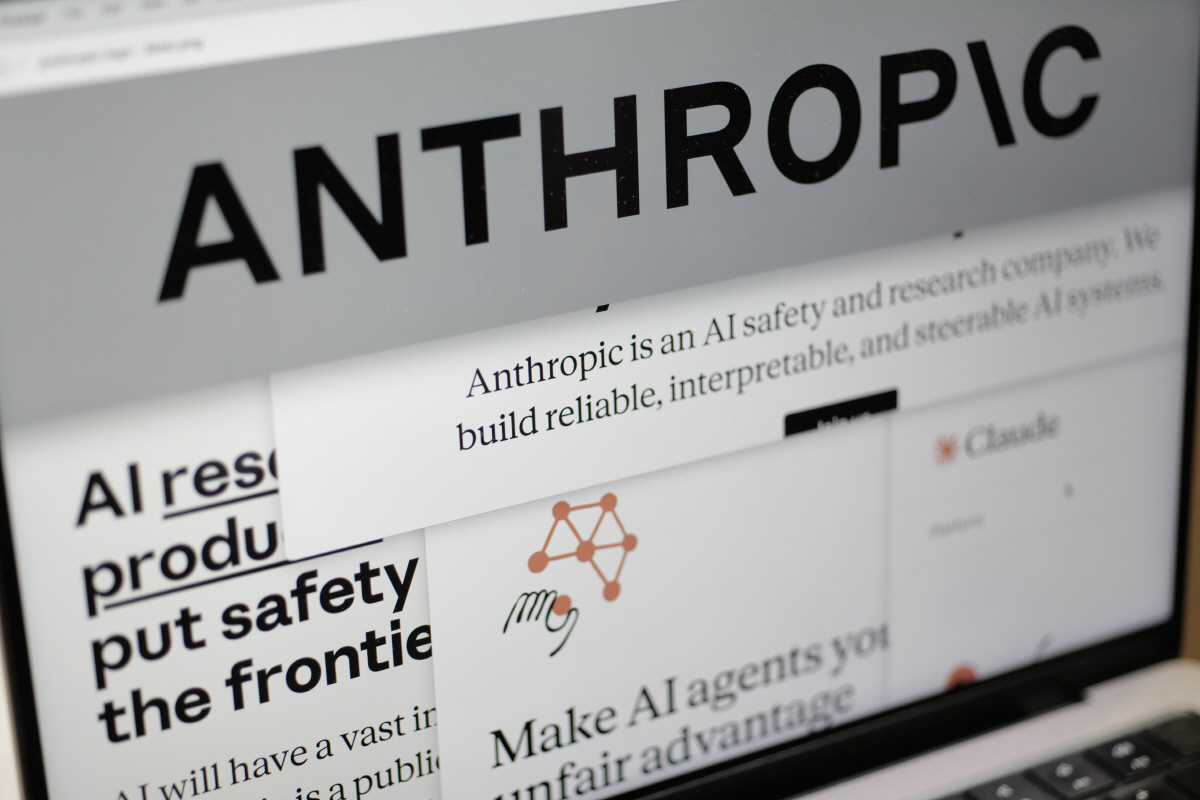
The South Korean government is exploring participation in Anthropic’s Project Glasswing, but analysts say access hurdles are steeper than expected. Control over advanced AI models is reshaping the global AI power balance and creating national-security concerns.
As of April 26, the U.K. is the only country granted external access to Anthropic’s Claude Mitos, via the AI Security Institute (AISI), a U.K. government research body. Industry officials say that access was enabled by a memorandum of understanding the U.S. and U.K. signed three years ago to cooperate on advanced AI safety testing.
Warnings that hacking groups could exploit Mitos to cripple national systems pushed Seoul to formalize its response. Ryu Je‑myung, second vice minister at the Ministry of Science and ICT, said, "We are exploring official participation in Anthropic’s Glasswing and with OpenAI." OpenAI also limits its GPT‑5.4‑Cyber model to top‑tier customers under its Trusted Access for Cyber (TAC) program.
Claude Mitos can identify thousands of zero‑day vulnerabilities in short order and autonomously chain them to generate attack code. In a recent assessment released by AISI in the U.K., the Mitos preview model successfully executed a corporate network attack scenario end to end — from external intrusion to lateral movement, privilege escalation and data exfiltration.
With core AI models shared only with selected partners, access has become a direct national‑security issue. Project Glasswing includes major U.S. tech firms — Apple, Google, Microsoft, Nvidia, Amazon Web Services (AWS) and Palo Alto Networks. Analysts say the initiative has effectively formed a U.S.‑centered, closed security network that goes beyond typical technology cooperation.
Long before these ultra‑capable AIs emerged, the U.S. elevated AI to the level of a national security asset. Earlier this year, under an "AI First" strategy, it established a system to deploy the latest AI models across all service branches within 30 days. "The U.S. Department of Defense issued guidance to weaponize the latest AI quickly," said Choi Byung‑ho, a research professor at Korea University’s Human‑Inspired AI Institute. "Would they share those weapons with other countries?"
There is effectively no international framework to temper that approach. South Korea still faces hurdles to join Project Glasswing. "Our working group has repeatedly called for international, joint discussions on Mitos," said Kim Myung‑ju, director of the AI Safety Research Institute. "Countries such as Japan and Canada that signed MOUs with Anthropic still have not joined Project Glasswing — South Korea must clear the MOU hurdle first."
The security gap between nations is likely to widen. Anthropic plans to publish a report on Mitos operations in early July. "Countries and companies that don’t join Project Glasswing will face challenges they haven’t seen before in roughly 80 days," warned Lee Sang‑geun, director of Korea University’s AI Security Research Institute. "In the short term, joining Project Glasswing is the best option; long term, failing to secure advanced coding AI risks dependency on the U.S."