After talks between the United States and Iran collapsed, clouding prospects for a cease-fire, Itamar Ben-Gvir—Israel’s national security minister and a leading far-right cabinet figure—staged a provocative visit to pray at Jerusalem’s contested holy site.
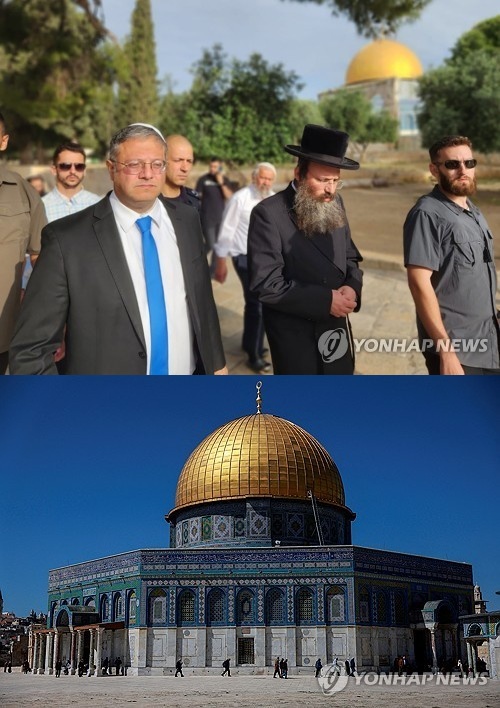
The move flouted the long-standing status quo that has helped manage Muslim–Jewish coexistence at the site and is likely to raise regional tensions further.
On April 12 (local time), footage shared by Arab media showed Ben-Gvir visiting the holy precinct in Jerusalem’s Old City—known to Muslims as the Haram al-Sharif and to Israelis as the Temple Mount—where he spread his arms, clapped and led loud communal prayers.
At the site he told those gathered, “Today you will feel like you own this place,” an explicit statement of intent to assert control. He contrasted the visit with past incidents in which people were reportedly detained for quietly praying while surrounded by Arabs, calling the scene “a complete change.” He said he is pressing Prime Minister Benjamin Netanyahu, more frequently and forcefully, to expand Jewish access and prayer rights at the holy site.
Jordan’s Foreign Ministry, which holds custodial responsibilities for the site, immediately protested.
In a statement, the ministry “strongly condemned the unacceptable intrusion by the far-right minister,” saying the entire holy site is a place of worship exclusively for Muslims and falls under the sole jurisdiction of the Jordanian Waqf, an Islamic religious endowment.