[Green Economy News = Reporter Choi Seong]

South Korea’s defense industry has moved beyond an early focus on “cost-effectiveness” and “rapid delivery” and is now shifting into an AI- and service-driven era officials call “K-Defense 2.0.”
Analysts say the sector has moved past simply expanding exports and is entering a phase in which it acts as a “technology partner that designs the battlefield,” changing how wars are fought.
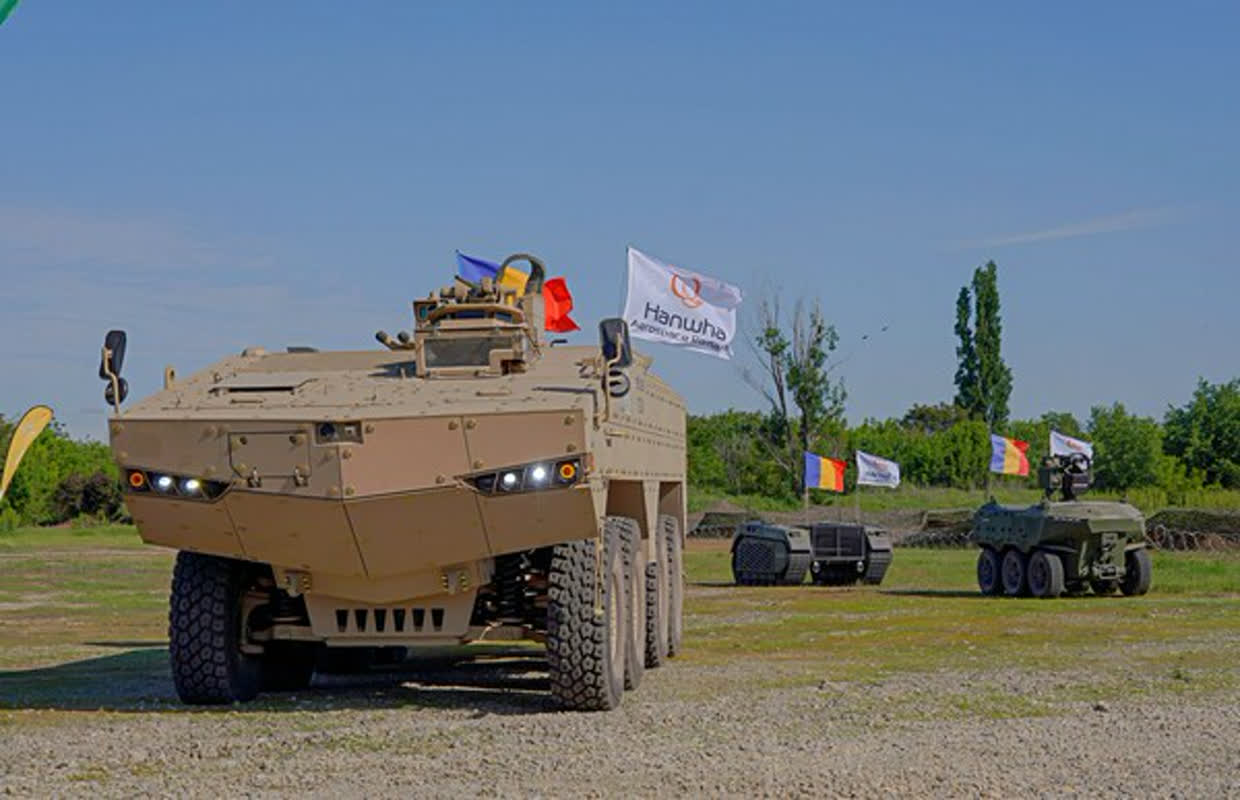
According to the Defense Acquisition Program Administration (DAPA) and the Korea Institute for Industrial Economics & Trade (KIET), South Korea’s defense exports are projected to reach about $37.7 billion in 2026 (approximately 50.27 trillion KRW). That would be more than double the previous record of $17.3 billion in 2022 (approximately 23.07 trillion KRW). Crucially, the export mix is undergoing a qualitative shift: a portfolio once dominated by conventional firepower is rapidly being replaced by advanced, integrated systems such as the KF-21 Boramae fighter, a roughly 3,000-ton-class submarine, and the mid-range surface-to-air system Cheongung-II.
The core of K-Defense competitiveness now lies in connectivity rather than the standalone performance of individual weapons. The KF-21, now in serial production, is not just a flight platform; it is the central hub of a manned-unmanned teaming (MUM-T) architecture, linked via datalinks to domestically produced unmanned stealth systems.
The domestically produced air-to-ground guided missile “Cheonggeom,” which recently passed quality-certification live-fire tests, symbolizes that technological advance. Using AI, it can autonomously identify and track targets and deliver precision strikes to vulnerable points on armored vehicles. Industry experts say, “Korean weapons integrated with IT capabilities are emerging as the most intelligent option on the battlefield.”
Another pillar of the 2026 K-Defense strategy is maintenance, repair and overhaul (MRO). Weapons systems are typically operated for at least 30 years after acquisition, and lifetime sustainment costs can reach two to three times the initial purchase price. The global submarine competition between Hanwha Ocean and HD Hyundai Heavy Industries illustrates this trend: both companies list local MRO centers and technology transfer as core conditions, underscoring Korea’s positioning as a full‑cycle “security partner” that manages buyers’ defense systems end to end.
Defense technology is also spreading into civilian safety. DAPA signed a memorandum of understanding with the National Fire Agency to strengthen civil‑military cooperation and apply defense technologies to firefighting and disaster response. High‑resolution image‑recognition capabilities developed through defense R&D are being adapted for a “K‑Wildfire Response System,” improving the ability to pinpoint ignition sites even in severe weather and bolstering national disaster response. The April agreement is expected to accelerate the modernization of disaster‑response equipment as defense technology is deployed for public safety.
Lee Yong‑cheol, head of DAPA, said, “As our defense industry draws global attention, now is the time to strengthen our foundation. We will help the sector take the next step forward based on input from personnel in the field and the public.”