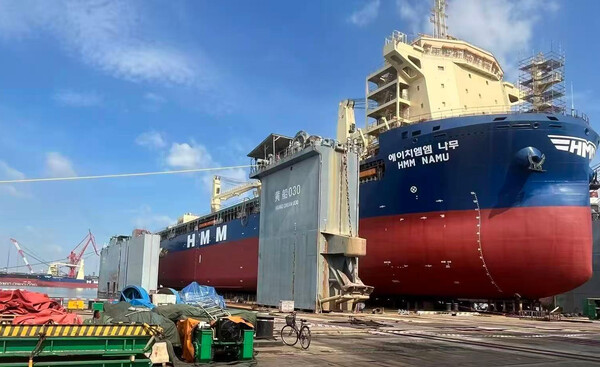
[The Public=Reporter Oh Doo-hwan] The probe into the explosion and fire aboard the HMM-operated containership Namu in the Strait of Hormuz is likely to be delayed, authorities say. Although crews extinguished the blaze, seafarers have not been able to enter the engine room, where the fire is believed to have started.
Inspecting the engine room is a critical step for determining the cause of the blast and gauging damage, but investigators face lingering hazards after the vessel’s carbon dioxide fire-suppression system discharged. That leaves a risk of asphyxiation and the potential for a secondary fire if the space is re-pressurized too quickly.
The incident occurred around 8:40 p.m. on the 4th in waters near the United Arab Emirates inside the Strait of Hormuz. An explosion and fire erupted on the engine-room side of Namu. The ship’s crew released CO2 and brought the blaze under control after about four hours. HMM said it confirmed the fire was out by reviewing on-board CCTV and the ship’s monitoring-room feeds.
Normally, crew or investigators would inspect the scene once a fire is declared out. In this case, entry to the engine room has been postponed. HMM officials said a large CO2 discharge created safety concerns for anyone who might enter the space.
Carbon dioxide suppression works by reducing oxygen concentration to put out flames. In a confined, sealed compartment, that can be lethal to people. Opening the engine-room door could allow oxygen to rush in and re-energize smoldering hotspots or embers.
Fire investigators and safety experts are urging caution. CO2 systems are often the preferred option for engine-room fires where using water is impractical, but they pose a serious suffocation hazard in enclosed spaces.
Rushing to open the space could result in injuries to responders or a rekindled fire, increasing damage. Some experts recommend preserving the scene for a period to ensure a thorough and safe investigation into the cause.
The situation onboard was described as urgent. Jeon Jeong-geun, chairman of HMM’s maritime union, told Yonhap News the explosion was loud enough to be noticed by nearby ships and delivered a considerable shock. Namu reportedly radioed nearby vessels, including HMM’s Daon, to report the fire and call for evacuation.
The exact nature of the explosion remains unclear. Some reports said CCTV captured a water column on the port side of the engine room, but Jeon warned that such accounts need confirmation. At this stage officials cannot rule out an external impact, an internal equipment failure, or other causes.
The government plans to start a formal investigation after the vessel is moved to Dubai Port. Fire-investigation specialists will be dispatched to the scene. Officials said tugs will tow Namu to Dubai; once the tow and berthing are complete, investigators will sequentially assess whether to open the engine room, inspect hull damage, and pinpoint the explosion site.
Based on available information, investigators cannot yet identify a definitive cause. One clear takeaway: extinguishing the fire does not automatically reveal why it started. The engine room remains central to the inquiry, but it is also the most hazardous compartment.
Witness accounts that nearby ships heard the blast and the emergency evacuation radio calls underscore the severity of the incident. Authorities may keep the engine room sealed until the government’s investigation begins.