|
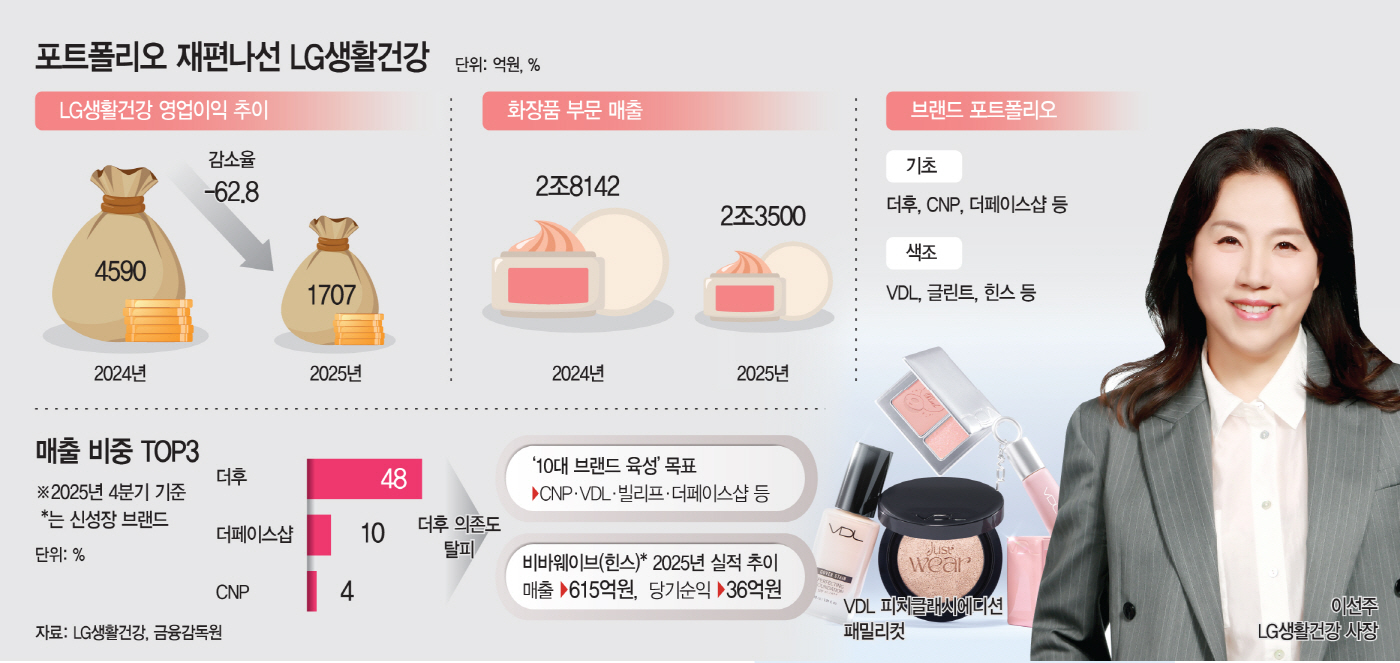
According to industry sources, LG H&H is moving away from a China-driven, luxury-skincare structure centered on The History of Whoo and su:m37˚. The company is diversifying its brand mix to reduce vulnerability from concentrating sales in a few premium names. For example, The History of Whoo — which made up 48% of LG H&H’s cosmetics sales in Q4 last year — was hit hard by slower Chinese demand and weak duty-free channels, weighing on results.
Last year, LG H&H reported revenue of KRW 6.3555 trillion (≈ $4.77 billion), down 6.7% year over year, while operating profit plunged 62.8% to KRW 170.7 billion (≈ $128.03 million). The drag came largely from cosmetics, which account for about 37% of total sales. Cosmetics revenue fell roughly 16.5% to KRW 2.35 trillion (≈ $1.76 billion), pushing the division into an operating loss for the first time in about 20 years.
To make this year a turning point, the company has launched an intensive restructuring effort. Since President Lee Seon‑ju took the helm late last year, LG H&H has reorganized its structure and implemented voluntary retirement programs. At the same time, it’s shifting away from a luxury-first playbook and beefing up derma and mid-tier product lines. President Lee’s plan to nurture “10 core brands” is part of that strategic pivot.
The company will push six brands — including The History of Whoo, CNP, belif and The Face Shop — as global pillars, while cultivating four others, such as VDL and Pra.L, as regional champions. At the shareholders’ meeting on the 24th, President Lee said the firm will focus its 10 core brands around high-growth channels and key regions to drive a growth turnaround this year.
Still, securities analysts expect restructuring to take time, so a quick earnings rebound is unlikely. That reality has put more strategic weight on the color cosmetics category as a complement to the company’s legacy luxury lineup. Color cosmetics tend to have lower brand loyalty and higher willingness among consumers to experiment, making the segment especially useful for attracting new shoppers and expanding retail touchpoints.
Those shifts are already showing up in the numbers. Hince, the indie brand LG H&H acquired, and in-house VDL have both shown healthy growth. According to the Financial Supervisory Service, VivaWave — which operates Hince — posted KRW 61.5 billion (≈ $46.13 million) in revenue last year, up 36.1% year over year. Operating profit jumped 153.2% to KRW 4.7 billion (≈ $3.53 million), and net profit turned positive at KRW 3.6 billion (≈ $2.70 million). This was the first net profit since LG H&H invested about KRW 42.5 billion (≈ $31.88 million) in 2023 to acquire a 75% stake.
VDL is also gaining momentum. The brand swept three categories at last year’s Olive Young Awards, and its bestseller, the Stain Perfecting Foundation, had sold more than 2.7 million bottles as of October. LG H&H included only VDL among its color brands in the list of 10 core brands, signaling its intention to develop VDL as a strategic growth vehicle.
Rising K‑beauty demand in Japan is another tailwind. Both Hince and VDL are targeting Japan as a key market. Customs data show South Korea’s cosmetics exports to Japan have grown about 7.5 times over the past decade. VDL plans to enter 4,000 Japanese drugstore locations this year and expand into Costco Wholesale Corporation as part of a local distribution push.
Along with expanding its footprint, LG H&H plans to rebuild competitiveness through stronger technology. A company spokesperson said, “Through a brand-centered organizational overhaul and investments in customer experience (CX) innovation, we will transform into a science-based beauty and health company,” adding the firm will concentrate R&D and marketing on hero products.