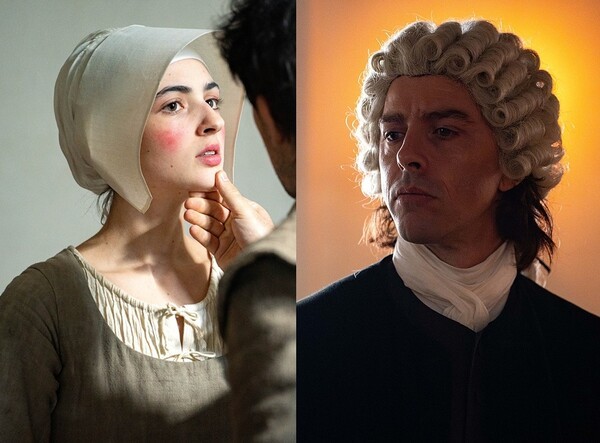
[NewsCulture reporter Kyu‑min Noh] Music has no purpose—and yet it can do everything.
Antonio Vivaldi is one of the defining figures of the Baroque era, often remembered as the “red‑haired priest.” Born in Venice in 1678, he balanced clerical duties with a prolific musical career across Europe. The son of musician Giovanni Battista Vivaldi, he entered seminary at 15. Asthma made life in the monastery difficult, and after a longer formation than most candidates, he was finally ordained ten years later.
Vivaldi is best known for his work at the Venetian orphanage Ospedale della Pietà. The Pietà earned a reputation for exceptional musical training, assembling female orchestras and choirs from talented orphans. The students lived in dormitories and performed behind grilles while wearing masks—an “orchestra without faces”—yet their concerts drew rulers and aristocrats from across Europe and even inquiries about enrolling their own children.
When Vivaldi joined the Pietà as a teacher, he did more than instruct. He composed orchestral works for the ensemble and matched instruments to each student’s gifts. The extraordinary abilities of some orchestra members pushed him to explore new compositional directions. He disrupted traditional harmonic conventions and crafted original musical themes that surprised listeners. Those accomplishments helped produce one of classical music’s most enduring works, The Four Seasons.
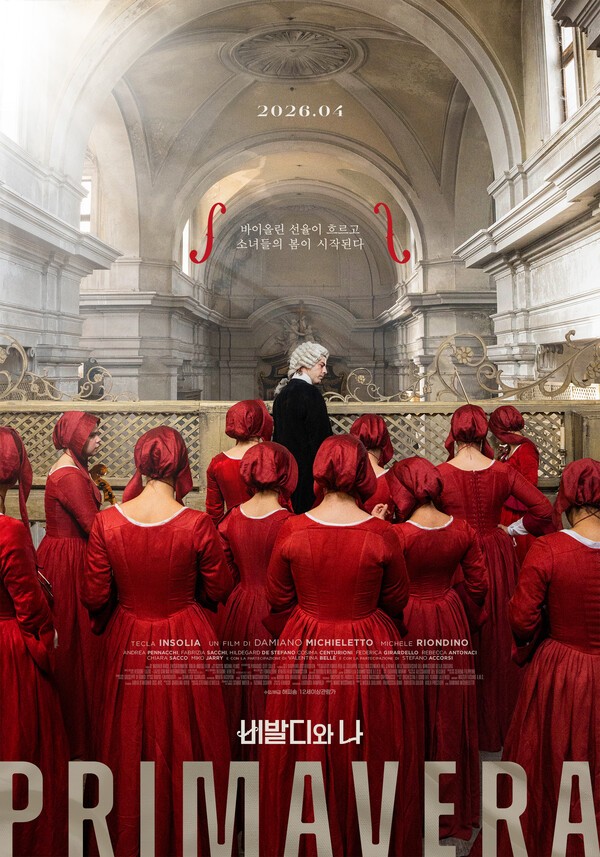
Marking the 300th anniversary of The Four Seasons, the film Vivaldi and I opens for audiences on the 29th. Set in early‑18th‑century Venice, it follows Cecilia (Tekla Insolia), an orphan at the Pietà who meets Vivaldi (Michele Riondino), discovers her extraordinary talent and navigates the confusion and growth of coming into her own. Arriving at a moment when classical music is enjoying renewed popularity—concert ticket sales have topped 100 billion KRW (approximately $75 million), and classical elements are showing up in K‑pop and film soundtracks—the movie promises a richly musical experience.
The film adapts Tiziano Scarpa’s novel Mother, Why Did You Abandon Me? (original title: Stabat Mater), which won Italy’s Strega Prize and the Mondello International Prize. It is also the feature debut of Damiano Michieletto, widely regarded as one of the most innovative opera directors today. Michieletto has staged productions at La Scala in Milan, the Royal Opera House in London, La Fenice in Venice and the Staatsoper in Berlin, directing works such as The Barber of Seville, La Bohème, Rigoletto, Don Giovanni, Madama Butterfly, Cavalleria Rusticana, Macbeth and Romeo and Juliet. He also attracted global attention directing the opening ceremony of the 2026 Milan–Cortina Winter Olympics.
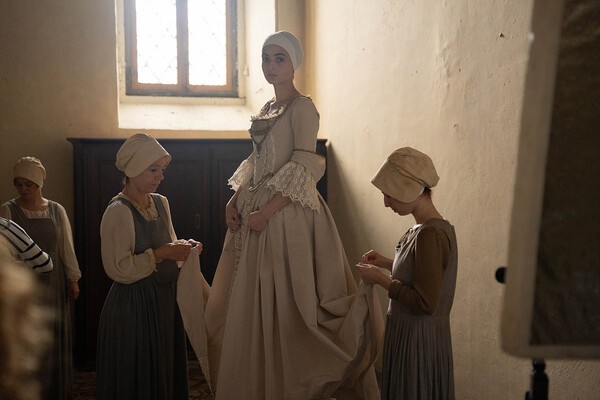
Michieletto sensitively explores Cecilia’s inner life: a nameless musician at the Pietà who, under the rules of her time, could only leave by marrying a patron. Meeting Vivaldi propels her to confront her identity through music and to attempt to shape her own destiny. The film has been invited to and honored at 24 leading festivals and award ceremonies worldwide. Notably, it received seven nominations for Italy’s David di Donatello awards—adaptation, leading actress, original score, costume design, makeup, hair and sound—for the ceremony in Rome on May 6.
Vivaldi and I captures many facets of Vivaldi’s world: his red hair and struggles with asthma; his role conducting and playing violin at the Pietà; the feverish popularity of his concerts; and his concentrated work composing with a variety of instruments. The film also dramatizes Vivaldi’s discovery of Cecilia’s gift, their mentor‑mentee chemistry, and a carefully realized depiction of 18th‑century Venice that draws viewers in.
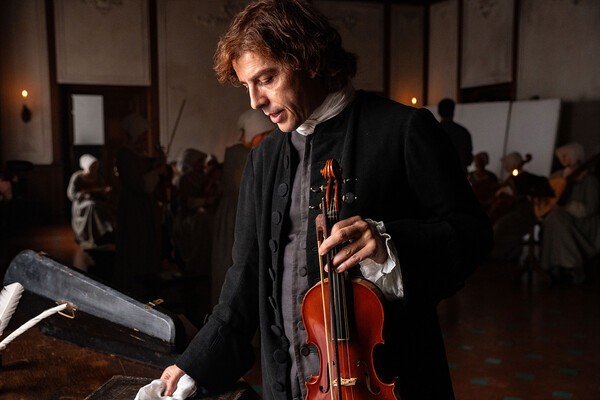
Production designer Gaspare De Pascalis dug into historical records of the Pietà, studied artifacts and period artworks, and interviewed Venice museum curators to ensure authenticity. Composer Fabio Massimo Capogrosso—who has collaborated with Michieletto on opera and theater—provided the film’s music, helping to realize a polished, high‑caliber classical film.
One striking element is the film’s female‑centered story about artistic ambition and redemption. It compellingly shows how Vivaldi inspires nameless young musicians and transforms lives. Cecilia’s arc—from student to artist—combines dramatic momentum with emotional depth.
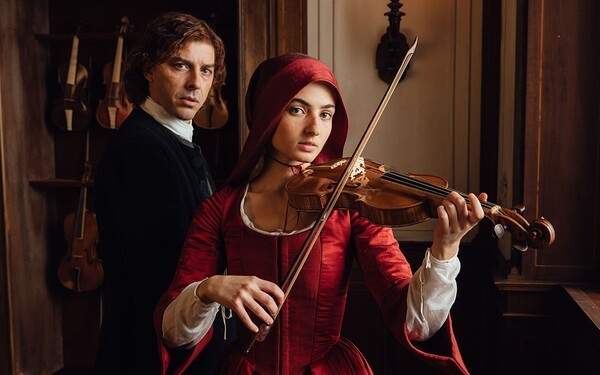
The cast delivers commanding performances that anchor the film. Tekla Insolia, as Cecilia, is an Italian rising star. She drew notice at the 2024 Cannes Film Festival for the drama The Art of Joy, won a newcomer award at the 81st Venice International Film Festival for her feature debut Family (directed by Francesco Costabile), and earned dual nominations at the 2025 David di Donatello awards for supporting and leading actress for Family and The Art of Joy.
Michele Riondino portrays Vivaldi. A respected actor, he received the EFP Shooting Star honor at the 2010 Berlin International Film Festival, the Premium Cinema Talent award at the 69th Venice Film Festival, the Pasinetti Best Actor award at the 73rd Venice Film Festival and the 2024 David di Donatello Best Actor award. In Vivaldi and I, he delivers a fully realized performance—both in presence and in his violin playing.
NewsCulture Kyu‑min Noh pressgm@nc.press