Defense Acquisition Agency Approval Can Be Skipped When Reselling Already-Exported Equipment
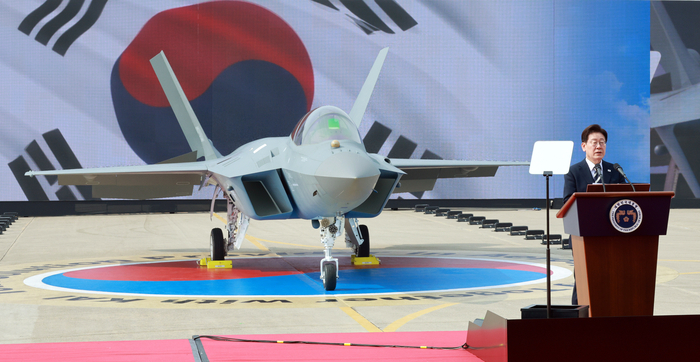 The government is moving to overhaul regulations to speed up technology transfers of defense R&D outputs as South Korea expands its K‑defense exports.
 On the 6th, the Ministry of National Defense published a draft partial revision of the enforcement decree for the Act on Promotion of Defense Science and Technology Innovation and solicited feedback from related agencies. The ministry said the changes are aimed at helping defense firms quickly produce and export repair parts and other defense items, thereby boosting the defense industry.
Under current rules, approvals for technology transfers of government-owned development results must be completed within three months. The process allows up to one month for the technology-holding institution to assess transfer feasibility and set royalties, and up to two months for approval by the Defense Acquisition Program Administration (DAPA).
The draft shortens DAPA’s approval window from two months to 30 days. Because the 30‑day period excludes Saturdays and public holidays, the practical turnaround is likely to exceed a single calendar month.
The revision also seeks to streamline export-related procedures. It would add a new ground for technology-holding institutions to grant their own approvals, allowing domestic companies to skip DAPA’s transfer approval when manufacturing repair parts needed during the operation and maintenance of exported equipment.
Specifically, self-approval would apply when repair parts for defense items—previously exported with the Defense Acquisition Program Administration chief’s permission under the Defense Projects Act—are being exported again to the same end user. For instance, replacing specific components during the operation of exported self-propelled guns or aircraft sometimes took months under the existing transfer process. If the amendment is adopted, suppliers should be able to deliver those parts far more quickly, reducing equipment downtime.
The ministry said sustained, life‑cycle maintenance is essential for weapon systems. With export demand expected to rise, it argued that authorities must create conditions that allow rapid production and export of repair parts.
The draft would also place development outputs produced by industry, academia and research institutes under the consignment management of the Defense Technology Quality Institute. Although the stockpile of government-owned defense R&D outputs has grown steadily, many items remain stored at developer institutions because systems and facilities for centralized management are lacking. The ministry said it will add a clause to the institute’s consignment duties—covering core technologies, Future Challenge Defense Technology R&D projects, and rapid demonstration projects—to clarify stewardship and enable systematic use and management of government‑owned development results.