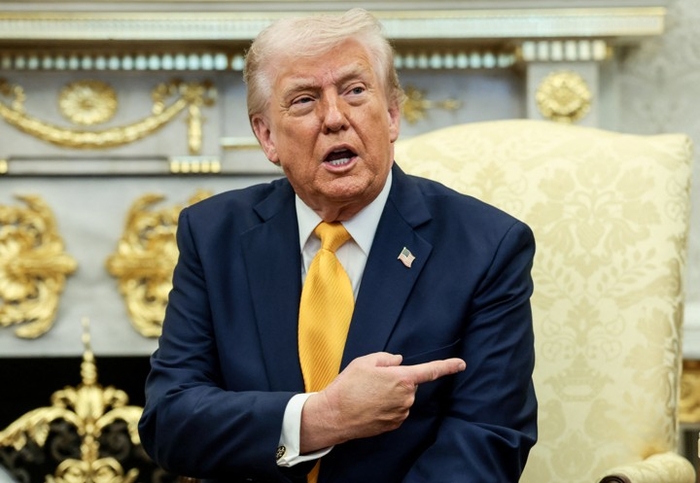
U.S. President Donald Trump publicly criticized allied nations, saying the United States “started” the mine-clearance operation in the Strait of Hormuz “for the whole world.”
On April 11 (local time), Trump wrote on his social media platform Truth Social, “We’re starting the Strait-clearing operation for countries like South Korea, China, Japan, France and Germany,” and added, “They don’t have the courage or the will to do it themselves.”
He also asserted that Iran has been effectively defeated, stressing, “All that remains is the threat that ships could hit mines.” Trump went on to claim that Iran’s mine-laying capability has been neutralized, underscoring U.S. military superiority.
Analysts say those remarks go beyond a situational update and amount to pressure on allies to share responsibility for securing the waterway. Countries such as South Korea, Japan and China are highly dependent on the Strait of Hormuz for oil imports, and Trump signaled they should take a more active role than the United States.
In practice, the United States’ higher level of energy self-sufficiency means it relies less on the Strait, while major Asian and European economies would face direct economic fallout if the route were blocked. Against that backdrop, Trump has repeatedly complained that the nations most at risk have been reluctant to act.
Meanwhile, as the U.S. and Iran enter talks in Islamabad aimed at ending hostilities, mine clearance in the Strait of Hormuz and the restoration of safe shipping lanes have emerged as key variables in the negotiations.
By Sangmok Lee