![[Photo: Aju Economy]](https://contents-cdn.viewus.co.kr/image/2026/03/CP-2023-0070/image-19d99461-8280-4472-a2a3-5f58d4bb090a.png)
Concerns that the Middle East conflict will linger pushed South Korea’s stock market lower again, marking a third consecutive trading-day drop. Foreign investors dumped 2.1332 trillion KRW (approximately 1.60 billion USD) on the day, driving March net foreign sales past 32.0131 trillion KRW (approximately 24.01 billion USD). Short-sale balances also topped 16 trillion KRW (approximately 12.00 billion USD) for the first time, underscoring rising panic among investors.
According to the Korea Exchange, the KOSPI closed at 5,277.30 on the 30th, down 161.57 points (2.97%) from the previous session. The index plunged as low as 5,151.22 in early trading before trimming losses in the afternoon.
Retail and institutional investors were net buyers, but sustained selling by foreign investors — the eighth straight day of net outflows — weighed on the market. Foreigners sold 2.1332 trillion KRW (approximately 1.60 billion USD) on the day, bringing their March net selling to 32.0131 trillion KRW (approximately 24.01 billion USD). A surging won-dollar exchange rate amid market uncertainty contributed to the capital flight.
Tech heavyweights remained under pressure after a shock tied to Google’s TurboQuant. Samsung Electronics fell 1.89% to 176,300 KRW (approximately 132.23 USD), while SK Hynix slid 5.31% to 873,000 KRW (approximately 654.75 USD). The KOSDAQ also retreated, closing at 1,107.05, down 34.46 points (3.02%).
[War-Split K-Sectors] K-defense surges as shipbuilding and shipping benefit; refiners face a complex squeeze
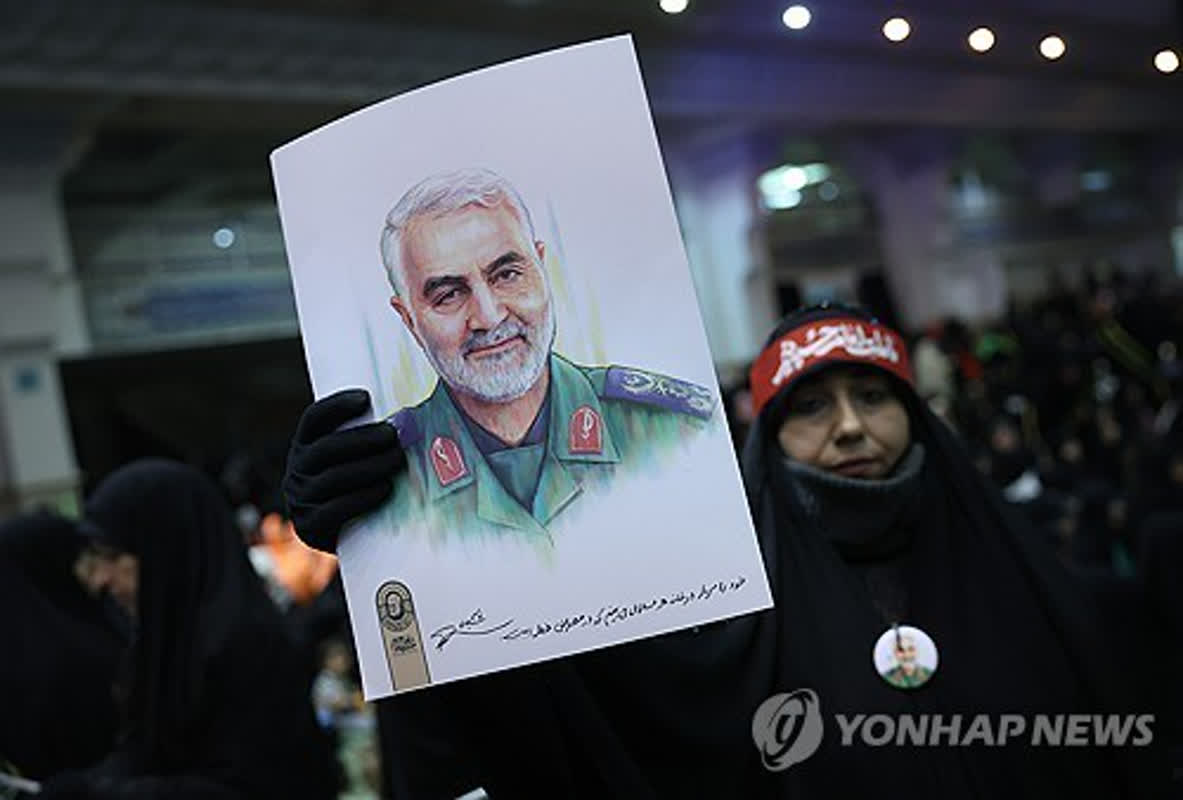
As the U.S.-Iran conflict stretches on, winners and losers are emerging across Korea’s industries. Defense firms are accelerating export efforts after Korean air-defense systems demonstrated high effectiveness. Shipbuilders and shipping lines stand to gain from higher freight rates and renewed orders for ultra-large crude carriers (VLCCs). Refiners, however, face a difficult mix of high oil prices and political pressure from price caps and consumer scrutiny.
Industry sources say defense has been the biggest beneficiary of the conflict. Missile and drone strikes have highlighted the value of air-defense systems, and South Korean systems — reported to have interception rates above 96% in operational use — have drawn active interest from Middle Eastern buyers requesting increased production. One industry official said Korean systems are proving competitive on price, delivery and quality compared with U.S. systems, which often face production delays, inventory shortages and higher costs. Global media coverage, the official added, has amplified the reputation of "K-air defense" capabilities.
The shipbuilding sector is also optimistic as international oil and LNG prices spike. Orders for VLCCs are increasing, raising expectations for more contracts. In a sustained high-oil-price environment, demand for long-haul crude transport typically favors VLCC deployments. Recently, Hanwha Ocean and Samsung Heavy Industries each booked three VLCCs. HMM has recovered canceled orders and secured six VLCCs, two of which are being built by HD Hyundai.
Shipping firms are seeing a near-term lift from heightened geopolitical risk. Major carriers routing around the Strait of Hormuz via the Cape of Good Hope are adding roughly two weeks to voyages, boosting demand for large-capacity vessels and putting upward pressure on freight rates.
Kim Jong Un observes new solid-fuel ICBM engine test — Pyongyang signals it is not like Iran
North Korea conducted a ground static-fire test of a new carbon-fiber solid-propellant engine intended for intercontinental ballistic missiles while Kim Jong Un observed. The move, and signals that Pyongyang is pursuing multi-warhead ICBM capability, appeared designed to underscore a key distinction from Iran.
State media reported on the 29th that Kim watched a ground static-fire test of a high-thrust solid engine using carbon-fiber composites. The agency said the upgraded engine’s maximum thrust reached 2,500 kN — about a 26% increase from the 1,971 kN measured during a ground test last September.
Analysts say the engine could be destined for the Hwasong-20, a system North Korea has publicly acknowledged it is developing. Even though the Hwasong-18 and Hwasong-19 already have ranges near 15,000 km — sufficient to reach the U.S. mainland — the increased thrust points to efforts to field multi-warhead capability.
Yang Moo-jin, a distinguished professor at the University of North Korean Studies, said the new figures are a marked improvement over the Hwasong-19. He added that Pyongyang is likely to continue thrust tests aimed at multi-warhead deployment and atmospheric reentry, and that the program serves in part to demonstrate a capability Iran lacks: the ability to strike the U.S. mainland.
Paint makers raised prices citing Middle East war; Fair Trade Commission launches on-site probe
As paint manufacturers raised product prices blaming higher raw-material costs linked to the Middle East conflict, South Korea’s Fair Trade Commission opened an investigation into possible collusion.
On the 30th, FTC investigators carried out on-site inspections at the headquarters of five paint companies — KCC, Nohru Paint, Samhwa Paints Industrial, Gangnam Jevisco and Jokwang Paint — and at the office of the Korea Paint & Ink Industrial Cooperative, the industry association.
The Fair Trade Act bars companies from fixing or coordinating prices through secret agreements or other collusion that unduly restricts competition. The FTC is examining whether unfair practices accompanied recent price hikes in paints and related products.
Nohru Paint and Samhwa Paints Industrial raised prices by 20–55% effective the 23rd, and KCC notified dealers it will raise distributor prices by 10–40% beginning on the 6th of next month. Jevisco plans at least a 15% increase starting the 1st of next month.
The companies say rising raw-material costs tied to the conflict — paints use naphtha as a feedstock — made the increases unavoidable. But the FTC noted that paint makers have previously raised prices around the same time, prompting scrutiny for potential improper coordination.
Trump: 'We removed key targets in Iran' — Tehran accuses U.S. of preparing ground invasion while preaching diplomacy
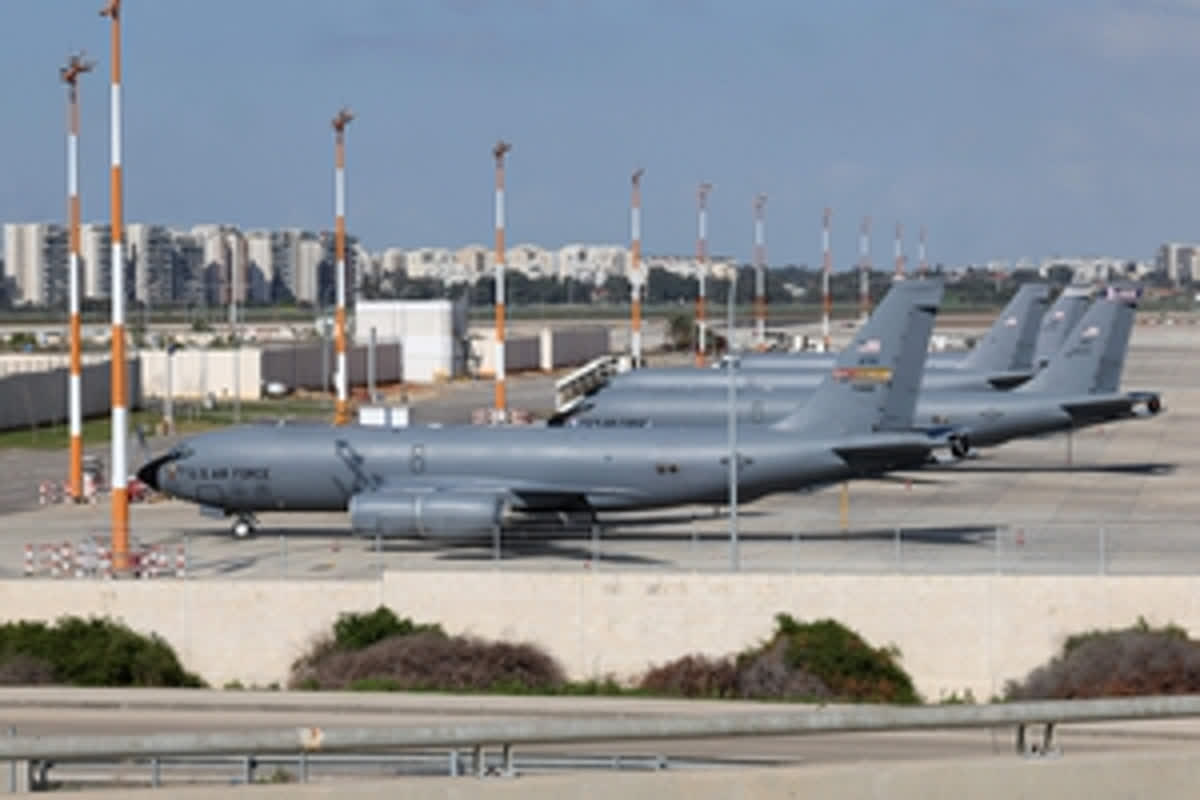
President Donald Trump highlighted U.S. military actions in Iran and issued a hardline statement, drawing a sharp rebuttal from Tehran, which accused the U.S. of publicly advocating diplomacy while secretly preparing ground forces for an attack.
On the 29th (local time), Trump posted on Truth Social that it had been a "big day" in Iran and that many long-sought targets had been removed and destroyed by "our great military." He called U.S. forces the most powerful and lethal in the world.
The comments followed Trump’s claim that the conflict with Iran had effectively produced regime change. Speaking to reporters aboard Air Force One, he said, "We have achieved regime change. We are now dealing with completely different people," and added that an agreement with Iran now looks possible and could come soon.
Iranian officials, however, expressed skepticism. Mohammad Bagher Ghalibaf, speaker of Iran’s parliament, told state news agency IRNA that the enemy publicly talks about negotiations and dialogue while secretly preparing ground forces for an attack.