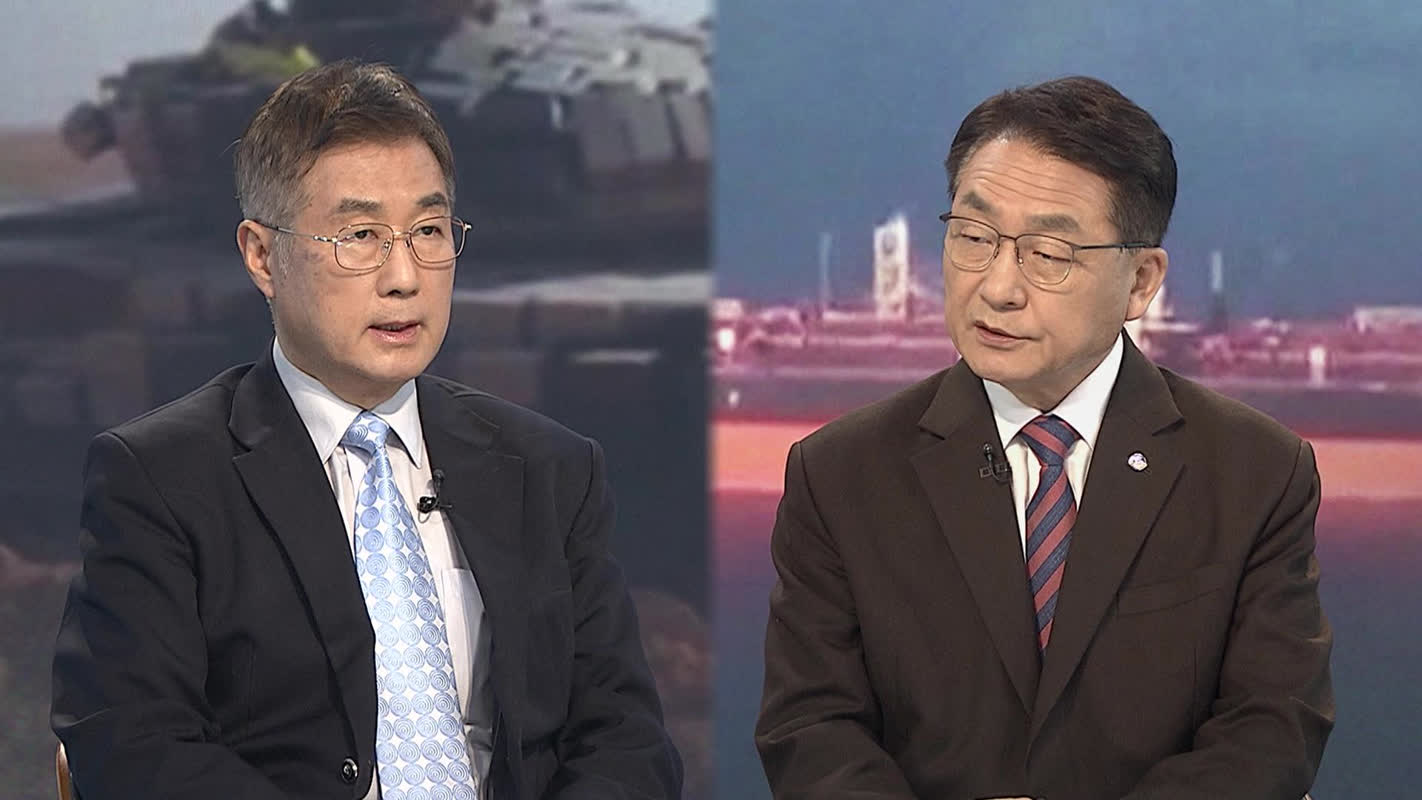
Sejong Institute Research Fellow Cho Jang-won Report
'Intent to Demonstrate Ability to Breach the ROK-U.S. Interception Network'
'Intent to Demonstrate Ability to Breach the ROK-U.S. Interception Network'
 Analysts say North Korea has shifted this year from basic performance checks of weapon systems to tests intended to validate battlefield operational capability. They warn that combining multiple warhead types—such as cluster munitions—with diverse delivery methods could place significant strain on ROK–U.S. defense systems.
 Cho Jang-won, a research fellow at the Sejong Institute, reached that conclusion in a recent report assessing North Korea's missile development trends from January through April. Cho says Pyongyang appears to be adopting operational approaches observed during the U.S. campaign in Iran and is intent on demonstrating an ability to penetrate the ROK–U.S. interception network and deliver concentrated devastation to selected areas.
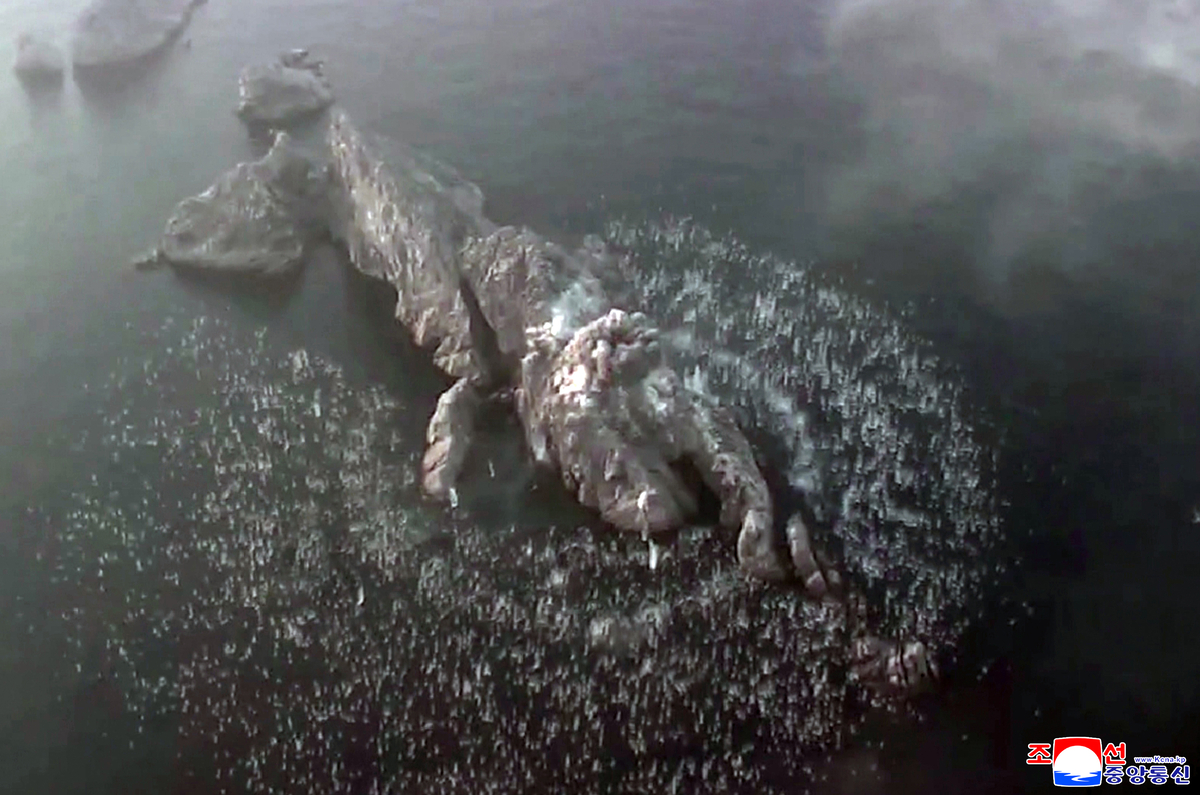
This year North Korea has continued military provocations, from hypersonic missiles and \"super-large\" rocket artillery to ship-launched strategic cruise missiles and tests of cluster warheads. Cho notes Pyongyang claimed the April 8 cluster warhead (dispersion warhead) test by a Hwasong-11 Ga-type round struck 6.5–7 hectares (about 16–17 acres), and that on April 19 five Hwasong-11 Ra-type rounds equipped with cluster and mine-scattering munitions struck an island 136 km (about 85 miles) away, impacting 12.5–13 hectares (about 31–32 acres). He interprets those claims as showing Pyongyang is prioritizing practical threat maximization over adherence to international norms.
Cluster munitions release hundreds of submunitions in flight that then fall over a wide area, producing extensive damage. They can degrade military infrastructure—runways at air bases, for example—and also threaten civilian facilities, which is why their use is highly controversial. Because they are widely regarded as inhumane weapons, most countries avoid publicly acknowledging possession.
Cho summarizes the technical priorities North Korea has emphasized this year as: △mixing hypersonic missiles with existing short-range tactical missiles that execute irregular maneuvers and firing them together to improve intercept-avoidance △mass launches of short-range tactical missiles fitted with cluster warheads and of super-large rocket projectiles to concentrate firepower on specific areas △diversifying warhead types—including cluster warheads and carbon-fiber warheads—to degrade military infrastructure, command nodes, and air-defense systems △and expanding strategic cruise-missile launch options from land to sea to diversify platforms and complicate detection and tracking.
 Cho also highlights technical limitations. He notes North Korea's public statements did not provide concrete evidence that hypersonic test launches were definitively successful. Developing hypersonic glide vehicles requires precise guidance and control while performing extreme high-speed maneuvers—an inherently difficult engineering challenge.
 He also points to other shortfalls: Pyongyang has yet to demonstrate sustained salvo capability for its super-large rocket artillery; the tested cluster warhead is not a novel warhead type; carbon-fiber warheads remain at an early development stage; and its strategic cruise missiles lack submarine-launch platforms. Cho argues that improving responsiveness to North Korea's missile threat will require developing low-cost, high-efficiency intercept systems and, over the long term, fielding AI-based real-time response architectures capable of mass, simultaneous countermeasures.
Meanwhile, the Wall Street Journal reported on May 1 that the conflict in Iran offers China, Russia, and North Korea a prime opportunity to assess U.S. warfighting capabilities and limits in real time. According to the report, those countries are observing U.S. use of new technologies—such as AI-assisted precision strikes—while analyzing U.S. vulnerabilities and the rate at which U.S. missile stockpiles are expended. The WSJ suggests the Iran conflict likely reinforced Kim Jong Un's perceived need for nuclear weapons; Iran's possession of highly enriched uranium alone gives it significant leverage in negotiations with the United States.
- What was the real condition behind the lovesickness that struck Chunhyang in classic tales? [Workplace Wake-up]
- Trump's hangover... U.S. troop cuts in Germany and a 25% auto tariff hike [Lee Tae-kyu's Washington Playbook]
- How much did prices jump in April? Watch March's current account [Han Dong-hoon's Weekly Outlook]
- Bull-market optimism lifts sentiment... the widest gap with the real economy in 16 years
- Foreign investors outpace retail—returns gap triples during the rally [This Director, That Stock]
- Did you know Russia alone owns the world's only 'nuclear-powered cruiser'? [Lee Hyun-ho's Military Talk]
- 'Baseball blind date' draws 500 people and matches 20 couples—who created the 'Hanwha singles'? [Fan Calculator]
- KOSPI nears 7,000... will the 'sell in May' adage hold? [Sunday Money Cafe]
- Series of fines in the 100 billion KRW range (about $75 million)... Coupang faces Fair Trade Commission ruling in June [Pickconomy]
- President Lee: Illegal loans exceeding the legal limit are void... you do not have to repay them