As Iran’s threat to blockade the Strait of Hormuz by laying mines materializes, tankers bound for China have reportedly continued to transit without disruption. Analysts warn that mine clearance could take considerable time, making a rapid return to normal traffic unlikely.
On March 10 (local time), Samir Madani, co-founder of ship-tracking firm TankerTrackers, told CNBC that at least 11.7 million barrels of crude moved through the Strait of Hormuz since U.S. and Israeli strikes on Iran on the 28th of last month — and that all of it was destined for China.
TankerTrackers uses satellite imagery to trace vessel movements and can detect the routes of ships that have turned off their tracking transponders. After Iran warned it would target ships transiting the Strait, many vessels reportedly switched off those systems.
Kepler, a real-time energy and commodities analytics platform, estimates roughly 12 million barrels passed through the Strait after the 28th, the network reported.
Nhway Khin Soe, a crude analyst at Kepler, told CNBC that, given China’s role as a major buyer of Iranian oil in recent years, a significant share of that crude likely headed to China. He added that confirming final destinations for individual tankers is becoming increasingly difficult. China’s National Energy Administration did not immediately respond to requests for comment.
China has been steadily building strategic oil reserves this year. Citing customs data released on March 10, CNBC reported China’s crude imports rose 15.8% in January–February compared with the same period last year.
Nhway Khin Soe said Iran exported about 2.16 million barrels per day in February but has been exporting roughly 1.22 million barrels per day since the outbreak of hostilities. While volumes have fallen from pre-conflict levels, exports continue, and China appears to be boosting stocks to hedge against potential supply disruptions.
Kepler and others note that China has accumulated large reserves over several years. The Atlantic Council estimates about 1.2 billion barrels as of January — roughly three to four months of demand.
The focus on Iranian oil reportedly bound for China has intensified because Tehran has not only threatened to close the Strait of Hormuz but has also begun laying mines, a move that can effectively disrupt tanker traffic.
On March 10, U.S. President Donald Trump posted on his Truth Social account that U.S. forces had “completely destroyed” 10 mine-laying vessels capable of deploying mines over the past few hours and vowed to sink additional ships in response to Iran’s blockade attempts. But reports indicate mines have already been laid.
CNN, citing two U.S. intelligence sources, reported that Iran has begun laying mines in the Strait of Hormuz and that dozens of mines were deployed in recent days, though the overall scale remains limited.
One source told CNN that Iran controls some 80–90% of small boats and mine-laying vessels in the area, giving it the capacity to deploy hundreds of mines in the Strait.
Analysts note that mines are far quicker to deploy than to clear, and the Strait’s complex seabed complicates detection, so mine-laying could effectively immobilize vessels that transit the waterway.
Fuad Izadi, a professor at Tehran University, told Al Jazeera that Iran has suffered tens of billions of dollars in losses over the past 12 days from U.S. and Israeli strikes and predicted the blockade of the Strait of Hormuz could continue until Iran receives compensation.
He said that unless these financial grievances are addressed, the Strait may remain closed for months, and dismissed the idea of changing Iran’s government as unrealistic.
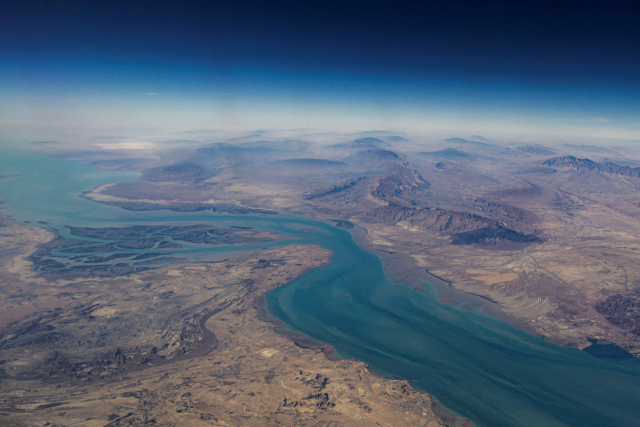
Interest is growing in alternative routes that could replace the Strait of Hormuz. CNBC noted that Oman’s Jask oil and gas terminal could allow shipments to avoid the Strait, but Nhway Khin Soe said its effectiveness as a practical export route remains uncertain.
The network explained that the Jask facility is Iran’s only crude export port on the Gulf of Oman that completely bypasses the Strait, but it has been largely unused because of inefficiencies.
Madani said loading a VLCC — a very large crude carrier built for long-distance transport — at the terminal can take up to 10 days. “It makes a big political statement, but it offers little logistical advantage,” he said. CNBC reported that loading the same volume at Iran’s export terminal on Kharg Island would typically take a day or two.