Air Force Chief Visits KAI Unannounced, Confirms Final Assembly… Six Jets to Be Delivered in Second Half of Year
1.5 trillion KRW (approximately $1.125 billion) contract on track; top-spec jets equipped with 'PhantomStrike' AESA radar and 'Sniper' targeting pod
1.5 trillion KRW (approximately $1.125 billion) contract on track; top-spec jets equipped with 'PhantomStrike' AESA radar and 'Sniper' targeting pod
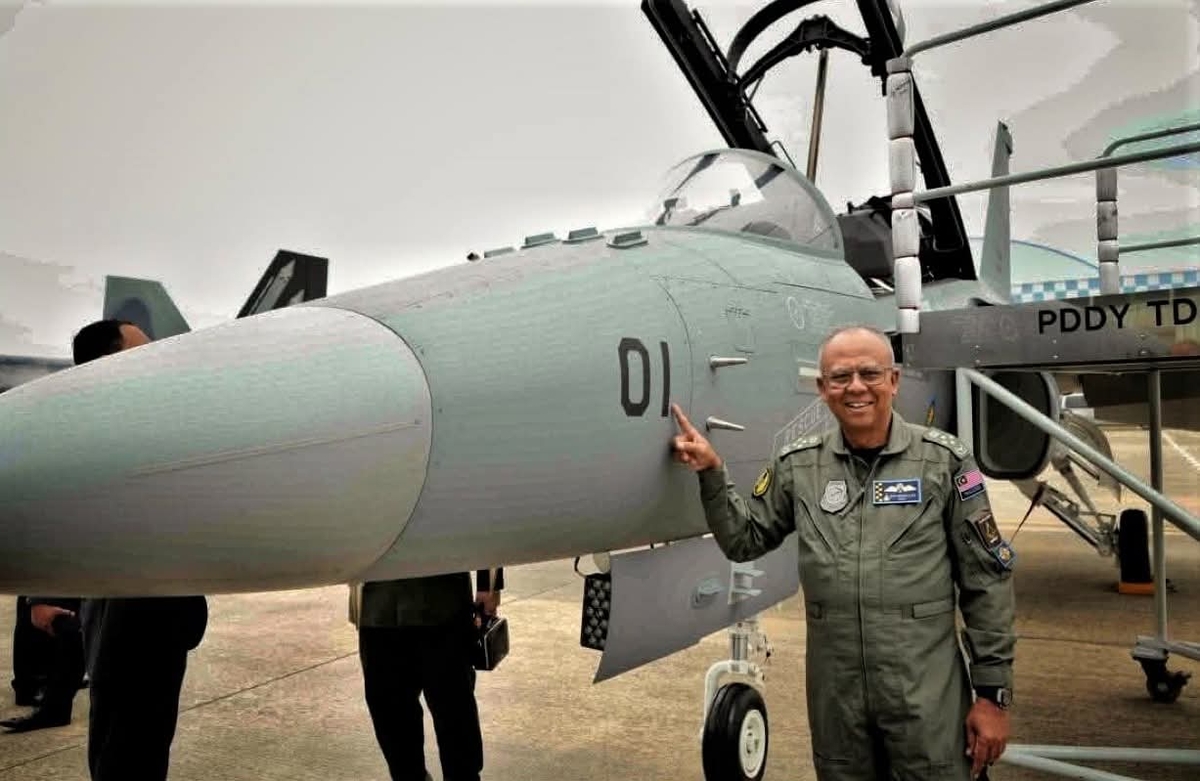 Malaysia’s first production FA-50M Block-20 — the domestically built multi-role light attack jet Kuala Lumpur expects to receive this year — has rolled off Korea Aerospace Industries’ (KAI) production line, Malaysian media reported.
 Malaysia signed a 2023 contract to buy 18 FA-50s from KAI, with deliveries scheduled to begin this year. The country is planning a second acquisition round for another 18 light attack jets, and officials say operational efficiency makes further FA-50 purchases likely.
The Royal Malaysian Air Force (RMAF) is concentrating resources on the FA-50M purchase. Analysts say the Korean-built fighter offers Southeast Asian states seeking strategic balance amid U.S.-China competition a compelling mix of affordability and capability.
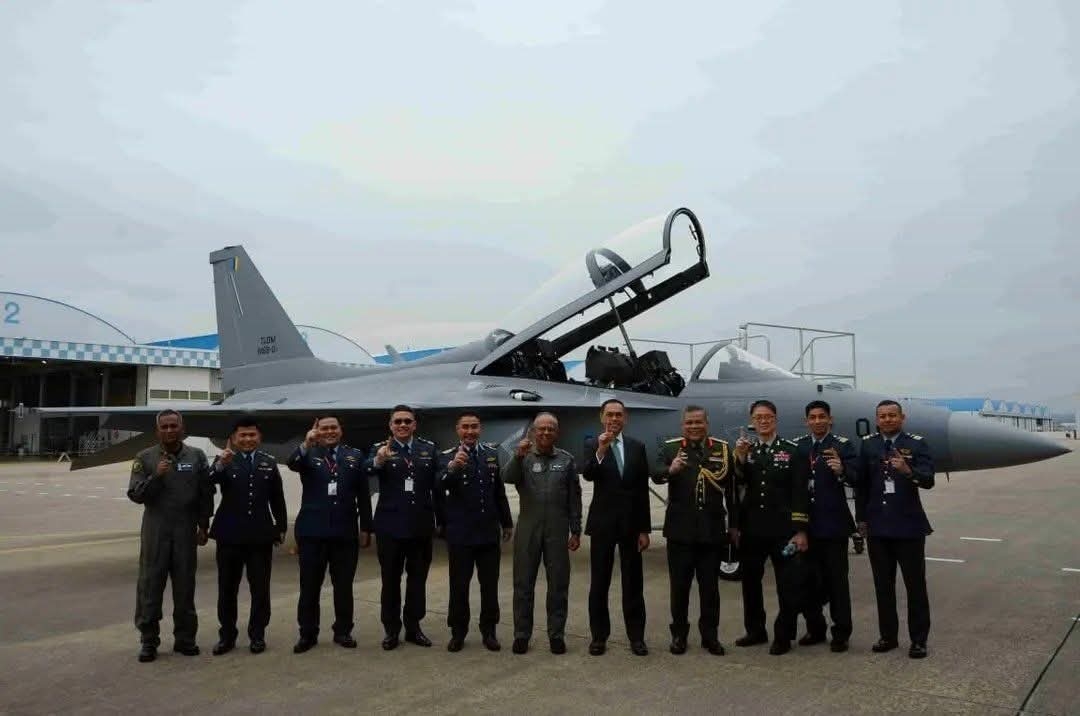 The FA-50M is a high-performance upgrade of the baseline FA-50. Its headline improvements are the PhantomStrike AESA radar and the Sniper targeting pod.
 The radar uses gallium nitride (GaN) technology, which enables longer-range detection with lower power requirements. The Sniper pod enhances the jet’s ability to employ precision-guided munitions. Fitting the same targeting pod used on Malaysia’s F/A-18D Hornets also preserves system commonality.
The FA-50M is on par with the export-standard FA-50PL fielded by Poland and represents the highest-spec variant among FA-50 derivatives now in service. That capability elevates the type from a trainer to a light combat jet capable of multi-role operations.
On April 22 (local time), Malaysian defense outlet Defense Security Asia (DSA) and industry sources reported that Air Chief Marshal Mohammad Norzlan Aris made an unannounced visit to KAI’s headquarters in Sacheon, South Gyeongsang Province. DSA published photos of FA-50M Block-20 No. 1.
Norzlan personally inspected final assembly and systems integration on the production line. His visit went beyond a routine tour; officials say he aimed to finalize plans for the first delivery scheduled this year and to settle operational preparations.
The Malaysian Air Force will receive 18 FA-50Ms in staged deliveries starting in the second half of this year.
The initial batch of six will arrive in two tranches: four jets in October and two in December. The remaining 12 are slated for phased delivery next year. The contract, valued at roughly 4 billion ringgit (about 1.494 trillion KRW, approximately $1.12 billion), marks a significant milestone in Malaysia’s air-power modernization.
Norzlan held detailed talks with KAI on flight-test schedules and upgrade plans. Those discussions indicate KAI’s production process is meeting Malaysia’s requirements and that fielding is proceeding on schedule.
Smooth deliveries to Malaysia would strengthen the K-fighter’s appeal as a cost-effective, capable option for Southeast Asian nations balancing influence from the U.S. and China.
Industry observers say the program could boost South Korea’s defense footprint in Southeast Asia. The Malaysian Defense Ministry is reportedly already weighing a second purchase of 18 more jets, which would grow the fleet to 36 FA-50s.
KAI’s emphasis on the FA-50M’s growth potential and operational efficiency could prompt several regional air forces to replace aging platforms.
A defense-industry source said, “Korean-made systems that combine interoperability with U.S. platforms, cost-effectiveness and proven technology are emerging as a top option for many Southeast Asian nations.”
If Malaysia follows Poland in successfully bringing the K-fighter into service, South Korea’s defense exports, led by KAI, could enter a new phase of global expansion. K-defense appears poised to move beyond domestic constraints and claim a larger role in the international defense market.