LIG Defense & Aerospace (LIG D&A) and Hanwha Systems—long considered the brains of South Korea’s defense sector—are locked in an all-out “brain war” to secure future battlefield dominance. The competition spans everything from next-generation weapons contracts to a push to recruit AI expertise onto corporate boards.
Bidding heats up on land and sea
Recently, LIG D&A (CEO Shin Ik-hyun) has shifted focus into command-and-control (C4I) and intelligence, surveillance, and reconnaissance (ISR) areas where Hanwha Systems (CEO Son Jae-il) has been strong. That shift has led to overlapping contract portfolios between the two firms.
Both companies develop systems that function as the nervous system and command structure for modern military forces, so their businesses naturally share similar characteristics. Historically, LIG D&A emphasized precision-guided munitions (PGM) programs such as Cheongung and Bigung, while Hanwha Systems built its niche around active electronically scanned array (AESA) radars and satellite systems.
There has been competition before. In 2016, Hanwha Systems (then Hanwha Thales) beat LIG D&A to the AESA radar contract — a core component for the KF-21 fighter. But in 2024, when the Navy solicited development of an unmanned surface vessel reconnaissance system, LIG D&A’s “Haegum” series won out over Hanwha Systems’ “Haeryeong,” earning LIG the prime contractor role.
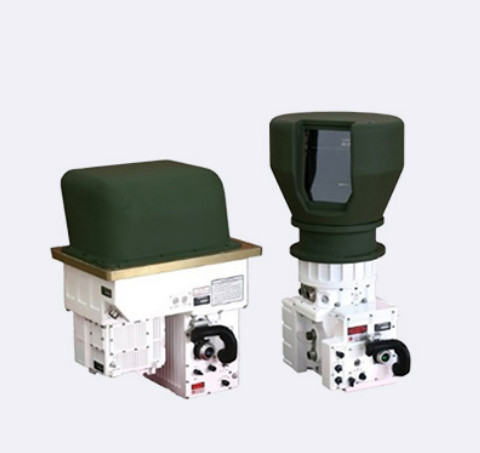
The rivalry has recently moved into ground-weapon systems. LIG D&A secured the contract to supply the sights and battlefield-visualization system for a prototype of the next-generation K3 tank, a project led by the Agency for Defense Development and Hyundai Rotem. Until now, Hyundai Rotem’s flagship K2 tank (Black Panther) has used cooling-type, high-performance gunner and commander sights developed and produced by Hanwha Systems.
An industry source said it’s unfortunate that the situation is framed only as a company rivalry, adding that it would be unfair to say LIG simply took Hanwha Systems’ market with the K3 sight contract.
The source noted that different platforms demand different technical specifications, so the outcome should be viewed as reflecting each company’s specialized capabilities.
'AI Board' formation to secure future technologies
The competition has also turned into a boardroom race for AI talent.
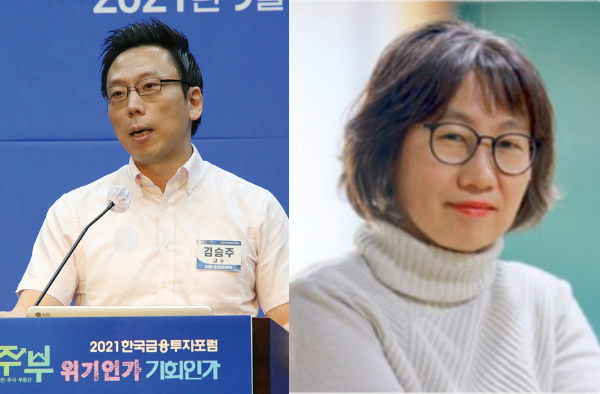
At a recent annual shareholders’ meeting, LIG D&A appointed Professor Kim Seung-joo of Korea University’s Graduate School of Information Security as an outside director. He replaces Lee Sang-jin, whose term expired in March.
Professor Kim, an AI security specialist, has served on the Presidential Committee on National AI and the Defense Innovation Committee, and now chairs the Korea Defense Innovation Technology Security Association.
LIG D&A described him as an information-security expert with deep academic credentials and industry insight, and said his policy and technology-development experience advising government agencies should materially support the company’s growth. LIG D&A has also expanded personnel and technical exchanges with Korea University through two industry-academic cooperation projects from November 2023 to February 2024.
Hanwha Systems responded by reappointing Professor Hwang Hyung-ju, an endowed professor in the Department of Mathematics and a faculty member at POSTECH’s Graduate School of AI and a recognized authority in mathematical approaches to AI, as an outside director.
Professor Hwang specializes in data science, big data, and deep learning, and serves as CEO of AI software firm AM Square. He developed an AI temperature-prediction solution using mathematical models for steel manufacturing and won the 2022 Choi Seok-jung Award for that work.
Hanwha Systems said it reappointed Professor Hwang because he made substantial contributions to shaping ICT business strategy and advancing key initiatives, including smart factory projects, during his previous term.