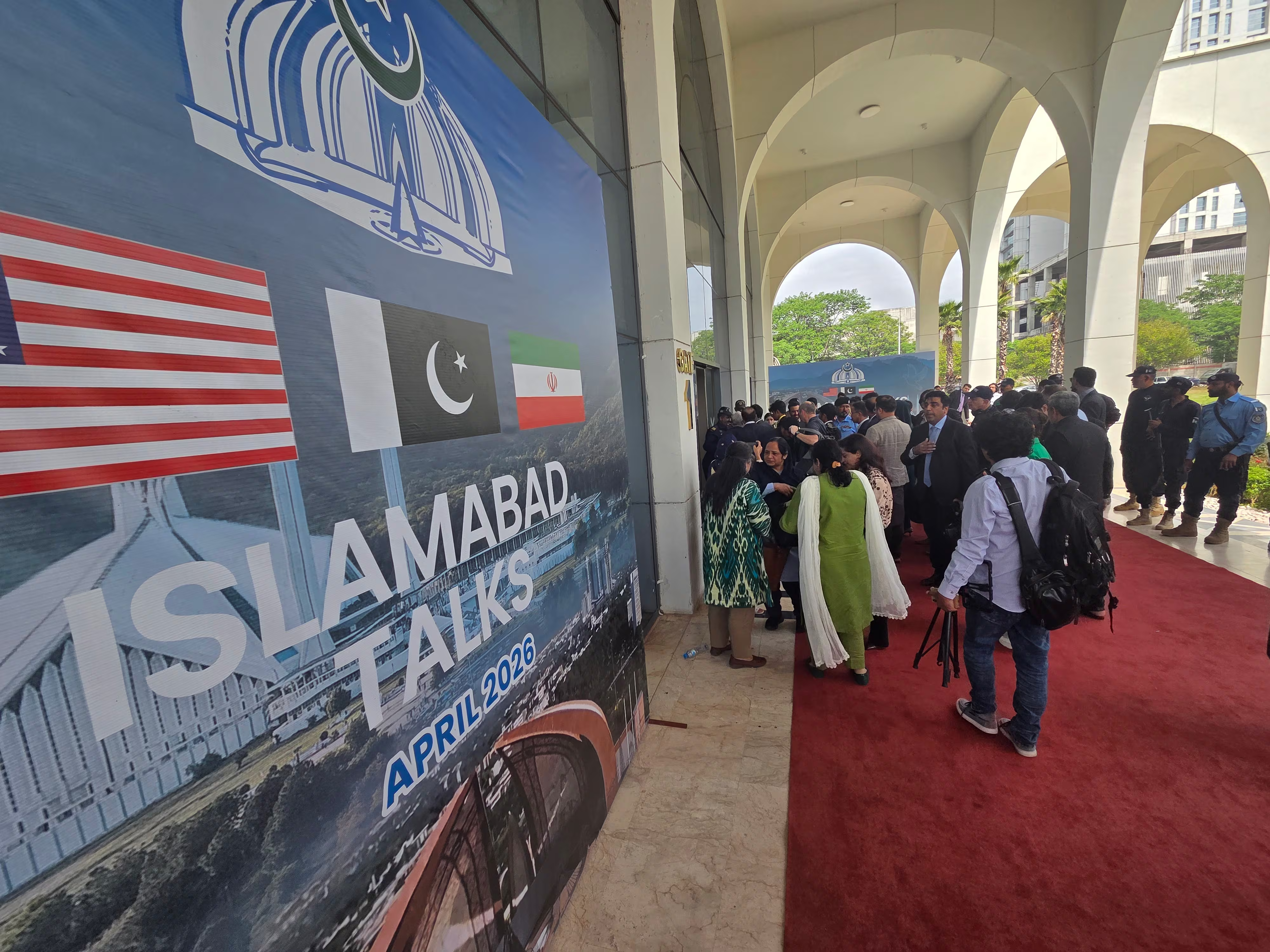
U.S. and Iranian delegations opened end-of-conflict talks in Islamabad, Pakistan, on April 11 (local time), local outlets reported.
Iranian outlets, including the Tasnim news agency, said negotiations between Washington and Tehran began in Islamabad. Al Jazeera reported that a trilateral meeting involving the U.S., Iran and Pakistan had convened.
Earlier that day, both delegations held separate meetings with Pakistani Prime Minister Shehbaz Sharif.
The talks opened four days after the two sides abruptly agreed to a two-week cease-fire on April 7.
The U.S. delegation was led by Vice President J.D. Vance, who arrived in the city that day. Jared Kushner, President Donald Trump's son-in-law, was also part of the delegation.
Iran's delegation included Parliament Speaker Mohammad Bagher Ghalibaf and Foreign Minister Abbas Araghchi.
Ahead of the talks, Pakistan’s Foreign Ministry said it would support constructive engagement so both sides could find a lasting, robust solution to the conflict.