First Western Ship Transit Through Strait Since War Began
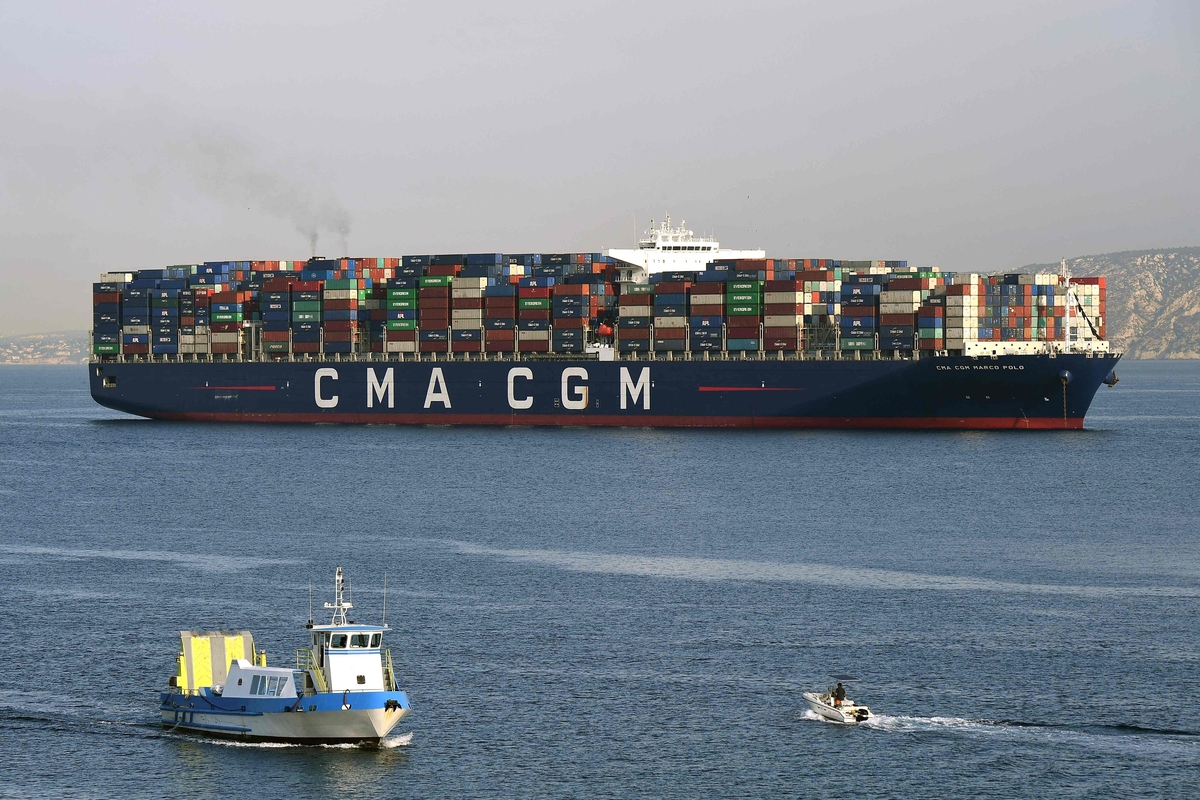
On April 3 (local time), Bloomberg, citing ship-tracking data, reported that the CMA CGM vessel Kribi sailed from waters off Dubai in the United Arab Emirates toward Iran and, the previous afternoon, transited the Strait of Hormuz.
Automatic Identification System (AIS) data listed the vessel’s owner as French. The ship followed the corridor between Larak and Qeshm islands — a routing the Islamic Revolutionary Guard Corps (IRGC) has recently insisted vessels use as an alternative path. The following morning the Kribi reported it had exited the Strait and was near Muscat, Oman.
Bloomberg noted this was the first passage by a Western European-linked vessel through the Strait since the outbreak of the war. Iran says the strait is “not closed,” but it has warned it will bar ships tied to the United States and Israel.
Sailing under the Maltese flag, the Kribi is operated by French shipping giant CMA CGM. Its capacity is about 5,000 TEUs (one TEU equals a 20-foot container), making it smaller than the roughly 19,000-TEU COSCO ships that have recently transited the Gulf (Persian Gulf).
It wasn’t only France. The Asahi Shimbun reported that a Japan-flagged liquefied natural gas (LNG) carrier also transited the strait that day. According to Asahi, this was the first time a Japanese merchant ship had passed through the Strait since the war began.
The Panama-flagged Sohar, operated by Mitsui, lingered in the Gulf within 100 km (about 62 miles) of the strait before making the transit. Mitsui told Asahi that both the crew and the vessel are safe.
The back-to-back transits by ships from Western countries and Japan — traditional U.S. partners — could help restore stalled energy shipments and ease some pressure on markets.
A critical issue is whether vessels will be subjected to IRGC-imposed transit fees. The IRGC reportedly ranks countries from 1 to 5 and charges a “Hormuz transit fee,” offering more favorable terms to states it views as friendly. Reports say the fee can start at $1 per barrel and rise to as much as $2 million (approximately 2.67 billion KRW) in total. Given Iran’s exposure to U.S. sanctions, many countries will likely be wary of formally accepting such a fee system.