Wang Yajun (王亞軍), China’s ambassador to North Korea, visited cemeteries for Chinese soldiers killed in the Korean War to pay his respects and underscore ties between the two countries.
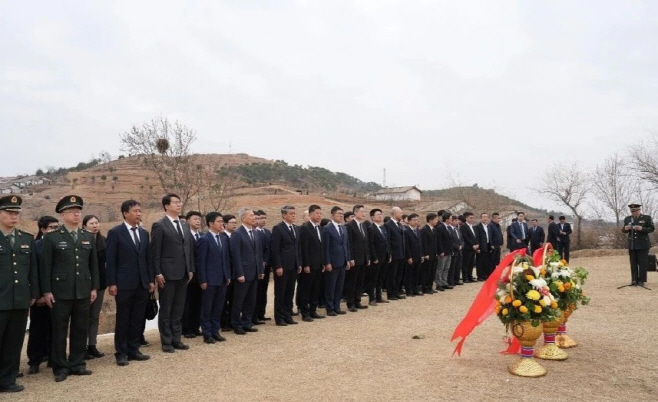
According to the Chinese Communist Party newspaper People’s Daily on April 2, Wang led roughly 70 people on March 31—ahead of the Qingming Festival—including embassy staff, Chinese businesspeople based in North Korea and Chinese students, to visit the Chinese People’s Volunteer Army martyrs’ cemeteries in Jeongju and Guseong in North Pyongan Province. North Korean officials who accompanied the delegation included Im Kwang-ho, deputy director of Department 1 at the Foreign Ministry, and Kang Young-ho, director of the Foreign Affairs Bureau of the North Pyongan Provincial People’s Committee.
Wang thanked North Korean authorities for restoring and maintaining the sites. He said the traditional friendship forged by the blood of earlier generations is a valuable asset and the bedrock of China–North Korea relations. He called protecting and maintaining the cemeteries an honorable mission to remember the shared history of fighting together and to preserve and develop that friendship.
He added that he hopes both sides will faithfully implement key agreements between their parties and top leaders, carry forward their traditional friendship, and continue to advance bilateral ties.
The People’s Daily reported that the ambassador and his delegation laid wreaths at the graves in a solemn ceremony, observed a moment of silence and performed libations to honor the martyrs.
The Jeongju cemetery holds the remains of 1,069 Chinese soldiers who died in the Korean War; the Guseong site contains 955 remains. North Korean authorities also maintain a cemetery for Chinese soldiers in Hoechang County, South Pyongan Province. That site includes the remains of Mao Anying (毛岸英), the eldest son of former Chairman Mao Zedong. Mao Anying was killed on Nov. 25, 1950—about a month after he entered the war—when a U.S. fighter-bomber struck Dayu Village, Dongchang Township, Changseong County in North Pyongan Province (now Daeyuro-dongjagu, Dongchang County, North Pyongan Province).
|
Wang thanked North Korean authorities for restoring and maintaining the sites. He said the traditional friendship forged by the blood of earlier generations is a valuable asset and the bedrock of China–North Korea relations. He called protecting and maintaining the cemeteries an honorable mission to remember the shared history of fighting together and to preserve and develop that friendship.
He added that he hopes both sides will faithfully implement key agreements between their parties and top leaders, carry forward their traditional friendship, and continue to advance bilateral ties.
The People’s Daily reported that the ambassador and his delegation laid wreaths at the graves in a solemn ceremony, observed a moment of silence and performed libations to honor the martyrs.
The Jeongju cemetery holds the remains of 1,069 Chinese soldiers who died in the Korean War; the Guseong site contains 955 remains. North Korean authorities also maintain a cemetery for Chinese soldiers in Hoechang County, South Pyongan Province. That site includes the remains of Mao Anying (毛岸英), the eldest son of former Chairman Mao Zedong. Mao Anying was killed on Nov. 25, 1950—about a month after he entered the war—when a U.S. fighter-bomber struck Dayu Village, Dongchang Township, Changseong County in North Pyongan Province (now Daeyuro-dongjagu, Dongchang County, North Pyongan Province).